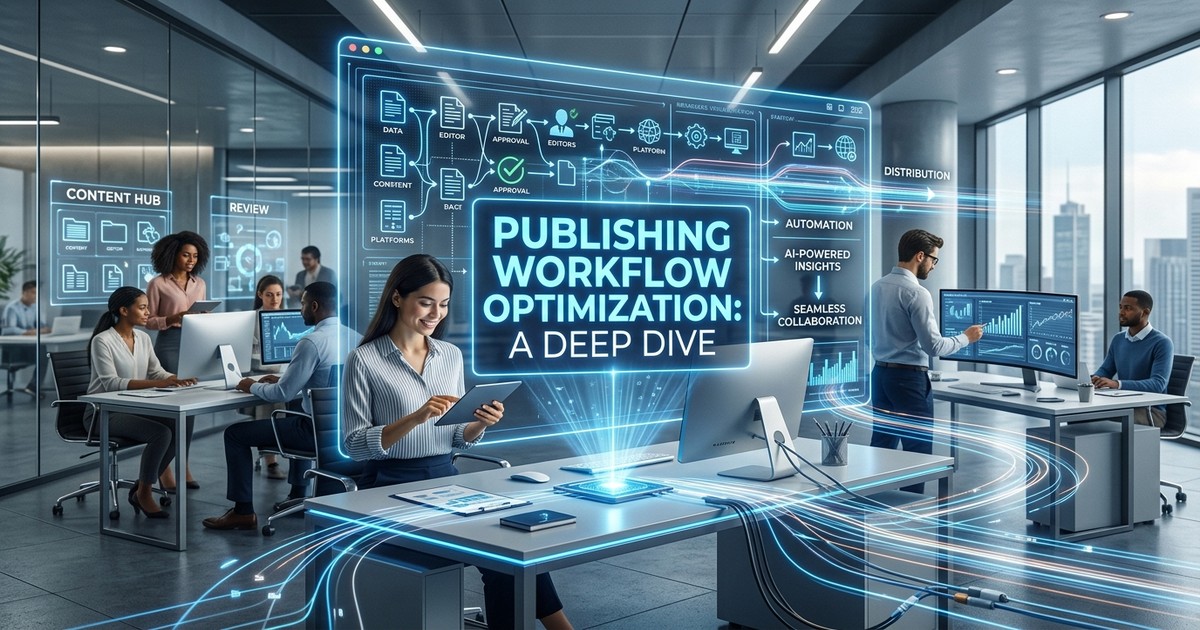
Publishing Workflow Optimization: A Deep Dive for Friday
Introduction - Hook with real problem
Sarah, a marketing director at a mid-sized SaaS company, is facing a familiar problem. Content creation is booming, but the publishing workflow is a bottleneck. Her team is churning out high-quality blog posts, white papers, and social media updates, but getting them live is a messy, time-consuming process. Multiple approval rounds, format inconsistencies, and missed deadlines are causing frustration and, more importantly, impacting revenue. They're spending more time managing content than optimizing it for performance. This isn't just Sarah's problem; it's a widespread pain point in 2026, where content velocity is paramount, and outdated publishing workflows are strangling growth. The question isn't if you need to optimize, but how to do it effectively in a landscape drastically different from even a few years ago.
The Current Landscape - What's happening in 2026
In 2026, the publishing landscape is defined by several key trends:
- AI-Powered Content Creation & Curation: AI tools are now integral to content creation, from generating initial drafts and conducting keyword research to optimizing for various platforms. The challenge is less about generating content and more about ensuring its quality, accuracy, and brand consistency.
- Personalized Content Experiences: Generic content is dead. Audiences expect personalized experiences tailored to their specific needs and preferences. This necessitates dynamic content creation and delivery, requiring sophisticated publishing workflows.
- Platform Proliferation and Fragmentation: The number of platforms where content needs to be published has exploded. From traditional websites and social media to emerging metaverse platforms and voice assistants, managing a cohesive brand presence across all channels is a significant challenge.
- Increased Focus on Data and Analytics: Publishers are under increasing pressure to demonstrate the ROI of their content efforts. This requires robust analytics tracking and reporting capabilities integrated into the publishing workflow.
- Decentralized Teams and Remote Work: The rise of remote work has made collaboration more complex. Publishing workflows need to be designed to support distributed teams and asynchronous communication.
- Emphasis on Speed and Agility: The news cycle is faster than ever. Publishers need to be able to quickly adapt to changing trends and get content out the door in a timely manner.
These trends necessitate a shift from traditional, linear publishing workflows to more agile, data-driven, and automated processes. Simply throwing more bodies at the problem is no longer a viable solution.
Deep Dive: Core Concepts - Frameworks and analysis
Optimizing a publishing workflow in 2026 requires understanding several core concepts:
- Content Operations (ContentOps): This is the overarching framework for managing the entire content lifecycle, from planning and creation to publication, distribution, and analysis. A well-defined ContentOps strategy provides the foundation for efficient publishing workflows.
- Headless CMS: Decoupling the content repository from the presentation layer allows for greater flexibility in publishing content across multiple platforms. A headless CMS enables you to create content once and publish it anywhere, without being tied to a specific website template.
- Workflow Automation: Automating repetitive tasks, such as content approvals, formatting, and scheduling, can significantly reduce bottlenecks and free up valuable time for content creators.
- Content Governance: Establishing clear guidelines and standards for content quality, brand consistency, and legal compliance is essential for maintaining a consistent brand voice and avoiding potential risks.
- Data-Driven Optimization: Continuously monitoring content performance and using data to inform future content decisions is crucial for maximizing ROI. This includes tracking metrics such as website traffic, engagement, and conversions.
- API-First Approach: Integration is key. An API-first approach ensures that all systems and tools can communicate seamlessly, enabling a smooth flow of data and content across the publishing workflow.
Without a solid understanding of these concepts, optimization efforts will likely fall short. For example, implementing a headless CMS without a clear ContentOps strategy can lead to chaos and inefficiencies.
Comparison and Trade-offs - Tables with pros/cons
Here are two comparison tables highlighting key considerations for publishing workflow optimization:
Table 1: Headless CMS vs. Traditional CMS
| Feature | Headless CMS | Traditional CMS |
|---|---|---|
| Architecture | Decoupled (API-first) | Tightly coupled |
| Flexibility | High (publish to any platform) | Limited (typically tied to website templates) |
| Scalability | Excellent | Moderate |
| Performance | Generally faster | Can be slower, especially with complex themes |
| Developer Focus | High (requires developers to build front-ends) | Lower (offers more out-of-the-box functionality) |
| Cost | Can be higher (due to custom front-end development) | Typically lower upfront cost |
| Pros | Future-proof, omnichannel publishing, high performance | Easy to use, large community, established workflows |
| Cons | Steeper learning curve, requires developer expertise | Limited flexibility, potential performance bottlenecks |
Table 2: Workflow Automation Tools
| Tool Type | Examples | Pros | Cons |
|---|---|---|---|
| General Automation | Zapier, IFTTT | Easy to use, integrates with many different apps, affordable | Limited customization, may not be suitable for complex workflows |
| Content-Specific Automation | Contentful, GatherContent, Versalence | Designed specifically for content workflows, offers advanced features, highly customizable | Can be more expensive, steeper learning curve |
| Project Management with Automation | Asana, Trello, Monday.com | Combines project management and automation, provides a centralized view of the workflow | May not offer the same level of content-specific features as dedicated content automation tools |
Implementation Framework - Step-by-step guide
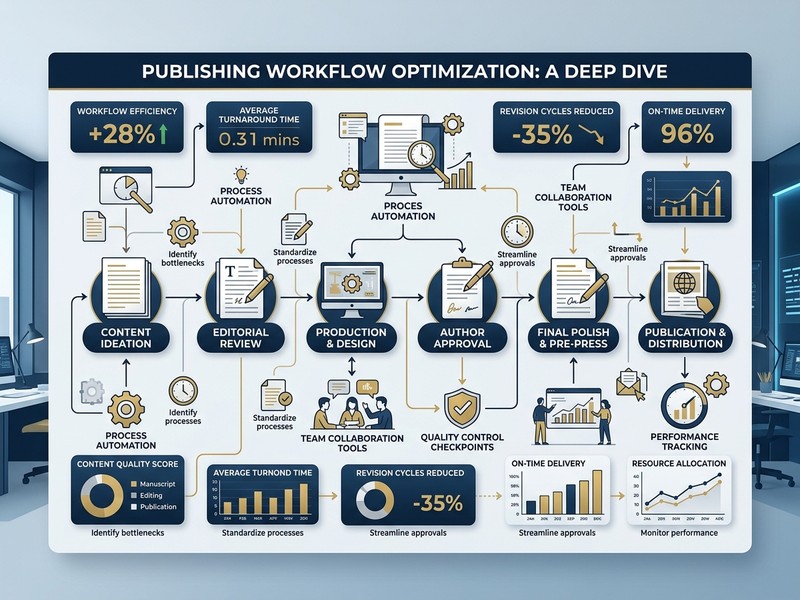
Here's a step-by-step guide to implementing a publishing workflow optimization strategy:
- Assess the Current State: Conduct a thorough audit of your existing publishing workflow. Identify bottlenecks, pain points, and areas for improvement.
- Define Goals and Objectives: Clearly define what you want to achieve with your optimization efforts. Are you looking to reduce publishing time, improve content quality, or increase website traffic?
- Choose the Right Tools and Technologies: Select the tools and technologies that best fit your needs and budget. Consider factors such as scalability, flexibility, and ease of use. This might include a Headless CMS, workflow automation software, and analytics platforms.
- Design the Optimized Workflow: Map out the new publishing workflow, including all steps, roles, and responsibilities. Focus on streamlining processes and automating repetitive tasks.
- Implement and Test: Implement the new workflow in a phased approach. Start with a small pilot project and gradually roll it out to the entire team. Thoroughly test the workflow to identify and fix any issues.
- Train the Team: Provide comprehensive training to all team members on the new workflow and tools. Ensure that everyone understands their roles and responsibilities.
- Monitor and Optimize: Continuously monitor the performance of the new workflow and make adjustments as needed. Use data to identify areas for further improvement.
- Document and Iterate: Document the entire workflow. This makes onboarding new team members much easier. Continually iterate on the workflow to adapt to changing needs and technologies.
Decision Guide - How to choose
Choosing the right tools and strategies depends on your specific needs and resources. Here's a decision framework:
- Content Volume and Complexity: If you're publishing a high volume of complex content across multiple platforms, a headless CMS and robust workflow automation tools are essential.
- Team Size and Skillset: If you have a small team with limited technical expertise, opt for user-friendly tools with good support. Consider no-code/low-code automation solutions.
- Budget: Balance your needs with your budget. Consider open-source options or SaaS solutions with flexible pricing plans.
- Integration Requirements: Ensure that the tools you choose integrate seamlessly with your existing systems and workflows. An API-first approach is crucial.
- Future Scalability: Choose tools that can scale with your business as your content needs grow.
Example Scenario: A small marketing team with a limited budget might choose a traditional CMS with a few key integrations for social media scheduling and email marketing. A larger enterprise team might opt for a headless CMS with a comprehensive suite of workflow automation tools and analytics platforms.
Case Study or Real Example
Consider "InnovateTech," a B2B tech company struggling with content velocity. They were using a traditional CMS, which made it difficult to publish content across multiple platforms. The approval process was manual and time-consuming, often taking weeks to get a single blog post live.
Solution: InnovateTech implemented a headless CMS (Contentful) and integrated it with a workflow automation tool (Versalence). They also established clear content governance guidelines and trained their team on the new tools and processes.
Results:
- Reduced publishing time by 60%: Automation streamlined the approval process and eliminated manual formatting tasks.
- Increased website traffic by 40%: The ability to publish content across multiple platforms drove more traffic to their website.
- Improved content quality and consistency: Content governance guidelines ensured that all content met brand standards and legal requirements.
- Increased team productivity: The team was able to focus on creating high-quality content instead of managing the publishing process.
30-Day Action Checklist
Here’s a practical checklist to get you started:
Week 1: Assessment and Planning
- [ ] Audit your current publishing workflow.
- [ ] Identify key pain points and bottlenecks.
- [ ] Define specific, measurable goals.
- [ ] Research potential tools and technologies.
Week 2: Tool Selection and Setup
- [ ] Select the right tools (CMS, automation, analytics).
- [ ] Set up accounts and configure basic settings.
- [ ] Integrate tools with existing systems.
Week 3: Workflow Design and Implementation
- [ ] Design the optimized publishing workflow.
- [ ] Create content governance guidelines.
- [ ] Implement workflow automation rules.
- [ ] Test the new workflow with a pilot project.
Week 4: Training and Optimization
- [ ] Train the team on the new workflow and tools.
- [ ] Monitor content performance and identify areas for improvement.
- [ ] Iterate on the workflow based on data and feedback.
- [ ] Document the entire process.
Bottom Line - Key takeaways
Optimizing your publishing workflow in 2026 is not just about adopting new technologies; it's about transforming your entire content operations strategy. By embracing automation, adopting a headless architecture, and focusing on data-driven optimization, you can unlock significant improvements in content velocity, quality, and ROI. The key is to start with a clear understanding of your needs and resources, choose the right tools and technologies, and continuously monitor and optimize your workflow. Don't get bogged down in the "shiny object syndrome" of new technologies. Focus on solving real problems and creating a publishing workflow that supports your business goals.
Work With Versalence - CTA paragraph
Ready to transform your publishing workflow and unlock the full potential of your content? Versalence provides AI-powered content automation solutions designed to streamline your entire content lifecycle, from creation to publication and analysis. Our platform integrates seamlessly with your existing systems and workflows, enabling you to create, manage, and optimize content at scale. Let Versalence help you achieve greater content velocity, improve content quality, and drive measurable results.
📧 versalence.ai/contact.html | sales@versalence.ai