
Openai Releases: A Deep Dive for Wednesday
Introduction - Hook with real problem
The year is 2026. Your company, a mid-sized logistics provider, is bleeding money. The promise of AI-driven route optimization and predictive maintenance, heralded by OpenAI and others back in the early 2020s, has largely remained unfulfilled. You've invested heavily in integrating various OpenAI APIs – GPT for customer service chatbots, DALL-E for generating marketing materials, and a customized model purportedly trained on your operational data for predicting equipment failures. Yet, customer satisfaction is stagnant, marketing ROI is questionable, and equipment breakdowns continue to plague your fleet. The question isn't whether AI can help; it's why your existing implementations are failing to deliver on their promises, and more importantly, what specific OpenAI-powered solutions, refined and matured over the past few years, actually work in 2026. This article dives deep into the current state of OpenAI's offerings, dissecting what’s delivering real value and providing a practical roadmap for successful implementation.
The Current Landscape - What's happening in 2026
By 2026, the hype surrounding general-purpose AI has subsided. The focus is now laser-sharp on domain-specific applications and demonstrable ROI. OpenAI, while still a leading innovator, faces stiff competition from open-source models and specialized AI startups. The regulatory landscape is also far more defined. Data privacy regulations are stricter, necessitating robust data governance and anonymization strategies. Model explainability is no longer optional; businesses are legally required to understand and justify the decisions made by AI systems, particularly in areas like finance and healthcare.
Several key trends define the current landscape:
- Model Specialization: General-purpose models are being replaced by fine-tuned, domain-specific models. The cost and computational resources required to train large language models (LLMs) from scratch have driven businesses towards fine-tuning pre-trained models with their own data. This specialization leads to significantly improved performance in specific tasks.
- Multi-Modal Integration: AI systems are increasingly capable of processing and generating information across multiple modalities – text, images, audio, and video. This integration enables richer and more nuanced applications, such as AI-powered design tools or interactive training simulations.
- Edge Computing and Federated Learning: To reduce latency and improve data privacy, AI models are being deployed on edge devices. Federated learning allows models to be trained on decentralized data sources without requiring data to be centralized, further enhancing privacy and security.
- Explainable AI (XAI) and Responsible AI: The need for transparency and accountability has driven significant advancements in XAI. Techniques for understanding and explaining model decisions are becoming increasingly sophisticated, enabling businesses to build trust and comply with regulatory requirements.
Deep Dive: Core Concepts - Frameworks and analysis
The success of OpenAI implementations in 2026 hinges on understanding a few core concepts:
-
Fine-tuning over Zero-Shot/Few-Shot: While impressive for demos, zero-shot and few-shot learning with general-purpose models rarely translate into robust, production-ready solutions. Fine-tuning a pre-trained OpenAI model (e.g., a variant of GPT) with your own data is crucial for achieving the required accuracy and reliability. This requires a substantial investment in data preparation, annotation, and model training.
-
Reinforcement Learning from Human Feedback (RLHF) Iteration: RLHF, used extensively in training models like GPT-4, remains a critical component. However, the initial RLHF process is just the beginning. Continuous iteration with human feedback, focusing on edge cases and specific business requirements, is essential for refining model behavior and ensuring alignment with your goals.
-
Prompt Engineering is Insufficient: While prompt engineering remains a valuable skill, relying solely on clever prompts is a recipe for inconsistent results. Effective solutions require a combination of fine-tuning, RLHF, and sophisticated prompt engineering techniques. Think of prompt engineering as a fine-tuning tool, not a silver bullet.
-
The Importance of Data Quality: Garbage in, garbage out. The quality of your training data is paramount. Invest in rigorous data cleaning, validation, and annotation processes. Consider using synthetic data generation to augment your training dataset and address data imbalances.
-
Observability and Monitoring: AI systems are not static. They require continuous monitoring and evaluation to detect drift, identify performance bottlenecks, and ensure ongoing accuracy. Implement robust observability tools to track key metrics, monitor model behavior, and trigger alerts when anomalies are detected.
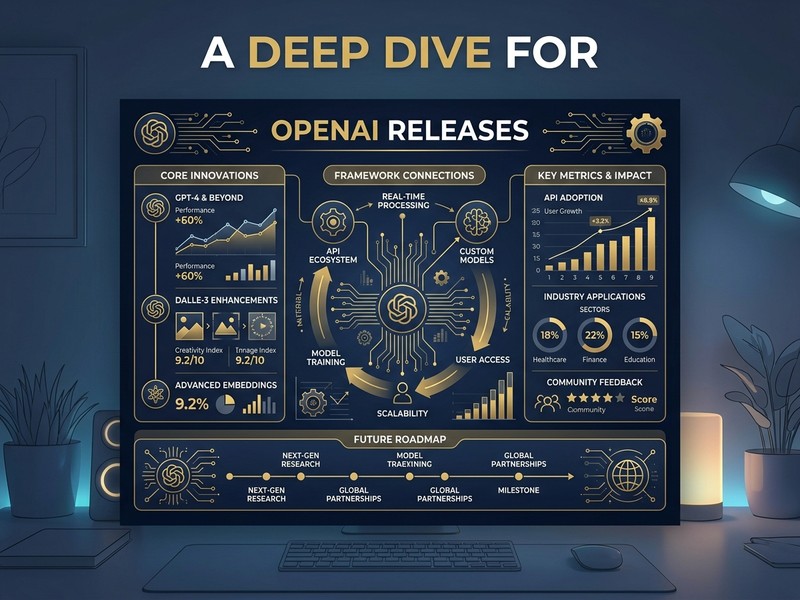
Comparison and Trade-offs - Tables with pros/cons
Table 1: Model Training Approaches
| Approach | Pros | Cons | Use Case |
|---|---|---|---|
| Zero-Shot | Requires no training data; quick to implement. | Low accuracy; unpredictable results; limited control over model behavior. | Prototyping; exploring potential applications; generating initial drafts. |
| Few-Shot | Requires minimal training data; faster than fine-tuning. | Accuracy still limited; requires careful prompt engineering; susceptible to bias. | Generating initial content; augmenting existing datasets; performing simple classification tasks. |
| Fine-Tuning | High accuracy; predictable results; allows for precise control over model behavior; leverages pre-trained knowledge. | Requires significant training data; computationally expensive; prone to overfitting if not carefully managed; requires ongoing maintenance. | Production-ready applications; complex classification tasks; generating high-quality content; building custom AI assistants; automating repetitive tasks. |
Table 2: OpenAI API vs. Custom Model Deployment
| Feature | OpenAI API | Custom Model Deployment |
|---|---|---|
| Infrastructure | Managed by OpenAI; no infrastructure management required. | Requires infrastructure management (e.g., cloud instances, GPUs); increased operational overhead. |
| Cost | Pay-per-use pricing; predictable costs for low-volume applications. | Potentially lower costs for high-volume applications; requires upfront investment in infrastructure and personnel; ongoing maintenance costs. |
| Customization | Limited customization options; pre-defined models and parameters. | Full control over model architecture, training data, and hyperparameters; allows for highly specialized applications. |
| Latency | Potential latency issues due to network communication and shared resources. | Lower latency due to local deployment; optimized for specific hardware and software configurations. |
| Security & Privacy | Relies on OpenAI's security infrastructure; potential data privacy concerns. | Full control over data security and privacy; can be deployed in secure environments; allows for compliance with strict regulatory requirements. |
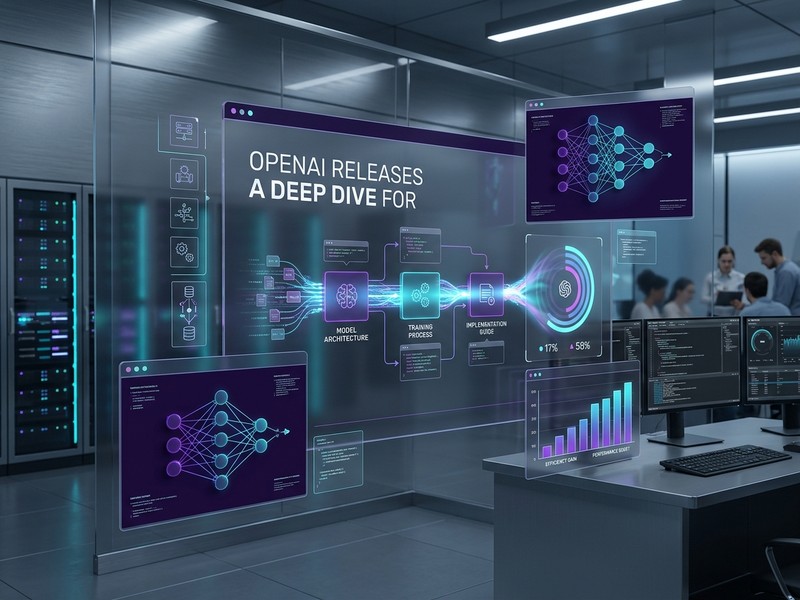
Implementation Framework - Step-by-step guide
Here’s a practical framework for implementing OpenAI solutions in 2026 that actually work:
-
Define the Problem: Clearly articulate the business problem you're trying to solve. Avoid vague goals like "improve customer service." Instead, focus on specific, measurable objectives like "reduce customer support ticket resolution time by 20%."
-
Data Audit and Preparation: Assess the availability, quality, and relevance of your data. Clean, validate, and annotate your data. Consider using synthetic data generation to augment your dataset.
-
Model Selection and Fine-Tuning: Choose a pre-trained OpenAI model that is appropriate for your task. Fine-tune the model with your own data, using techniques like transfer learning and domain adaptation.
-
RLHF Iteration: Implement a continuous RLHF process to refine model behavior and ensure alignment with your goals. Involve domain experts in the feedback loop.
-
Prompt Engineering: Design effective prompts that guide the model towards the desired output. Experiment with different prompt styles and techniques.
-
Integration and Deployment: Integrate the model into your existing systems. Deploy the model on appropriate infrastructure (e.g., cloud, edge).
-
Monitoring and Evaluation: Continuously monitor model performance and identify areas for improvement. Track key metrics like accuracy, latency, and cost.
-
Iterative Improvement: Continuously iterate on your model and deployment strategy based on the results of your monitoring and evaluation.
Decision Guide - How to Choose
Choosing the right OpenAI solution requires careful consideration of several factors. This decision guide helps navigate the options:
-
Complexity of the Task: For simple tasks, zero-shot or few-shot learning with general-purpose models may suffice. For complex tasks requiring high accuracy and reliability, fine-tuning is essential.
-
Availability of Data: If you have a large, high-quality dataset, fine-tuning is the preferred approach. If you have limited data, consider using synthetic data generation or transfer learning.
-
Computational Resources: Fine-tuning requires significant computational resources. If you have limited resources, consider using a smaller model or outsourcing the training process.
-
Latency Requirements: If low latency is critical, consider deploying the model on edge devices.
-
Security and Privacy Requirements: If you have strict security and privacy requirements, consider deploying the model in a secure environment and controlling access to the data.
-
Cost Considerations: Evaluate the cost of training, deploying, and maintaining the model. Consider using a pay-per-use API or deploying the model on your own infrastructure.
If you need high accuracy and control, and have the resources, fine-tune. If you need speed and low cost, and accuracy is less critical, use the API with prompt engineering.
Case Study or Real Example
Consider a healthcare provider aiming to improve the efficiency of its patient intake process. In 2023, they attempted to use a GPT-based chatbot for initial patient assessments, but the results were inconsistent and often inaccurate, leading to frustration among patients and staff.
By 2026, they've implemented a more sophisticated solution:
- Specialized Model: They fine-tuned a medical-specific variant of GPT on a large dataset of patient records and medical literature.
- RLHF with Doctors: Doctors provided continuous feedback on the chatbot's responses, correcting errors and refining its understanding of medical terminology.
- Multi-Modal Integration: The chatbot can now process both text and audio input, allowing patients to describe their symptoms in their own words.
- Human-in-the-Loop: The chatbot is designed to escalate complex cases to human doctors, ensuring that patients receive appropriate care.
The result? A significant reduction in patient wait times, improved accuracy in initial assessments, and increased patient satisfaction. The key was moving beyond generic AI and focusing on domain-specific expertise and continuous improvement.
30-Day Action Checklist
Here’s a 30-day action checklist to kickstart your OpenAI implementation:
Week 1: Planning and Assessment
- [ ] Define the specific business problem you want to solve.
- [ ] Conduct a data audit to assess the availability and quality of your data.
- [ ] Identify the key metrics you will use to measure success.
- [ ] Research relevant OpenAI models and APIs.
Week 2: Data Preparation and Model Selection
- [ ] Clean and validate your data.
- [ ] Annotate your data (if necessary).
- [ ] Choose a pre-trained OpenAI model that is appropriate for your task.
- [ ] Set up your development environment.
Week 3: Fine-Tuning and Evaluation
- [ ] Fine-tune the model with your own data.
- [ ] Evaluate the model's performance on a validation dataset.
- [ ] Identify areas for improvement.
- [ ] Begin RLHF process with internal stakeholders.
Week 4: Integration and Deployment
- [ ] Integrate the model into your existing systems.
- [ ] Deploy the model on appropriate infrastructure.
- [ ] Monitor model performance and track key metrics.
- [ ] Plan for ongoing maintenance and improvement.
Bottom Line - Key takeaways
In 2026, the successful application of OpenAI technologies hinges on moving beyond hype and focusing on practical, domain-specific solutions. Fine-tuning, RLHF, data quality, and continuous monitoring are essential for achieving real ROI. The key is to treat AI as a tool, not a magic bullet, and to invest in the expertise and infrastructure required to use it effectively. Don't chase the newest shiny object; focus on the fundamentals and build a solid foundation for long-term success.
Work With Versalence - CTA paragraph
Are you struggling to navigate the complex landscape of AI and unlock the true potential of OpenAI's technologies? Versalence specializes in helping businesses like yours build and deploy AI solutions that deliver tangible results. We offer a comprehensive suite of services, from data preparation and model fine-tuning to integration and ongoing maintenance. Our team of experienced AI engineers and data scientists can help you transform your data into actionable insights and drive real business value.
📧 versalence.ai/contact.html | sales@versalence.ai