
Emerging Ai Technologies: A Deep Dive for Monday
Introduction - Hook with real problem
Imagine this: You're the CTO of a mid-sized logistics company, "SwiftRoute." In 2024, you experimented with AI-powered route optimization. It showed promise, but the infrastructure was clunky, the data integration a nightmare, and the promised efficiency gains never quite materialized. Now it's 2026. Your competitors, who were initially hesitant, are boasting about 20% cost reductions and improved delivery times, all thanks to "AI." You need to catch up, but you're wary of repeating past mistakes. You're not just looking for buzzwords; you need to know what actually works in 2026, and how to deploy it effectively. This post is for you. We'll cut through the hype and focus on the AI technologies delivering tangible value right now.
The Current Landscape - What's happening in 2026
The AI landscape in 2026 is significantly more mature than just a few years prior. The hype cycle has largely subsided, replaced by a focus on practical applications and demonstrable ROI. Several key trends are shaping the field:
- Edge AI Dominance: Processing data closer to the source (e.g., in vehicles, warehouses, or retail stores) is no longer a niche concept. Powerful, energy-efficient chips and optimized algorithms allow for real-time decision-making without relying on constant cloud connectivity. This is crucial for applications like autonomous driving, predictive maintenance, and smart manufacturing.
- Generative AI Specialization: While large language models (LLMs) are still prominent, the focus has shifted from general-purpose models to specialized ones trained on specific datasets for particular tasks. Think AI trained solely on legal documents for contract analysis, or AI trained on manufacturing sensor data for anomaly detection. This specialization delivers higher accuracy and efficiency.
- AI-Powered Automation as Standard: Robotic process automation (RPA) is now seamlessly integrated with AI capabilities like computer vision and natural language processing. This allows for end-to-end automation of complex workflows, significantly reducing manual effort and human error.
- Explainable AI (XAI) Mandate: Regulatory pressure and ethical concerns have made XAI a necessity. Businesses are prioritizing AI models that provide clear and understandable explanations for their decisions, fostering trust and accountability.
- Democratization of AI Tools: Low-code/no-code AI platforms are empowering non-technical users to build and deploy AI applications, accelerating innovation and reducing the reliance on specialized AI engineers.
Deep Dive: Core Concepts - Frameworks and analysis
To understand what works, we need to delve into the core concepts driving successful AI deployments.
1. Data-Centric AI: Forget the algorithm-first approach. In 2026, the quality and relevance of your data are paramount. Focus on data cleaning, labeling, and augmentation. Techniques like synthetic data generation are becoming increasingly important, especially when dealing with limited or biased datasets.
2. Federated Learning: This allows you to train AI models on decentralized datasets without directly accessing the raw data. This is crucial for industries with strict data privacy regulations, like healthcare and finance. A key challenge is managing the heterogeneity of data across different sources.
3. Reinforcement Learning (RL) for Dynamic Optimization: RL is proving particularly effective in dynamic environments where continuous learning and adaptation are required. Examples include optimizing energy consumption in buildings, managing inventory levels in warehouses, and personalizing customer recommendations.
4. Knowledge Graphs: These are structured representations of knowledge that can be used to enhance AI models with contextual information. They are particularly useful for tasks like semantic search, question answering, and knowledge discovery.
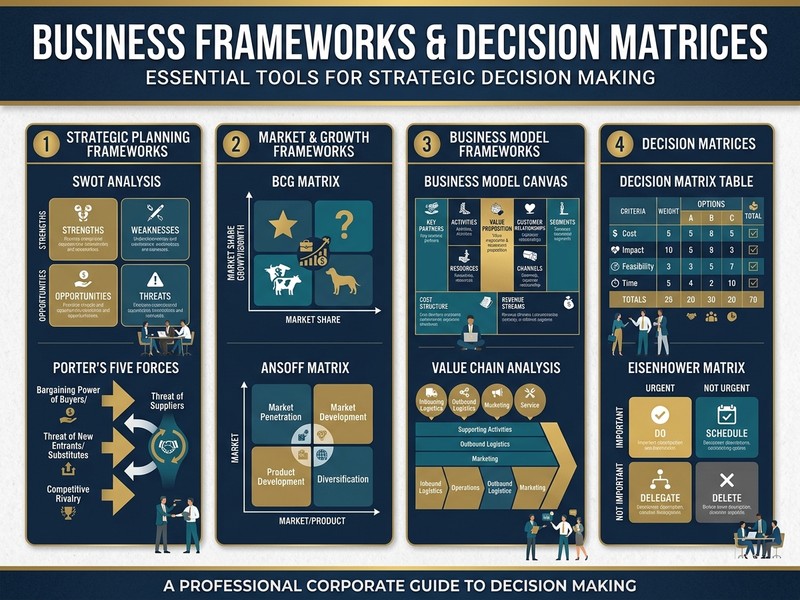
Framework for Evaluating AI Technologies:
Before investing in any AI technology, ask yourself these questions:
- Problem Fit: Does this technology directly address a specific business problem?
- Data Availability: Do you have sufficient high-quality data to train and validate the model?
- Explainability: Can you understand why the model is making certain decisions?
- Scalability: Can the technology scale to meet your future needs?
- Integration: Can the technology be easily integrated with your existing systems?
- Cost: What is the total cost of ownership, including development, deployment, and maintenance?
Comparison and Trade-offs - Tables with pros/cons
Here are a couple of comparison tables to help you evaluate different AI technologies:
Table 1: Edge AI vs. Cloud AI
| Feature | Edge AI | Cloud AI |
|---|---|---|
| Latency | Low | High |
| Bandwidth | Low | High |
| Privacy | High | Low (depending on security measures) |
| Processing Power | Limited (but improving) | High |
| Cost | Higher upfront investment | Lower upfront investment, ongoing costs |
| Use Cases | Real-time applications, remote locations | Batch processing, large-scale data analysis |
| Pros | Faster response times, enhanced privacy | Scalability, access to advanced resources |
| Cons | Limited processing power, higher cost | Latency, bandwidth dependency, privacy concerns |
Table 2: Generative AI Approaches
| Approach | Focus | Pros | Cons | Example Use Case |
|---|---|---|---|---|
| LLMs (fine-tuned) | Text generation, analysis | Versatile, can be adapted to various tasks with sufficient training data, good for summarization and translation. | Can be computationally expensive, requires significant data for fine-tuning, potential for bias and hallucinations. | Customer service chatbots, automated report generation. |
| Diffusion Models | Image/Video Generation | High-quality image and video generation, can create realistic and creative content. | Computationally intensive, requires specialized hardware, may struggle with complex scenes. | Generating marketing materials, creating realistic simulations for training. |
| GANs | Data Augmentation | Can generate realistic synthetic data to augment training datasets, useful for improving model accuracy. | Can be unstable to train, prone to mode collapse (generating limited variety of data). | Generating synthetic images for object detection training, creating realistic financial transaction data. |
Implementation Framework - Step-by-step guide
Here's a practical framework for implementing AI in your organization:
Step 1: Identify a Business Problem: Don't start with the technology. Start with a specific, measurable business problem that AI can solve. Focus on problems that have a clear impact on your bottom line.
Step 2: Assess Data Readiness: Evaluate the availability, quality, and relevance of your data. Clean and label your data appropriately. Consider using synthetic data generation if necessary.
Step 3: Choose the Right Technology: Based on your problem and data, select the AI technology that is most appropriate. Consider the trade-offs outlined in the comparison tables above.
Step 4: Build or Buy: Decide whether to build an AI solution in-house or purchase a pre-built solution from a vendor. Consider your internal expertise and resources.
Step 5: Develop a Proof of Concept (POC): Start with a small-scale POC to validate your assumptions and demonstrate the value of the AI solution.
Step 6: Deploy and Monitor: Deploy the AI solution in a production environment and continuously monitor its performance. Retrain the model as needed to maintain accuracy.
Step 7: Iterate and Improve: Continuously iterate on your AI solution based on feedback and performance data.
Decision Guide - How to choose
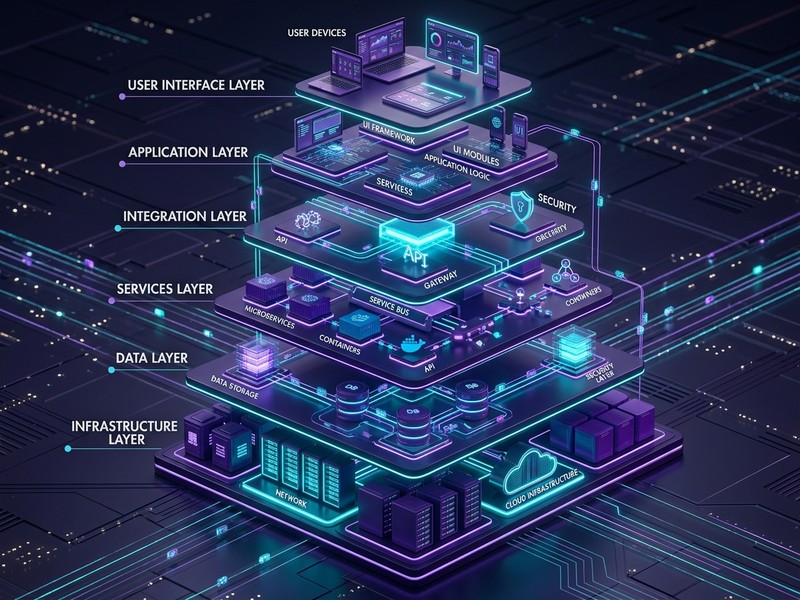
Choosing the right AI technology requires careful consideration of your specific needs and constraints. Here's a decision guide:
1. Define Clear Objectives: What specific outcomes are you trying to achieve? (e.g., reduce costs, improve efficiency, increase revenue).
2. Assess Your Resources: What is your budget, team size, and level of AI expertise?
3. Evaluate Vendor Solutions: Research different AI vendors and compare their offerings. Look for vendors with a proven track record and a strong understanding of your industry.
4. Consider the Long-Term: Think about the long-term maintenance and scalability of the AI solution.
5. Prioritize Explainability: Choose AI models that are explainable and transparent.
Decision Tree Example:
- Question 1: Do you need real-time decision-making?
- Yes: Consider Edge AI.
- No: Proceed to Question 2.
- Question 2: Do you have sensitive data that cannot be shared?
- Yes: Consider Federated Learning.
- No: Proceed to Question 3.
- Question 3: Do you need to automate complex workflows?
- Yes: Consider AI-powered RPA.
- No: Consider Generative AI or other specialized AI solutions.
Case Study or Real Example
Let's revisit SwiftRoute, the logistics company from the introduction. In 2024, their AI implementation failed due to poor data quality and a lack of explainability. In 2026, they adopted a data-centric approach, investing heavily in data cleaning and labeling. They also chose an AI-powered route optimization solution that provided clear explanations for its recommendations. Furthermore, they implemented an Edge AI component to their fleet vehicles for real-time rerouting based on traffic and weather conditions. The results? A 15% reduction in fuel costs, a 10% improvement in delivery times, and a significant increase in customer satisfaction. The key was focusing on data, explainability, and the right technology for the specific problem.
30-Day Action Checklist
Here's a 30-day checklist to get you started:
Week 1: Assessment & Planning
- [ ] Identify a high-impact business problem suitable for AI.
- [ ] Assess your current data infrastructure and data quality.
- [ ] Define clear and measurable objectives for your AI initiative.
- [ ] Research potential AI vendors and solutions.
Week 2: Data Preparation & Vendor Selection
- [ ] Begin cleaning and labeling your data.
- [ ] Evaluate and shortlist potential AI vendors.
- [ ] Schedule demos and POCs with selected vendors.
- [ ] Develop a detailed project plan with timelines and milestones.
Week 3: Proof of Concept & Evaluation
- [ ] Conduct a POC with your chosen vendor.
- [ ] Evaluate the results of the POC against your objectives.
- [ ] Assess the explainability and transparency of the AI solution.
- [ ] Refine your project plan based on the POC results.
Week 4: Implementation & Deployment (Planning)
- [ ] Finalize your vendor selection and negotiate pricing.
- [ ] Develop a detailed implementation plan.
- [ ] Prepare your infrastructure for AI deployment.
- [ ] Train your team on the new AI solution.
Bottom Line - Key takeaways
In 2026, successful AI implementation is about more than just technology. It's about:
- Data-Centricity: Focus on data quality and relevance.
- Explainability: Prioritize AI models that are transparent and understandable.
- Problem Fit: Choose the right technology for the specific business problem.
- Iterative Approach: Start small, iterate, and improve.
- Strategic Alignment: Ensure your AI initiatives are aligned with your overall business strategy.
By following these principles, you can avoid the pitfalls of past AI implementations and unlock the true potential of AI for your organization.
Work With Versalence - CTA paragraph
Are you ready to transform your business with AI that delivers real results? Versalence specializes in developing and deploying tailored AI solutions for businesses like yours. We focus on data-centric AI, explainable AI, and practical applications that drive measurable ROI. We can help you navigate the complex AI landscape and implement solutions that are aligned with your specific needs and goals. Contact us today for a free consultation.
📧 versalence.ai/contact.html | sales@versalence.ai