Vcx Use Cases: A Deep Dive for Tuesday
Introduction - Hook with real problem
It's 2026. Your customer support team is drowning. Ticket volumes are through the roof, churn is creeping upwards, and your agents are burning out faster than ever. You invested heavily in a "next-generation" VCx platform last year, promised AI-powered efficiency and personalized experiences. But the reality? It feels like you're just shoveling coal into a slightly shinier, but equally inefficient, engine. The promised land of seamless, omnichannel customer journeys hasn't materialized. In fact, you're struggling to even consistently route customers to the right agent, let alone proactively anticipate their needs.
This isn't just your problem. It's a widespread issue. Many companies in 2026 are grappling with the reality that VCx (Voice and Customer Experience) technology, while promising, often falls short of expectations. The key isn't just having a VCx platform, it's understanding how to leverage its capabilities effectively to solve real business challenges. This post will cut through the hype and focus on what actually works in 2026, providing actionable strategies for customer support leaders, sales teams, and operations managers to maximize their VCx investment.
The Current Landscape - What's happening in 2026
In 2026, the VCx landscape is dominated by a few key trends:
- AI-Driven Personalization is Table Stakes: Basic chatbots and sentiment analysis are no longer differentiators. Customers expect hyper-personalized experiences, anticipating their needs and resolving issues proactively. This requires sophisticated AI models trained on vast datasets and seamlessly integrated across all touchpoints.
- The Rise of Composable VCx: Companies are moving away from monolithic, all-in-one platforms towards modular, composable solutions. This allows them to select best-of-breed tools for specific functions and integrate them through APIs, creating a more flexible and adaptable VCx stack.
- Agent Augmentation, Not Replacement: The focus has shifted from replacing human agents with AI to augmenting their capabilities. AI is used to handle routine tasks, provide real-time information, and guide agents through complex interactions, allowing them to focus on higher-value activities.
- Data Privacy and Security are Paramount: Customers are increasingly concerned about data privacy and security. VCx platforms must comply with stringent regulations and implement robust security measures to protect customer data. Transparency and control over data usage are crucial for building trust.
- The Metaverse and Immersive Experiences: While still nascent, the metaverse is beginning to influence VCx. Companies are exploring virtual customer service agents, immersive product demonstrations, and virtual events to enhance the customer experience.
These trends highlight the need for a strategic and data-driven approach to VCx implementation. It's no longer enough to simply deploy technology; you need to understand how to leverage it to achieve specific business outcomes.
Deep Dive: Core Concepts - Frameworks and analysis
To effectively leverage VCx in 2026, it's crucial to understand a few core concepts:
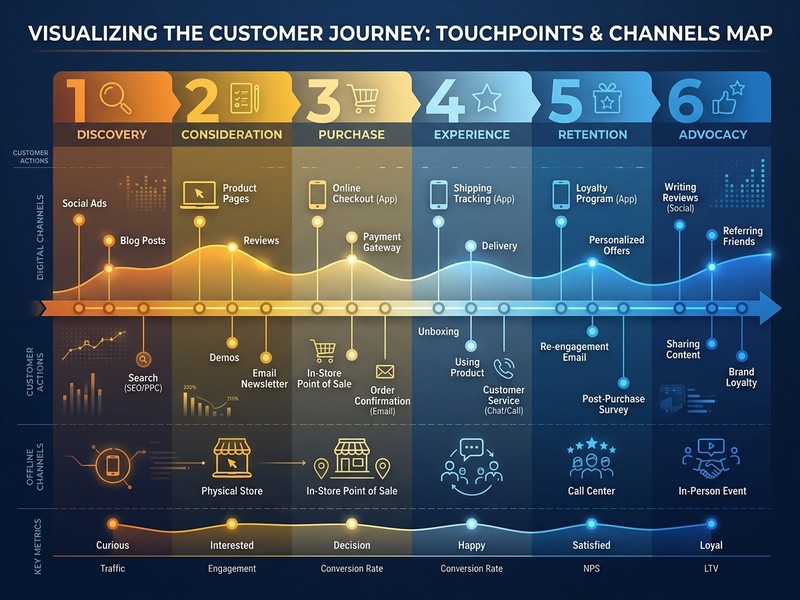
1. Customer Journey Orchestration (CJO): CJO is the process of mapping and managing the customer journey across all touchpoints. It involves identifying key moments of truth, understanding customer needs and pain points, and designing personalized experiences that drive engagement and loyalty. VCx platforms play a crucial role in CJO by providing the tools to capture customer data, analyze behavior, and automate interactions.
2. AI-Powered Routing and Prioritization: Intelligent routing ensures that customers are connected to the right agent or resource based on their needs, skills, and availability. AI algorithms can analyze customer intent, sentiment, and historical data to optimize routing decisions. Prioritization ensures that urgent or high-value customers receive immediate attention.
3. Knowledge Management and Agent Assistance: VCx platforms should integrate with knowledge management systems to provide agents with quick and easy access to relevant information. AI-powered agent assistance tools can provide real-time guidance, suggest solutions, and automate tasks, improving agent efficiency and accuracy.
4. Proactive Customer Engagement: VCx platforms can be used to proactively engage with customers based on their behavior and needs. For example, if a customer is struggling to complete a transaction on a website, the platform can automatically initiate a chat session or offer assistance.
5. Continuous Improvement and Optimization: VCx is not a set-it-and-forget-it solution. It requires continuous monitoring, analysis, and optimization. VCx platforms should provide robust reporting and analytics capabilities to track key metrics, identify areas for improvement, and measure the impact of changes.
Comparison and Trade-offs - Tables with pros/cons
Table 1: VCx Platform Deployment Models
| Feature | Cloud-Based VCx | On-Premise VCx | Hybrid VCx |
|---|---|---|---|
| Pros | Scalability, lower upfront costs, faster deployment, automatic updates, accessibility | Data security, control over infrastructure, customization, regulatory compliance | Flexibility, combines benefits of cloud and on-premise, phased migration |
| Cons | Data security concerns, vendor lock-in, dependence on internet connectivity | High upfront costs, maintenance overhead, slower deployment, scalability limitations | Complexity, requires careful planning and integration, potential for increased management overhead |
| Use Cases | Startups, SMBs, companies with rapid growth, organizations prioritizing agility | Large enterprises, highly regulated industries, organizations with strict data security requirements | Organizations with a mix of cloud and on-premise applications, phased migration strategies |
Table 2: VCx Channel Integration Approaches
| Feature | Unified Platform | Integrated Best-of-Breed |
|---|---|---|
| Pros | Single vendor, simplified management, consistent user experience, centralized data | Flexibility, access to specialized features, avoids vendor lock-in, best tool for specific needs |
| Cons | Limited customization, potential for vendor lock-in, may not offer best-of-breed features for all channels | Integration complexity, data silos, inconsistent user experience, higher management overhead |
| Use Cases | Organizations prioritizing simplicity and ease of management, limited technical resources | Organizations with complex requirements, diverse channel mix, strong technical expertise |
Implementation Framework - Step-by-step guide
Implementing a successful VCx strategy in 2026 requires a structured approach:
Step 1: Define Your Business Objectives: Clearly define what you want to achieve with VCx. Are you looking to improve customer satisfaction, reduce costs, increase sales, or drive operational efficiency?
Step 2: Map Your Customer Journey: Identify key moments of truth and pain points in the customer journey. Understand how customers interact with your brand across different channels.
Step 3: Assess Your Current VCx Capabilities: Evaluate your existing technology infrastructure and identify gaps in functionality. Determine what needs to be upgraded, replaced, or integrated.
Step 4: Select the Right VCx Platform: Choose a platform that meets your specific business needs and integrates seamlessly with your existing systems. Consider factors such as scalability, security, customization, and reporting capabilities.
Step 5: Design Your VCx Solution: Develop a detailed design for your VCx solution, including routing rules, agent workflows, knowledge management processes, and proactive engagement strategies.
Step 6: Implement and Test Your Solution: Implement your VCx solution in a phased approach, starting with a pilot program and gradually rolling it out to the entire organization. Thoroughly test the solution to ensure it meets your requirements and performance expectations.
Step 7: Train Your Agents: Provide comprehensive training to your agents on how to use the new VCx platform and processes. Emphasize the importance of providing exceptional customer service and resolving issues efficiently.
Step 8: Monitor and Optimize Your Solution: Continuously monitor the performance of your VCx solution and make adjustments as needed. Track key metrics, gather customer feedback, and identify areas for improvement.
Step 9: Integrate AI strategically: Don't just deploy AI for the sake of it. Focus on specific use cases where AI can deliver tangible benefits, such as intelligent routing, personalized recommendations, and automated responses.
Decision Guide - How to choose
Choosing the right VCx solution in 2026 requires careful consideration of your specific business needs and priorities. Here's a decision framework to guide your selection:
- Identify Your Key Requirements: What are your must-have features and capabilities? (e.g., omnichannel support, AI-powered routing, knowledge management integration, data privacy compliance).
- Evaluate Your Budget: How much are you willing to spend on a VCx platform? Consider both upfront costs and ongoing maintenance expenses.
- Assess Your Technical Expertise: Do you have the in-house expertise to implement and manage a complex VCx solution? Or do you need a more user-friendly platform that requires minimal technical support?
- Consider Scalability: Will the VCx platform be able to scale as your business grows?
- Evaluate Security: Does the VCx platform meet your data security requirements?
- Check for Integrations: Does the VCx platform integrate seamlessly with your existing systems?
- Read Reviews and Case Studies: What are other customers saying about the VCx platform? Look for reviews and case studies that highlight the platform's strengths and weaknesses.
- Request a Demo: Before making a decision, request a demo of the VCx platform to see it in action.
By following this decision framework, you can choose a VCx solution that meets your specific needs and helps you achieve your business objectives.
Case Study or Real Example
Company: Global E-commerce Retailer (Let's call them "ShopSphere")
Problem: ShopSphere was experiencing high customer churn due to long wait times and inconsistent support across different channels. Their legacy VCx system lacked the ability to provide personalized experiences or proactively address customer issues.
Solution: ShopSphere implemented a composable VCx solution, integrating a cloud-based contact center platform with an AI-powered routing engine and a knowledge management system. They also deployed AI-powered chatbots to handle routine inquiries and free up agents to focus on more complex issues.
Results:
- Reduced Average Handle Time by 25%: Intelligent routing ensured that customers were connected to the right agent faster.
- Improved Customer Satisfaction Scores by 15%: Personalized experiences and proactive support led to higher customer satisfaction.
- Increased Agent Productivity by 20%: AI-powered agent assistance tools helped agents resolve issues more efficiently.
- Reduced Churn by 10%: Improved customer service led to higher customer retention.
Key Takeaway: ShopSphere's success demonstrates the power of a well-designed VCx solution to improve customer satisfaction, reduce costs, and drive business growth. The composable architecture allowed them to select the best tools for each specific function and integrate them seamlessly.
30-Day Action Checklist
Here's a practical checklist to get you started with your VCx transformation:
Week 1: Assessment and Planning
- [ ] Define your business objectives for VCx.
- [ ] Map your customer journey and identify pain points.
- [ ] Assess your current VCx capabilities.
- [ ] Research and evaluate potential VCx platforms.
Week 2: Solution Design and Vendor Selection
- [ ] Design your VCx solution, including routing rules, agent workflows, and knowledge management processes.
- [ ] Select a VCx platform that meets your specific needs and budget.
- [ ] Negotiate contract terms with your chosen vendor.
Week 3: Implementation and Training
- [ ] Implement your VCx solution in a phased approach.
- [ ] Train your agents on how to use the new platform and processes.
- [ ] Develop a communication plan to inform customers about the changes.
Week 4: Monitoring and Optimization
- [ ] Monitor the performance of your VCx solution.
- [ ] Gather customer feedback and identify areas for improvement.
- [ ] Optimize your VCx solution based on data and feedback.
- [ ] Schedule a review meeting to discuss progress and next steps.
Bottom Line - Key takeaways
VCx in 2026 is about more than just technology. It's about understanding your customers, designing personalized experiences, and empowering your agents to deliver exceptional service. Key takeaways:
- Personalization is paramount. Customers expect hyper-personalized experiences across all touchpoints.
- AI is a powerful tool, but it's not a silver bullet. Focus on specific use cases where AI can deliver tangible benefits.
- A composable VCx architecture provides flexibility and adaptability.
- Continuous monitoring and optimization are essential for success.
- Don't underestimate the importance of agent training and empowerment.
By embracing these principles, you can leverage VCx to transform your customer experience, improve operational efficiency, and drive business growth.
Work With Versalence - CTA paragraph
Ready to take your VCx strategy to the next level? Versalence offers a comprehensive suite of AI-powered solutions designed to help you deliver personalized, proactive, and efficient customer experiences. Our expertise in customer journey orchestration, intelligent routing, and agent augmentation can help you achieve your business objectives and stay ahead of the competition. Contact us today to learn more about how Versalence can transform your VCx strategy. 📧 versalence.ai/contact.html | sales@versalence.ai