
Digital Transformation Strategies: A Deep Dive for Monday
Introduction - Hook with real problem
Imagine this: It’s 2026. Your competitor, "NovaTech Solutions," just launched a personalized customer experience platform leveraging AI-powered predictive analytics. Their customer acquisition cost plummeted by 30%, and customer lifetime value jumped by 40%. Meanwhile, your company, still clinging to legacy systems and a siloed approach, is bleeding market share. You've tried "digital transformation" before, throwing money at shiny new tools, but seen little ROI. Why? Because digital transformation isn't about buying technology; it's about fundamentally rethinking your business model and operations. In 2026, simply being "digital" isn't enough. You need a strategic, adaptive, and data-driven approach. The generic "digital transformation" of the early 2020s is dead. This post outlines what actually works in 2026.
The Current Landscape - What's happening in 2026
The digital landscape in 2026 is characterized by several key trends that demand a different approach to transformation:
- AI Everywhere: AI is no longer a novelty; it's embedded in every aspect of business, from customer service chatbots to supply chain optimization algorithms. Companies that fail to leverage AI will be at a significant disadvantage.
- Hyper-Personalization: Customers expect personalized experiences tailored to their individual needs and preferences. Generic marketing and product offerings are no longer acceptable.
- Data Privacy & Security: Stringent data privacy regulations (e.g., enhanced GDPR, CCPA 2.0) are commonplace. Companies must prioritize data security and transparency to maintain customer trust.
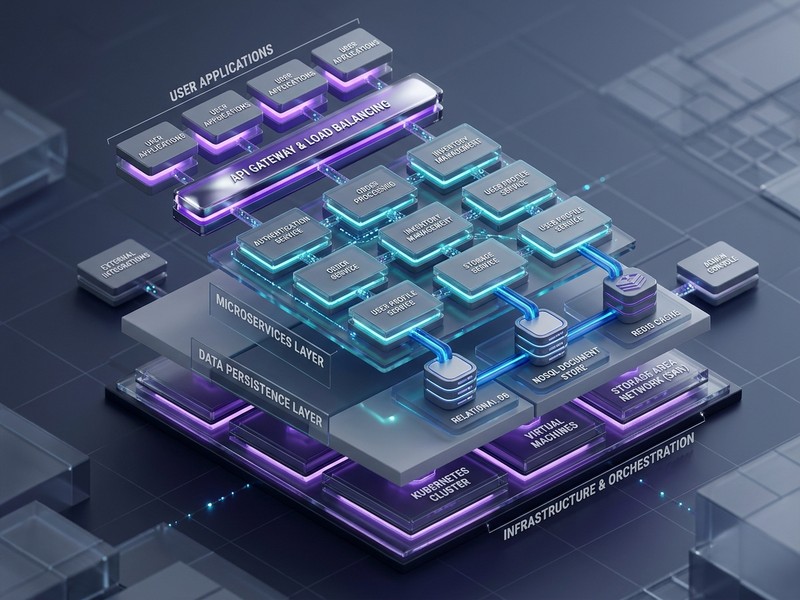
- Composable Architectures: Monolithic systems are dinosaurs. Businesses are adopting composable architectures, building applications from modular, independent components that can be easily assembled and reconfigured.
- Sustainability as a Driver: Consumers and investors are increasingly prioritizing sustainability. Digital transformation initiatives must incorporate environmental considerations.
- Skills Gap Intensifies: The demand for skilled data scientists, AI engineers, and cybersecurity experts far exceeds the supply. Companies must invest in training and upskilling their workforce.
- The Metaverse Integration Begins: While not fully mainstream, the metaverse is starting to impact specific industries (e.g., retail, entertainment, training). Forward-thinking companies are exploring metaverse applications.
The key takeaway is that digital transformation in 2026 is about more than just technology; it's about adapting to a complex and rapidly changing environment.
Deep Dive: Core Concepts - Frameworks and analysis
Effective digital transformation in 2026 hinges on three core concepts:
-
Data-Driven Decision Making: This goes beyond simple analytics. It involves building a data-centric culture, where every decision, from product development to marketing campaigns, is informed by data insights. This requires robust data governance, advanced analytics capabilities (including AI/ML), and the ability to democratize data access across the organization.
-
Agile & Iterative Development: Waterfall methodologies are obsolete. Organizations must embrace agile principles, breaking down large projects into smaller, manageable sprints, and continuously iterating based on feedback and data. This requires a shift in mindset, from rigid planning to flexible adaptation.
-
Customer-Centric Design: Every digital transformation initiative must start with the customer. Understanding their needs, pain points, and expectations is crucial for creating valuable and engaging experiences. This requires user research, customer journey mapping, and a relentless focus on customer satisfaction.
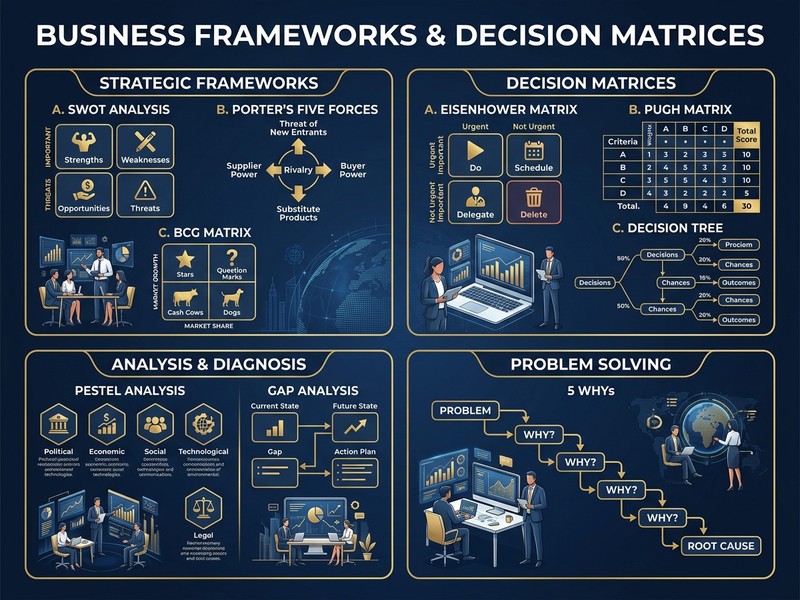
A useful framework for structuring digital transformation is the "Adapt, Automate, Augment" model:
- Adapt: Redesign your processes to be more agile and customer-centric. This often involves breaking down silos and empowering employees to make decisions.
- Automate: Automate repetitive tasks and processes using technologies like robotic process automation (RPA) and AI. This frees up employees to focus on more strategic and creative work.
- Augment: Enhance human capabilities with AI-powered tools and technologies. This can include everything from decision support systems to personalized learning platforms.
Comparison and Trade-offs - Tables with pros/cons
Here are some key technology choices with their respective trade-offs:
Table 1: Cloud Platform Comparison
| Feature | AWS | Azure | Google Cloud Platform (GCP) |
|---|---|---|---|
| Pros | Mature ecosystem, widest range of services, strong community support | Integrated with Microsoft ecosystem, strong for enterprise workloads | Leading in AI/ML, innovative data analytics, competitive pricing |
| Cons | Can be complex to manage, pricing can be opaque | Can be expensive for non-Microsoft shops, complexity | Smaller ecosystem, less mature in some areas |
| Ideal For | Startups to large enterprises, diverse workloads | Enterprises with strong Microsoft presence, hybrid cloud strategies | Data-intensive applications, AI/ML development, cost-sensitive projects |
Table 2: Data Architecture Comparison
| Feature | Data Lake | Data Warehouse | Data Mesh |
|---|---|---|---|
| Pros | Stores all types of data, flexible schema, cost-effective for large volumes | Structured data, optimized for reporting and analytics, strong governance | Decentralized data ownership, promotes agility and innovation, scales well |
| Cons | Can be difficult to govern, requires skilled data engineers | Rigid schema, can be expensive to scale, slow to adapt to changing needs | Requires strong organizational alignment, can be complex to implement and manage |
| Ideal For | Exploratory data analysis, AI/ML, data discovery | Business intelligence, reporting, dashboards | Large organizations with diverse data sources and decentralized teams |
Table 3: AI/ML Platform Comparison
| Feature | TensorFlow | PyTorch | scikit-learn |
|---|---|---|---|
| Pros | Mature, production-ready, strong community support, good for large-scale deployment | More flexible, easier to debug, favored by researchers | Easy to use, good for classical ML algorithms, well-documented |
| Cons | Steeper learning curve, can be less flexible | Can be less production-ready, requires more coding | Limited to classical ML, not suitable for deep learning |
| Ideal For | Large-scale AI deployment, production environments | Research and development, prototyping, complex models | Simple ML tasks, educational purposes |
Implementation Framework - Step-by-step guide
Here's a practical step-by-step framework for implementing a successful digital transformation strategy in 2026:
Phase 1: Assessment and Planning (Months 1-3)
- Conduct a Digital Maturity Assessment: Evaluate your current digital capabilities and identify areas for improvement.
- Define Clear Objectives: What specific business outcomes do you want to achieve (e.g., increased revenue, reduced costs, improved customer satisfaction)?
- Develop a Digital Transformation Roadmap: Outline the key initiatives, timelines, and resources required to achieve your objectives.
- Secure Executive Sponsorship: Gain buy-in from senior leadership and establish a dedicated digital transformation team.
- Choose the Right Technology Stack: Select the cloud platform, data architecture, and AI/ML tools that best fit your needs (refer to the comparison tables above).
Phase 2: Implementation and Execution (Months 4-12)
- Implement Agile Development Practices: Break down projects into smaller sprints and continuously iterate based on feedback.
- Build a Data-Driven Culture: Invest in data governance, analytics capabilities, and training for employees.
- Automate Repetitive Tasks: Use RPA and AI to automate manual processes and free up employees to focus on more strategic work.
- Personalize Customer Experiences: Leverage data and AI to deliver personalized content, offers, and services.
- Prioritize Data Security: Implement robust security measures to protect customer data and comply with data privacy regulations.
Phase 3: Measurement and Optimization (Ongoing)
- Track Key Performance Indicators (KPIs): Monitor your progress towards your objectives and identify areas for improvement.
- Gather Customer Feedback: Continuously solicit feedback from customers to understand their needs and expectations.
- Optimize Your Digital Transformation Strategy: Adapt your strategy based on data, feedback, and changing market conditions.
- Invest in Continuous Learning: Stay up-to-date on the latest technologies and trends and invest in training for your employees.
Decision Guide - How to choose
Choosing the right technologies and approaches for your digital transformation is critical. Here's a decision framework:
1. Business Needs First: Start by clearly defining your business objectives and the specific problems you're trying to solve. Don't let technology drive the process.
2. Assess Your Current Capabilities: Honestly evaluate your existing infrastructure, skills, and resources. Don't try to bite off more than you can chew.
3. Consider Your Budget: Determine how much you're willing to invest in digital transformation. Balance cost with performance and scalability.
4. Evaluate Technology Options: Research different technologies and vendors, paying attention to their strengths, weaknesses, and pricing models (refer to the comparison tables above).
5. Conduct Proof-of-Concepts (POCs): Before committing to a full-scale implementation, conduct POCs to test the technologies and validate their effectiveness.
6. Prioritize Security and Compliance: Ensure that all technologies and processes comply with relevant data privacy regulations and security standards.
7. Focus on User Experience: Design solutions that are user-friendly and intuitive. Don't sacrifice usability for functionality.
8. Build a Strong Team: Assemble a team of skilled professionals with the right expertise and experience.
9. Embrace Change Management: Digital transformation requires a significant shift in mindset and culture. Invest in change management to help employees adapt to the new ways of working.
10. Don't Be Afraid to Experiment: Digital transformation is an iterative process. Be willing to experiment with new technologies and approaches and learn from your mistakes.
Case Study or Real Example
Consider "HealthTech Innovations," a hypothetical healthcare provider struggling with outdated patient record systems and inefficient workflows. They embarked on a digital transformation focused on improving patient care and reducing administrative costs.
- Problem: Fragmented patient data, long wait times, high administrative overhead.
- Solution: Implemented a cloud-based electronic health record (EHR) system, integrated with AI-powered diagnostic tools and a patient portal.
- Implementation:
- Data Migration: Migrated patient data from legacy systems to the new EHR.
- AI Integration: Integrated AI algorithms for analyzing medical images and predicting patient risks.
- Patient Portal: Developed a patient portal for online appointment scheduling, medication refills, and access to medical records.
- Training: Provided comprehensive training for healthcare professionals on using the new system.
- Results:
- Reduced patient wait times by 25%.
- Improved diagnostic accuracy by 15%.
- Reduced administrative costs by 20%.
- Increased patient satisfaction by 30%.
HealthTech Innovations' success demonstrates the power of digital transformation to improve patient care and reduce costs when implemented strategically.
30-Day Action Checklist
Here's a practical 30-day checklist to kickstart your digital transformation:
Week 1: Assessment and Planning
- [ ] Schedule a meeting with key stakeholders to discuss digital transformation goals.
- [ ] Conduct a preliminary digital maturity assessment.
- [ ] Identify 3-5 quick wins that can be implemented in the short term.
- [ ] Define key performance indicators (KPIs) to track progress.
Week 2: Technology Evaluation
- [ ] Research potential cloud platforms, data architectures, and AI/ML tools.
- [ ] Contact vendors and request demos.
- [ ] Evaluate the pros and cons of different technology options (refer to the comparison tables above).
Week 3: Proof-of-Concept (POC)
- [ ] Select one or two technologies for a proof-of-concept.
- [ ] Define clear objectives and success criteria for the POC.
- [ ] Allocate resources and assign responsibilities.
- [ ] Conduct the POC and evaluate the results.
Week 4: Strategy and Roadmap
- [ ] Develop a digital transformation roadmap based on the assessment and POC results.
- [ ] Secure executive sponsorship and build a dedicated digital transformation team.
- [ ] Communicate the digital transformation strategy to the entire organization.
- [ ] Celebrate early successes and build momentum.
Bottom Line - Key takeaways
In 2026, digital transformation is no longer optional; it's essential for survival. The key takeaways are:
- Focus on Business Outcomes: Start with clear business objectives and let technology follow.
- Embrace Data-Driven Decision Making: Build a data-centric culture and leverage AI/ML to gain insights.
- Prioritize Customer Experience: Design solutions that are customer-centric and personalized.
- Adopt Agile Development Practices: Iterate quickly and adapt to changing needs.
- Invest in Security and Compliance: Protect customer data and comply with data privacy regulations.
- Build a Strong Team: Assemble a team of skilled professionals with the right expertise.
- Don't Be Afraid to Experiment: Digital transformation is an iterative process.
The companies that will thrive in 2026 are those that embrace these principles and continuously adapt to the ever-changing digital landscape.
Work With Versalence - CTA paragraph
Navigating the complexities of digital transformation in 2026 requires expertise and a strategic partner. Versalence specializes in helping businesses like yours develop and implement effective, data-driven digital transformation strategies. We provide end-to-end services, from assessment and planning to implementation and optimization, ensuring you achieve your desired business outcomes. Let us help you unlock the full potential of digital transformation and stay ahead of the competition.
📧 versalence.ai/contact.html | sales@versalence.ai