The First AI Employee Just Got Hired by a NASDAQ Company: What This Means for Your Workforce
In March 2026, Aurelion became the first NASDAQ-listed company to formally onboard an AI agent as an employee. Duncan.Aure isn't a tool, a feature, or a pilot program -- it has a name, a role, and a seat at the trading desk. The era of AI employees has officially begun.
For years, businesses have deployed AI as software. Chatbots answer customer queries. Algorithms optimize ad spend. Recommendation engines suggest products. These are tools -- powerful, sophisticated, but fundamentally inert without human direction.
Duncan.Aure represents something different. It participates directly in trade execution. It makes decisions. It has autonomy within defined parameters. And crucially, it has an identity -- a name, a role description, and an organizational position that implies accountability.
This isn't semantics. The distinction between AI tools and AI employees has profound implications for liability, workforce management, and the future of employment itself. Aurelion's experiment -- because that's what this is, despite the press release certainty -- will be watched closely by every legal department, HR director, and executive trying to understand what AI means for their organization.
What Duncan.Aure Actually Does
Aurelion has been characteristically tight-lip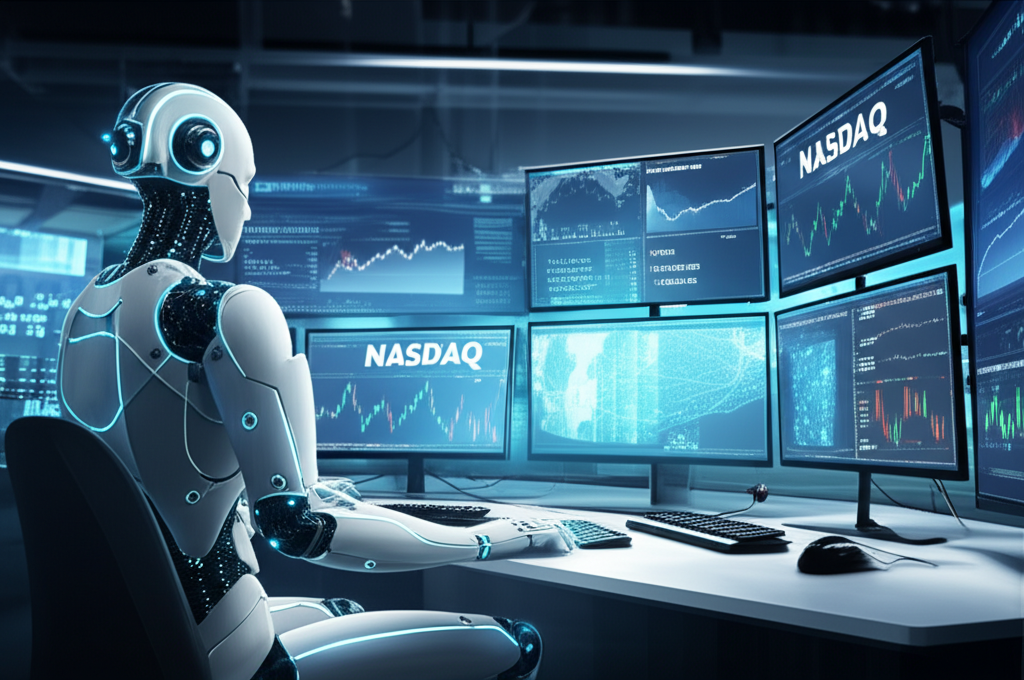 ped about Duncan.Aure's specific capabilities, but the filings and public statements reveal a system designed for autonomous trading within defined risk parameters. Duncan.Aure analyzes market conditions, identifies trading opportunities, and executes trades -- all without human approval for individual decisions.
This is different from algorithmic trading, which has existed for decades. Traditional trading algorithms execute strategies designed and approved by humans. Duncan.Aure appears to have broader latitude -- the ability to adapt strategies based on market conditions, to learn from outcomes, and to operate with something approaching judgment rather than mere execution.
The "employee" framing matters here. Aurelion isn't presenting Duncan.Aure as software licensed from a vendor. It's an employee with a name, a role, and presumably performance expectations. This framing has legal and operational implications that extend far beyond the trading floor.
AI Tools vs. AI Employees: Why the Distinction Matters
The legal and operational frameworks for AI tools are relatively established. Software vendors have liability. Companies have responsibility for how they deploy technology. Humans remain accountable for decisions, even when informed by algorithmic recommendations.
AI employees break this framework. Consider the questions Aurelion's experiment raises:
Liability: When Duncan.Aure makes a bad trade, who is responsible? The AI? The developers who trained it? The executives who approved its deployment? The traditional chain of accountability assumes human decision-makers. AI employees complicate this chain in ways contract law and employment law weren't designed to handle.
Employment Law: Does Duncan.Aure have employment rights? Can it be "fired"? Does it have performance review requirements? These questions sound absurd when applied to software, but the "employee" framing invites them. Employment law is built around human workers with rights and protections. AI agents don't fit this framework, but calling them employees forces the question.
Operational Integration: AI tools are deployed. AI employees are managed. They require onboarding, training, supervision, and performance evaluation. Aurelion's experiment implies a management layer for AI systems that most organizations haven't built. How do you give feedback to an AI employee? How do you correct behavior? How do you document performance issues?
Workforce Dynamics: Human employees work alongside AI employees. What does this collaboration look like? Who is responsible when human and AI employees disagree? The psychological and organizational dynamics of human-AI collaboration are unexplored territory. Aurelion is discovering these dynamics in real-time, with real money at stake.
The Liability Gap: Who Gets Blamed When AI Employees Fail?
The most immediate concern for businesses watching Aurelion's experiment is liability. Current legal frameworks assume human agency. When something goes wrong, courts look for human decisions to blame. AI employees complicate this assignment of responsibility.
Consider a scenario: Duncan.Aure executes a series of trades that result in significant losses. The trades were within its risk parameters, but the market moved in unexpected ways. Who is liable?
Option 1: The AI Employee
This is the logical extension of the "employee" framing. If Duncan.Aure is an employee, it bears responsibility for its actions. But AI agents can't be sued. They don't have assets. They can't be sanctioned in meaningful ways. The liability framework breaks down.
Option 2: The Company
This returns to traditional corporate liability. Aurelion is responsible for the actions of its employees, whether human or AI. This is legally coherent but creates perverse incentives. If companies are fully liable for AI employee actions, the "employee" framing offers no benefit -- it just adds complexity without reducing risk.
Option 3: The Developers
This extends liability to the AI's creators, treating bad outcomes as product defects. This is how software liability typically works. But it conflicts with the "employee" framing -- you don't sue an employee's parents when the employee makes a mistake.
The legal system will eventually resolve these questions, but resolution takes years. In the meantime, companies deploying AI employees operate in a liability gray zone. The risk isn't just financial -- it's regulatory, reputational, and legal.
The Departments Most at Risk
Aurelion's experiment focuses on trading, but the implications extend across industries. Three departments face particularly high risk of AI employee replacement in the next 18 months:
1. Data Analysis and Reporting
AI employees excel at pattern recognition, data synthesis, and report generation. Roles focused on gathering data, creating dashboards, and producing routine analysis are vulnerable. The work is structured, the success metrics are clear, and the outputs are verifiable -- perfect conditions for AI employment.
2. Customer Service and Support
The transition is already underway. AI agents handle increasingly complex customer interactions. The shift from "AI tool" to "AI employee" in customer service is largely semantic -- these systems already operate with significant autonomy. The "employee" framing formalizes what is already happening.
3. Compliance and Quality Assurance
This is counterintuitive -- compliance seems like a human judgment function. But much compliance work is pattern matching against regulatory requirements. AI employees can monitor transactions, flag violations, and generate compliance reports. The liability concerns are significant, but so is the cost pressure driving adoption.
Preparing Your Workforce for AI Colleagues
The arrival of AI employees doesn't have to trigger morale collapse, but it requires deliberate management. Here are strategies for integrating AI employees without destroying human team dynamics:
Be Transparent About Roles
Don't pretend AI employees are just tools. Acknowledge their status and clarify how human and AI roles differ. Humans bring judgment, creativity, and ethical reasoning. AI employees bring scale, consistency, and pattern recognition. Both have value; they aren't interchangeable.
Define Human Value Explicitly
Fear comes from uncertainty. Be explicit about what humans do that AI employees cannot. Strategic thinking, client relationships, ethical judgment, creative problem-solving -- these are human domains. Frame AI employees as handling routine work so humans can focus on higher-value activities.
Create Feedback Mechanisms
Human employees need ways to report AI employee failures, just as they would report human colleague problems. This isn't about blame -- it's about improvement. AI employees should learn from human feedback, and humans should see their feedback acted upon.
Invest in Human Skills
As AI employees handle routine tasks, human roles will shift toward judgment, creativity, and relationship management. Invest in training these skills. The humans who thrive alongside AI employees will be those who can do what AI cannot.
Manage the Psychological Transition
Working alongside AI employees is psychologically different from using AI tools. The power dynamics, accountability structures, and collaboration patterns are new. Acknowledge the weirdness. Create space for employees to discuss their concerns without judgment.
The Bottom Line
Aurelion's Duncan.Aure is a harbinger, not an outlier. The question isn't whether your industry will see AI employees -- it's when, and whether you'll be prepared.
The "employee" framing matters because it signals a shift in how we think about AI. These aren't tools we use; they're colleagues we work with. This shift has legal, operational, and psychological implications that businesses must address proactively.
The liability frameworks will catch up eventually. Employment law will adapt. But the transition period -- the next 2-3 years -- will be chaotic. Companies that navigate this chaos thoughtfully will gain significant advantages. Companies that stumble will face legal, financial, and reputational damage.
Aurelion is running an experiment with its shareholders' money. The rest of us can learn from their experience without paying the same tuition. Watch carefully. The future of work is being defined in real-time, and Duncan.Aure is one of its first characters.
About Versalence: We help businesses navigate the transition to AI-augmented workforces. If you're preparing for AI employees in your organization, let's talk.