
Technical Architecture: A Deep Dive for Thursday
Introduction - The AetherConnect Conundrum
The year is 2026. AetherConnect, a rapidly scaling SaaS platform, finds itself at a critical juncture. Their initial hyper-growth, fueled by a hastily adopted microservices architecture on a public cloud, has given way to crippling operational overhead. Cloud bills are spiraling, developer velocity is plummeting due to complex deployments and debugging, and system stability is a constant firefight. The promise of agility has been swallowed by the reality of distributed monoliths and an unsustainable cognitive load. Their leadership asks: "What worked for us in 2023 is now a liability. What actually works in 2026 to build resilient, cost-effective, and highly performant systems?" This isn't a hypothetical; it's the stark reality for many organizations grappling with the accelerating pace of technological evolution. Generic advice and buzzword-laden whitepapers offer little solace. True architectural efficacy in 2026 demands a deeply pragmatic, implementation-focused approach.
The Current Landscape - What's Happening in 2026
The architectural landscape in 2026 is characterized by a mature understanding of distributed systems, the pervasive integration of AI/ML, and an acute focus on operational and financial efficiency. We've moved beyond the initial hype cycles into a phase of consolidation and refinement.
* AI/ML as an Architectural Keystone: AI is no longer an isolated service; it's deeply woven into application logic, data pipelines, and operational intelligence. This means architectural patterns must accommodate real-time inference at the edge, efficient data ingestion for continuous model retraining, and robust MLOps platforms. Vector databases, specialized AI accelerators (GPUs, TPUs, NPUs), and distributed inference frameworks are now first-class architectural considerations.
* Distributed Systems Evolved, Not Just Decomposed: The "microservices everywhere" mantra has matured. We're seeing a strategic retreat from granular decomposition where it doesn't provide clear business value, favoring modular monoliths or service-based architectures for specific domains. Event-driven architectures (EDA) built on robust streaming platforms (e.g., Apache Kafka, Pulsar, NATS) are standard for asynchronous communication and data propagation, but synchronous RPC remains critical for request-response patterns.
* Platform Engineering as a Strategic Imperative: The complexity of cloud-native ecosystems has necessitated the rise of Platform Engineering. Internal Developer Platforms (IDPs) are critical for abstracting away infrastructure complexity, providing "golden paths" for common tasks, and empowering developer self-service. This reduces cognitive load, enforces architectural guardrails, and accelerates time-to-market.
* FinOps and Cloud Cost Optimization: Cloud spend is no longer an afterthought. FinOps principles are deeply embedded in architectural decision-making, driving choices around resource utilization, serverless adoption, data storage tiers, and intelligent workload scheduling. Architects are now directly accountable for cost efficiency alongside performance and scalability.
* Data Mesh and Data Fabric Maturity: Data is king, but its management has been democratized. Data Mesh principles, emphasizing domain-oriented data ownership and data-as-a-product, are gaining traction, often complemented by Data Fabric concepts for unified data access and governance across disparate sources. Real-time data processing and analytics are table stakes.
* Security by Design and Supply Chain Integrity: Zero-trust principles are foundational. Supply chain security, from source code to deployed artifacts, is paramount. Architectural decisions must inherently consider vulnerability management, secret management, identity and access management (IAM), and compliance from day one.
* Observability and AIOps: Comprehensive observability (logs, metrics, traces, events) is non-negotiable. AIOps tools leverage machine learning to correlate signals, predict outages, and automate incident response, transforming reactive operations into proactive management. eBPF is becoming a standard for deep, low-overhead introspection across the stack.
Deep Dive: Core Concepts - Frameworks and Analysis
To navigate this landscape, architects in 2026 rely on a blend of proven principles and emergent technologies.
1. Evolutionary Architecture & Fitness Functions:
Architecture is not static. It must evolve. The concept of "Architectural Fitness Functions" is crucial. These are objective measures that assess a system's architectural health against specific non-functional requirements (NFRs) and business goals.
* Example Fitness Functions:
<em>   </em>Latency Budget:* All API calls must complete within P99 < 150ms.
<em>   </em>Cost per Transaction:* Average cloud cost per user transaction < $0.001.
<em>   </em>Deployment Frequency:* Production deployments average > 5 per day with < 1% rollback rate.
<em>   </em>Data Consistency Lag:* Inter-service data replication lag < 500ms for critical data.
These functions guide architectural changes, ensuring they align with desired outcomes and prevent architectural drift.
2. Strategic Decomposition – Beyond Microservices Hype:
* Modular Monoliths Reconsidered: For many domains, especially those with stable bounded contexts or smaller teams, a well-structured modular monolith offers superior developer experience, simpler deployments, and lower operational overhead than premature microservices. Clear internal module boundaries, explicit interfaces, and strong encapsulation are key.
* Event-Driven Architectures (EDA) as the Glue: For truly distributed systems, EDA is paramount. Asynchronous communication via message brokers (Kafka, Pulsar) allows for loose coupling, resilience, and scalability. This pattern is particularly effective for:
* Data Synchronization: Propagating changes across services without direct coupling.
* Long-Running Processes: Orchestrating complex workflows.
* Real-time Analytics: Feeding data lakes/warehouses for immediate insights.
* Bounded Contexts (DDD): Irrespective of monolithic or microservice style, correctly identifying and defining bounded contexts remains the single most important exercise for managing complexity. It dictates where services (or modules) should be split and how data consistency is managed within and across these boundaries.
3. The Rise of WebAssembly (Wasm) as a Server-Side Runtime:
Wasm, once confined to browsers, is now a powerful, lightweight, and secure runtime for server-side applications, particularly at the edge.
* Key Advantages:
* Portability: Run code in any language compiled to Wasm on any OS/architecture.
* Security: Sandboxed execution environment, preventing arbitrary system access.
* Performance: Near-native speed, significantly faster cold starts than containers or traditional serverless functions.
* Resource Efficiency: Tiny footprint, ideal for edge computing, IoT, and high-density deployments.
* Use Cases in 2026:
* Edge Computing: Running business logic or AI inference close to data sources or users.
* Plugin Systems: Securely extending applications with user-provided code.
* Serverless Functions: As a faster, more efficient alternative to traditional FaaS platforms for specific workloads (e.g., Fastly Compute@Edge, Cloudflare Workers).
* Data Stream Processing: Lightweight, high-throughput processing nodes.
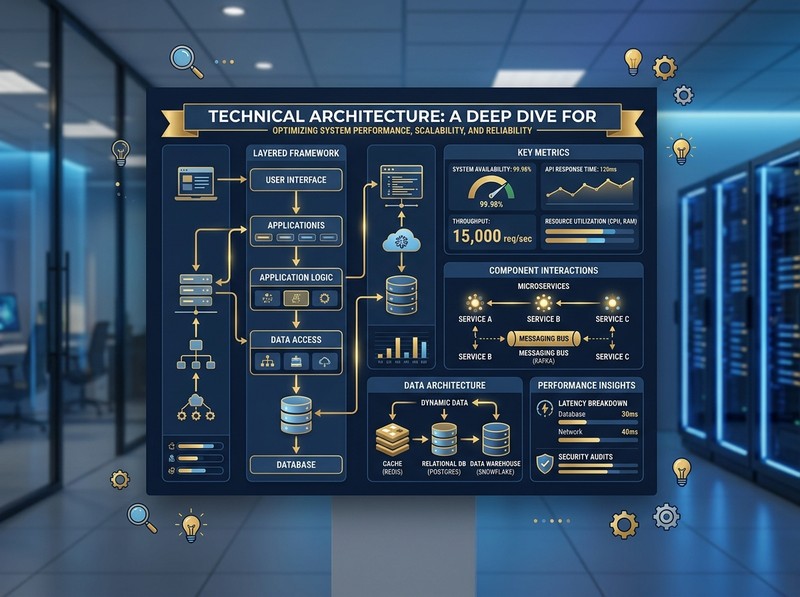
Comparison and Trade-offs - Tables with Pros/Cons
Choosing the right architectural style or technology stack involves navigating complex trade-offs. Here are three decision frameworks for common choices in 2026.
Table 1: Architectural Style Comparison for Business Domains
| Feature/Style | Modular Monolith | Evolved Microservices (EDA-driven) | Serverless FaaS (Event-driven) |
| :------------------ | :------------------------------------------------ | :----------------------------------------------------- | :-------------------------------------------------------------- |
| Development Speed | High (single codebase, simpler deployments) | Moderate (requires distributed system expertise) | High (focus on business logic, managed infrastructure) |
| Operational Comp. | Low (single deployment unit) | High (distributed debugging, service mesh, observability) | Low (vendor manages infra), but high for distributed state |
| Scalability | Moderate (vertical scaling, some horizontal) | High (independent scaling of services) | Very High (auto-scaling, pay-per-execution) |
| Cost Efficiency | Good (predictable resource usage) | Variable (can be high if not optimized, idle resources) | Excellent (pay-per-use, but can be complex to predict at scale) |
| Team Autonomy | Low (shared codebase, tight coupling) | High (independent teams, bounded contexts) | High (focus on individual functions/services) |
| Data Consistency | Strong (single database, ACID transactions) | Eventual (distributed transactions, sagas, CDC) | Eventual (often external data stores, message queues) |
| Best For | Early-stage products, stable domains, small teams | Complex, evolving domains, high scaling needs, large orgs | Event-driven, bursty, stateless workloads, high cost sensitivity |
Table 2: Data Architecture Approaches for Analytics & AI
| Feature/Approach | Data Warehouse (Traditional) | Data Lakehouse (Modern) | Data Mesh (Decentralized) |
| :------------------ | :------------------------------------------------ | :------------------------------------------------------ | :---------------------------------------------------------- |
| Data Types | Structured, pre-processed | Structured, semi-structured, unstructured (raw & refined) | All types (domain-owned, diverse formats) |
| Data Freshness | Batch processing (hours/days) | Near real-time (streaming, micro-batches) | Real-time (domain-specific pipelines, streaming) |
| Data Ownership | Centralized (IT/Data Team) | Centralized (Data Platform Team) | Decentralized (Domain Teams own data products) |
| Scalability | Moderate (often appliance-based) | High (cloud-native, distributed storage/compute) | Very High (distributed, independent domain scaling) |
| Cost | High (licensing, specialized hardware) | Moderate (cloud storage cheaper, compute scales) | Variable (depends on domain infra, but avoids central bottleneck) |
| Complexity | Moderate (ETL pipelines) | High (managing diverse data, transformations) | Very High (governance, interoperability across domains) |
| Analytics Cap. | BI, reporting, structured queries | BI, ML training, advanced analytics, data science | Domain-specific analytics, federated queries, ML integration |
| Best For | Stable reporting, historical analysis | Comprehensive data platform, ML/AI, diverse workloads | Large enterprises, federated data, domain expertise |
Table 3: Runtime Environments for Distributed Services in 2026
| Feature/Runtime | Containers (e.g., Kubernetes) | Serverless FaaS (e.g., Lambda, Azure Functions) | WebAssembly (Wasm) on Server/Edge |
| :------------------ | :------------------------------------------------ | :----------------------------------------------------- | :------------------------------------------------------ |
| Cold Start | Moderate (container image pull, runtime init) | High (OS/runtime boot, application init) | Very Low (near-instantaneous, sub-millisecond) |
| Resource Footprint | Moderate to High (full OS/runtime layer) | Low (minimal runtime per function) | Extremely Low (just the Wasm module, no full OS) |
| Portability | High (Docker images run anywhere with container runtime) | Moderate (vendor-specific APIs, runtime environment) | Very High (Wasm module runs on any Wasm host) |
| Vendor Lock-in | Low (open standards, self-managed) | High (tightly coupled to cloud provider's FaaS platform) | Low (open standard, multiple hosts/providers) |
| Operational Overhead | High (Kubernetes management, scaling, updates) | Low (managed by vendor, but monitoring still complex) | Very Low (simple host, lightweight orchestration) |
| Performance | Good (consistent, dedicated resources) | Variable (cold starts, execution limits) | Excellent (near-native speed, consistent) |
| Best For | Stateful services, long-running processes, microservices | Stateless, event-driven, bursty workloads, cost-sensitive | Edge computing, high-performance functions, plugins, security |
Implementation Framework - Step-by-Step Guide
Architecting effectively in 2026 requires a structured, iterative approach.
1. Phase 1: Contextualization & NFR Deep Dive (Weeks 1-2)
* Business Alignment: Work directly with product and business leadership to understand core value streams, strategic goals, and market pressures. Map these to architectural drivers.
* Quantitative NFRs: Translate abstract requirements (e.g., "scalable," "secure") into measurable, testable metrics. Define specific SLAs (e.g., P99 latency < 100ms), RTO/RPO targets, specific security compliance standards (e.g., ISO 27001, SOC 2), and cost per transaction/user targets.
* Current State Assessment: Document the existing architecture, identify pain points, technical debt, and existing bottlenecks. Use tools like value stream mapping to identify developer friction points.
2. Phase 2: Domain Modeling & Architectural Pattern Selection (Weeks 3-4)
* Domain-Driven Design (DDD): Conduct workshops to identify bounded contexts, aggregates, and ubiquitous language. This is foundational for effective decomposition, regardless of chosen style.
* Fitness Function Definition: Based on NFRs, define a set of architectural fitness functions. These will be automated tests or metrics that continuously validate architectural integrity.
* Pattern Matching: Evaluate architectural styles (modular monolith, microservices, serverless, event-driven) against your specific domain model and NFRs. Leverage the comparison tables above. Don't be afraid of a hybrid approach.
* Data Strategy: Decide on a data architecture (Data Lakehouse, Data Mesh, etc.) that aligns with data ownership, freshness, and analytical requirements. Plan for real-time data ingestion and processing.
3. Phase 3: Technology Radar & Platform Engineering Strategy (Weeks 5-6)
* Technology Spikes: For critical or novel requirements, conduct targeted technology spikes. For instance, if edge processing is vital, experiment with Wasm runtimes (e.g., Wasmtime, Spin) or specific edge platforms.
* Tooling & Ecosystem Selection: Choose core technologies (cloud provider, programming languages, databases, messaging queues, observability stack, CI/CD tools) based on fitness functions, team expertise, and ecosystem maturity. Prioritize open standards where possible to mitigate vendor lock-in.
* Platform Engineering Blueprint: Design the internal developer platform. Define "golden paths" for common tasks like service creation, deployment, monitoring, and secret management. Focus on self-service, GitOps principles, and developer experience. Tools like Backstage can be a starting point.
4. Phase 4: Build, Observe, and Evolve (Ongoing)
* Incremental Development: Implement the architecture incrementally, prioritizing core value streams. Use feature flags to roll out new components.
* Observability First: Embed comprehensive logging, metrics, and distributed tracing from day one. Leverage eBPF for deep kernel-level visibility. Automate anomaly detection with AIOps.
* Automated Fitness Function Testing: Integrate fitness functions into your CI/CD pipelines to prevent architectural decay.
* FinOps Integration: Continuously monitor cloud costs, attribute them to specific services/teams, and implement cost optimization strategies (e.g., right-sizing, reserved instances, serverless for appropriate workloads).
* Regular Review & Refinement: Schedule regular architectural reviews. Be prepared to adapt and evolve the architecture based on new business requirements, technological advancements, and operational feedback.
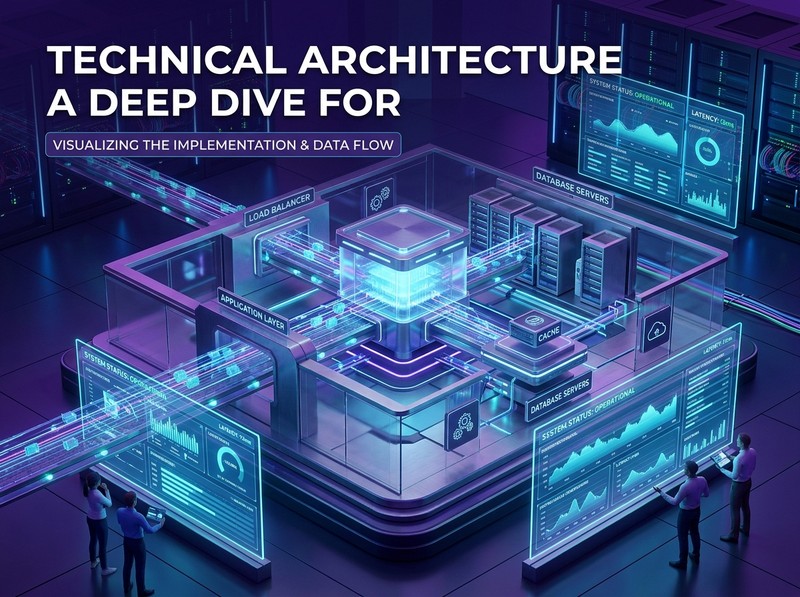
Decision Guide - How to Choose
Making architectural decisions in 2026 requires a structured, data-driven approach rather than relying on intuition or hype.
1. Weighted Attribute Scoring:
This framework helps objectively evaluate architectural options against your specific NFRs and business priorities.
| Architectural Attribute/NFR | Weight (1-5, 5=critical) | Option A Score (1-5) | Option B Score (1-5) | Option C Score (1-5) | Weighted Score A | Weighted Score B | Weighted Score C |
| :-------------------------- | :----------------------- | :------------------- | :------------------- | :------------------- | :--------------- | :--------------- | :--------------- |
| Scalability (P99 Latency) | 5 | 4 | 5 | 3 | 20 | 25 | 15 |
| Cost Efficiency | 4 | 3 | 4 | 5 | 12 | 16 | 20 |
| Developer Productivity | 4 | 5 | 3 | 4 | 20 | 12 | 16 |
| Operational Complexity | 3 | 4 | 2 | 5 | 12 | 6 | 15 |
| Security Posture | 5 | 4 | 5 | 4 | 20 | 25 | 20 |
| Time-to-Market | 3 | 5 | 3 | 4 | 15 | 9 | 12 |
| Talent Availability | 2 | 4 | 5 | 3 | 8 | 10 | 6 |
| TOTAL WEIGHTED SCORE | | | | | 107 | 103 | 104 |
* Process:
1. Identify Key Attributes: List all critical NFRs and business priorities relevant to the decision (e.g., scalability, cost, security, developer experience, maintainability, vendor lock-in risk).
2. Assign Weights: For each attribute, assign a weight (e.g., 1-5) reflecting its importance to the business.
3. Define Options: Outline 2-3 viable architectural options (e.g., Modular Monolith, Event-Driven Microservices, Serverless-first).
4. Score Options: For each option, score how well it addresses each attribute (e.g., 1-5, 5=excellent). This often requires research, proof-of-concepts, and expert opinion.
5. Calculate Weighted Score: Multiply the score by the weight for each attribute, then sum the weighted scores for each option.
6. Analyze & Decide: The option with the highest total weighted score is generally the most aligned. However, don't blindly follow the numbers. Use this as a structured discussion tool, highlighting trade-offs and risks.
2. Risk-Driven Analysis:
Beyond scoring, explicitly identify and mitigate risks for each option.
* Technical Risks: Complexity, integration challenges, performance bottlenecks, scalability limits.
* Operational Risks: Monitoring gaps, deployment complexity, incident response, talent availability for specific technologies.
* Business Risks: Vendor lock-in, cost overruns, time-to-market delays, inability to meet future demands.
* Mitigation Strategies: For each identified risk, propose concrete mitigation strategies.
3. Incremental Adoption & Reversibility:
Favor decisions that allow for incremental adoption and provide clear off-ramps or reversibility. Avoid "big bang" rewrites. Can a new architectural component be introduced alongside existing ones? Can a service be migrated to a new runtime without rewriting the entire application?
Case Study: QuantEdge Solutions' Hybrid Evolution
QuantEdge Solutions, a rapidly expanding FinTech firm specializing in real-time algorithmic trading and fraud detection, faced a classic dilemma in late 2025. Their monolithic Java application, while stable, was struggling to keep up with the millisecond-latency requirements of market data processing and the rapid iteration needed for new AI-driven fraud models. Cloud costs were spiraling due to over-provisioned VMs.
The Challenge:
* Latency: Processing market data and executing trades required sub-10ms latency.
* Scalability: Handling millions of market events per second, with bursts during peak trading hours.
* AI Integration: Deploying and updating hundreds of machine learning models for fraud detection and predictive analytics in real-time.
* Cost Control: Reduce significant cloud spend on underutilized infrastructure.
* Developer Velocity: Accelerate feature delivery for new trading strategies.
QuantEdge's 2026 Architectural Solution:
QuantEdge adopted a hybrid event-driven architecture leveraging a combination of evolved microservices, serverless, and cutting-edge WebAssembly for specific use cases.
1. Core Trading Engine (Evolved Microservices): The critical, low-latency trading engine was decomposed into a few, highly optimized microservices. These were deployed on Kubernetes, but with significant investment in FinOps (right-sizing, spot instances, custom autoscaling) and a service mesh (Istio) for traffic management, observability, and security. Data consistency was managed using Change Data Capture (CDC) from a high-performance transactional database into Apache Kafka.
2. Market Data Ingestion (Stream Processing & Wasm at Edge): Raw market data feeds (millions of events/sec) were ingested directly into Apache Kafka. For initial filtering, normalization, and basic anomaly detection at the edge (colocated with data sources), QuantEdge deployed lightweight Wasm modules. These Wasm functions, written in Rust, offered ultra-low latency processing and minimal resource footprint, significantly reducing the data volume sent to the central cloud for further processing.
3. AI/ML Model Inference (Serverless & Wasm):
* Fraud Detection: High-volume, low-latency fraud detection models were deployed as Wasm modules on Fastly Compute@Edge, allowing inference to happen geographically closer to the user/transaction source, minimizing round trips. These Wasm modules consumed transaction data from an event stream and published fraud alerts back to Kafka.
* Predictive Analytics & Batch Inference: Less latency-sensitive AI models for market prediction or portfolio optimization were deployed as serverless functions (AWS Lambda) triggered by data events in S3 or Kafka. This provided cost efficiency by scaling down to zero when not in use.
4. Data Mesh for Analytics: QuantEdge implemented a Data Mesh strategy. Each business domain (e.g., Equity Trading, Derivatives, Risk Management) owned its operational data and was responsible for publishing "data products" (curated, discoverable, trustworthy datasets) to a central Data Lakehouse built on Databricks. This empowered domain teams to build their own analytical tools and AI models without bottlenecking a central data team.
5. Platform Engineering: A dedicated Platform Engineering team built an internal developer platform using Backstage. This provided self-service templates for creating new services (Kubernetes manifests, Lambda functions, Wasm modules), automated CI/CD pipelines, and integrated observability dashboards. This significantly boosted developer velocity and enforced architectural standards.
Outcome:
QuantEdge achieved a 30% reduction in cloud costs, a 4x improvement in developer velocity, and met its sub-10ms latency targets for critical trading operations. The strategic use of Wasm for edge processing and serverless for bursty AI workloads proved instrumental in achieving both performance and cost efficiency.
30-Day Action Checklist
For architects and technical leaders looking to modernize their systems in 2026, here’s a practical, actionable checklist.
Week 1: Assess and Define
* [ ] Conduct an Architectural Health Check: Document your current architecture, identifying key pain points, technical debt hotspots, and operational bottlenecks. Interview key stakeholders (product, engineering, operations) to gather qualitative feedback.
* [ ] Define Critical NFRs for the Next 12-24 Months: Translate business goals into measurable non-functional requirements (e.g., "reduce P99 latency by 20%", "decrease cloud spend by 15%", "achieve 99.99% uptime"). Prioritize these.
* [ ] Identify 1-2 Key Business Value Streams: Focus your initial architectural efforts on areas that will deliver the most immediate business impact or are experiencing the most pain.
Week 2: Frameworks and Fitness
* [ ] Establish Architectural Fitness Functions: Based on your NFRs, define 3-5 objective, measurable fitness functions. These should be testable and ideally automatable (e.g., latency budget, cost per transaction, deployment frequency, security scan pass rate).
* [ ] Initiate Domain-Driven Design (DDD) Workshops: For your chosen value streams, conduct initial DDD sessions to identify bounded contexts, aggregates, and key entities. This is crucial for guiding decomposition.
* [ ] Review Current Observability Stack: Evaluate your logging, metrics, and tracing capabilities. Identify gaps and opportunities to leverage AIOps or eBPF for deeper insights.
Week 3: Strategic Exploration
* [ ] Conduct a Targeted Tech Radar Exercise: For 1
Work With Versalence
At Versalence AI, we specialize in building tailored AI solutions that fit your unique business needs. From intelligent chatbots to complete workflow automation, our team combines the best tools—OpenClaw, Botpress, n8n, Flowise, and custom web applications—to deliver solutions that actually work. Whether you're looking to streamline operations, improve customer engagement, or implement cutting-edge AI systems, we bring the expertise and flexibility to make it happen.
📧 versalence.ai/contact.html | sales@versalence.ai