
Ai Automation Trends: What Actually Works in 2026
Introduction - Hook with real problem
Sarah, the CTO of a rapidly growing e-commerce company, is facing a familiar problem: scaling operations without exploding costs. Customer support tickets are piling up, fulfillment errors are increasing, and her development team is stretched thin. She's heard the promises of AI automation, but the reality so far has been disappointing – expensive pilots that delivered marginal improvements, and vendor lock-in that feels like a digital cage. In 2023, AI was the shiny new toy. In 2026, Sarah needs solutions that demonstrably work and deliver a clear ROI, not just hype. This is the challenge facing many leaders today: navigating the AI automation landscape to find genuinely effective solutions. This post will cut through the noise and focus on what actually works in 2026, providing a practical guide for business leaders, CTOs, and founders looking to leverage AI for real-world impact.
The Current Landscape - What's happening in 2026
The AI automation landscape in 2026 is vastly different from even two years prior. The "AI winter" of underwhelming results and inflated expectations has largely passed. We're now in a period of pragmatic application. Several key trends are shaping the market:
- The Rise of Domain-Specific AI: General-purpose AI models are still valuable, but the biggest gains are being made with AI tailored to specific industries and business functions. Think AI for fraud detection in finance, AI for optimizing supply chains in manufacturing, or AI for personalized learning in education.
- Composable AI is King: The "all-in-one" AI platform is dead. Businesses are increasingly building custom AI solutions by combining pre-trained models, open-source tools, and proprietary data. This allows for greater flexibility and control.
- Human-in-the-Loop is Essential: Full automation is rarely feasible or desirable. The most successful AI implementations involve humans working alongside AI systems, handling complex cases, providing feedback, and ensuring ethical oversight. This is particularly true in areas like customer service and healthcare.
- Edge AI is Maturing: Processing data closer to the source (e.g., in factories, retail stores, or connected vehicles) is becoming more common, enabling faster response times and reduced reliance on cloud infrastructure.
- Focus on AI Governance and Explainability: With increased scrutiny from regulators and the public, businesses are prioritizing AI governance frameworks and ensuring that AI systems are transparent and explainable. This includes bias detection and mitigation.
Deep Dive: Core Concepts - Frameworks and analysis
To understand what "works," we need to delve into the core concepts driving successful AI automation:
- Data-Centric AI: Forget the algorithm-first approach. In 2026, data quality and quantity are paramount. Focus on cleaning, labeling, and augmenting your data before investing in complex models. The better the data, the better the AI.
- Reinforcement Learning for Dynamic Optimization: Reinforcement learning (RL) is proving incredibly powerful for optimizing dynamic processes, such as pricing, inventory management, and robotics. RL agents learn by trial and error, adapting to changing conditions in real-time.
- Generative AI Beyond Content Creation: While generative AI is known for creating text, images, and audio, its potential extends far beyond. It's being used for code generation, drug discovery, and even the design of new materials.
- Knowledge Graphs for Contextual Understanding: Knowledge graphs represent entities and relationships in a structured way, providing AI systems with the context they need to make informed decisions. This is particularly useful for applications like customer service and fraud detection.
Framework for Evaluating AI Opportunities:
Consider the following questions when assessing potential AI automation projects:
- Business Impact: How will this AI solution improve key business metrics (e.g., revenue, cost, customer satisfaction)?
- Data Availability: Do we have sufficient high-quality data to train and validate the AI model?
- Technical Feasibility: Do we have the technical expertise and infrastructure to build and deploy the AI solution?
- Ethical Considerations: Are there any potential ethical risks associated with this AI solution (e.g., bias, privacy)?
- Human Integration: How will humans work alongside the AI system? What training will be required?
Comparison and Trade-offs - Tables with pros/cons
Choosing the right AI automation approach involves understanding the trade-offs:
Table 1: AI Model Deployment Options
| Option | Pros | Cons | Best For |
|---|---|---|---|
| Cloud-Based | Scalable, easy to deploy, access to pre-trained models, lower upfront costs | Vendor lock-in, data privacy concerns, latency issues, reliance on internet connectivity | Startups, SMEs, applications requiring high scalability, projects with limited internal AI expertise |
| On-Premise | Greater control over data, improved security, lower latency, no vendor lock-in | Higher upfront costs, requires significant internal AI expertise, more complex to scale | Large enterprises, organizations with strict data privacy requirements, applications requiring real-time processing, highly sensitive data handling |
| Edge Computing | Low latency, reduced reliance on internet connectivity, improved privacy | Limited computing resources, more complex to manage, requires specialized hardware, data synchronization | IoT devices, autonomous vehicles, applications requiring real-time processing in remote locations, environments with unreliable internet connectivity |
Table 2: AI Model Development Approaches
| Approach | Pros | Cons | Best For |
|---|---|---|---|
| Build from Scratch | Complete control, tailored to specific needs, potential for innovation | Time-consuming, expensive, requires significant AI expertise, high risk of failure | Organizations with unique requirements, large budgets, and strong AI teams, applications where pre-trained models are inadequate |
| Fine-Tune Pre-trained | Faster development, lower cost, leverage existing knowledge | Limited control, may not be perfectly suited to specific needs, requires labeled data for fine-tuning | Most common approach, suitable for a wide range of applications, organizations with limited AI expertise but access to relevant data |
| Use AutoML Platforms | Easy to use, rapid prototyping, automated model selection | Limited control, "black box" approach, may not achieve optimal performance, potential vendor lock-in | Small businesses, organizations with limited AI expertise, projects requiring rapid prototyping, situations where explainability is not critical |
Implementation Framework - Step-by-step guide
Implementing AI automation successfully requires a structured approach:
- Identify a High-Impact Use Case: Start with a problem that is both important to the business and amenable to AI automation.
- Assess Data Availability and Quality: Ensure you have sufficient high-quality data to train and validate your AI model. Clean, label, and augment your data as needed.
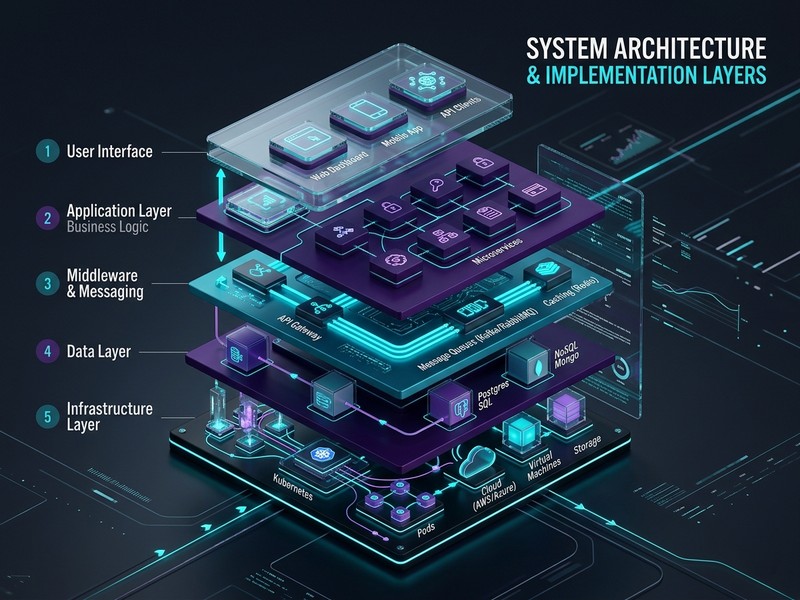
- Choose the Right Technology Stack: Select the appropriate AI models, tools, and infrastructure based on your specific needs and constraints. Consider cloud-based platforms, on-premise solutions, or edge computing.
- Build a Prototype: Develop a proof-of-concept to validate your approach and demonstrate the potential value of the AI solution.
- Deploy and Monitor: Deploy the AI solution in a production environment and continuously monitor its performance. Retrain the model as needed to maintain accuracy.
- Iterate and Improve: Continuously iterate on your AI solution based on feedback and performance data. Consider adding new features or improving the model's accuracy.
Decision Guide - How to choose
Choosing the right AI automation solution requires careful consideration of your specific needs and constraints. Here's a decision framework:
- Define Your Business Goals: What are you trying to achieve with AI automation? (e.g., reduce costs, increase revenue, improve customer satisfaction)
- Assess Your Data Maturity: How well-prepared is your data for AI? (e.g., clean, labeled, accessible)
- Evaluate Your Technical Capabilities: Do you have the internal expertise to build and deploy AI solutions? (e.g., data scientists, machine learning engineers)
- Consider Your Budget: How much are you willing to invest in AI automation? (e.g., software licenses, hardware, consulting services)
- Prioritize Explainability and Governance: How important is it that your AI systems are transparent and explainable? (e.g., regulatory compliance, ethical considerations)
If you have limited data, limited technical expertise, and a tight budget, start with a cloud-based AutoML platform. If you have abundant data, strong technical capabilities, and a larger budget, consider building a custom AI solution from scratch. If you have specific data privacy requirements, consider deploying your AI solution on-premise or using edge computing. Always prioritize explainability and governance, especially in highly regulated industries.
Case Study or Real Example
Consider a large logistics company struggling with inefficient route planning. Using reinforcement learning (RL), they developed an AI system that optimized delivery routes in real-time, taking into account traffic conditions, weather patterns, and driver availability. The RL agent learned from historical data and continuously adapted to changing conditions. The result? A 15% reduction in fuel costs, a 10% improvement in on-time deliveries, and a significant increase in driver satisfaction. This demonstrates the power of domain-specific AI and reinforcement learning for optimizing complex processes. The key was focusing on high-quality data, a well-defined reward function for the RL agent, and continuous monitoring and retraining.
30-Day Action Checklist
Here's a practical checklist to get started with AI automation:
- Day 1-3: Identify a high-impact use case. Focus on a problem that is both important to the business and amenable to AI automation.
- Day 4-7: Assess your data availability and quality. Clean, label, and augment your data as needed.
- Day 8-14: Research and evaluate different AI models, tools, and infrastructure.
- Day 15-21: Build a prototype to validate your approach.
- Day 22-28: Deploy the AI solution in a limited production environment.
- Day 29-30: Monitor performance and gather feedback.
Bottom Line - Key takeaways
AI automation in 2026 is about pragmatism and ROI. Focus on domain-specific AI, composable architectures, human-in-the-loop, and data-centric approaches. Start with a clear business problem, assess your data maturity, choose the right technology stack, and prioritize explainability and governance. Don't get caught up in the hype; focus on solutions that deliver real value. By following a structured implementation framework and continuously iterating on your AI solutions, you can unlock the transformative power of AI automation and drive significant business impact.
Work With Versalence - CTA paragraph
Ready to unlock the potential of AI automation for your business? Versalence specializes in building custom AI solutions tailored to your specific needs. We combine cutting-edge AI technology with deep industry expertise to deliver measurable results. From data strategy to model deployment, we provide end-to-end support to help you succeed. Contact us today for a free consultation.
📧 versalence.ai/contact.html | sales@versalence.ai