Product Roadmap Updates: A Deep Dive for Tuesday
Introduction - Hook with real problem
Imagine this: it's Q3 2026. Your customer support team is drowning in tickets about a feature that's been "coming soon" for six months according to the publicly available product roadmap. Sales are losing deals because competitors actually have that feature. Operations is scrambling to find workarounds to bridge the gap, wasting valuable engineering time. The culprit? A product roadmap update process that's more smoke and mirrors than substance. In 2026, generic "roadmap updates" just don't cut it. Your customers, your sales team, and your internal operations demand – and deserve – more. This blog post dives deep into what actually works in product roadmap updates, moving beyond vague promises to actionable intelligence.
The Current Landscape - What's happening in 2026
In 2026, several key trends are shaping the product roadmap update landscape:
- Hyper-Personalization: Customers expect personalized experiences, and that extends to product roadmaps. Generic, one-size-fits-all roadmaps are increasingly ineffective. Segmenting roadmaps based on customer type, plan level, or industry vertical is becoming the norm.
- Real-Time Transparency: Static PDFs and quarterly webinars are relics of the past. Interactive, real-time roadmaps integrated with feedback mechanisms are essential. Tools that allow customers to upvote features, provide direct feedback, and track progress in real-time are gaining traction.
- Data-Driven Prioritization: "Gut feeling" roadmaps are a recipe for disaster. Product decisions must be driven by data from multiple sources: customer feedback, usage analytics, market research, and competitive analysis. AI-powered tools are helping to synthesize this data and identify the most impactful features.
- Cross-Functional Alignment: Siloed product development is a thing of the past. Successful roadmap updates require seamless collaboration between product, engineering, sales, marketing, customer support, and operations. Regular cross-functional meetings and shared visibility into the roadmap are critical.
- Agile Adaptability: The market moves fast. Roadmaps must be flexible and adaptable to changing customer needs and competitive pressures. Frequent updates, iterative development, and a willingness to pivot are essential for staying ahead of the curve.
Deep Dive: Core Concepts - Frameworks and analysis
At the heart of effective roadmap updates lies a fundamental shift in perspective. It's no longer about just telling people what you're building; it's about engaging them in the process. Here are some core frameworks to consider:
- Jobs-to-be-Done (JTBD): Focus on the underlying needs and motivations of your customers. Instead of simply listing features, explain how those features will help customers achieve their goals. "Improved Reporting" is less compelling than "Gain actionable insights into your sales performance to close more deals."
- Impact/Effort Matrix: Prioritize features based on their potential impact on key business metrics (e.g., customer satisfaction, revenue growth, cost reduction) and the effort required to implement them. This helps to focus on the high-impact, low-effort opportunities.
- RICE Scoring (Reach, Impact, Confidence, Effort): A more granular approach to prioritization that considers reach (how many people will be affected), impact (how much will they be affected), confidence (how confident are you in your estimates), and effort (how much time will it take).
- Now/Next/Later Roadmap: A simple but effective framework for visualizing the product roadmap. "Now" features are currently in development, "Next" features are planned for the near future, and "Later" features are under consideration. This helps to manage expectations and communicate priorities.
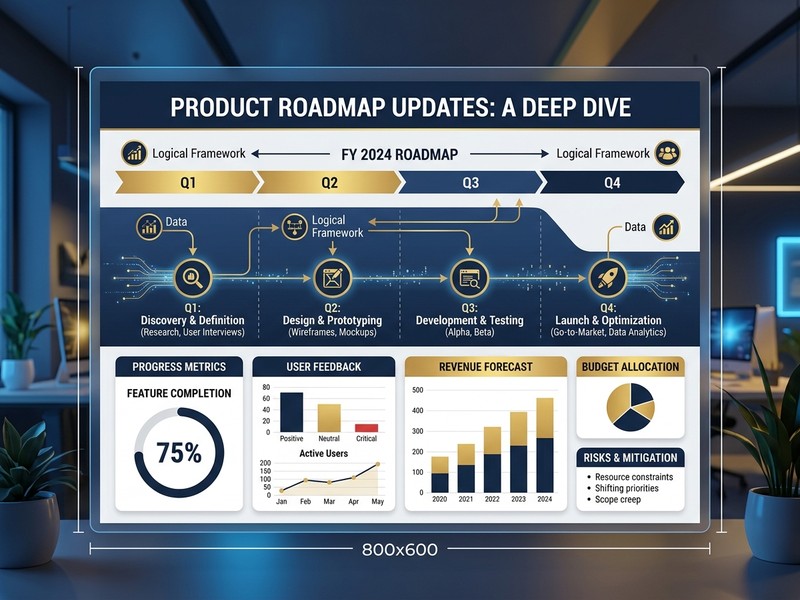
Comparison and Trade-offs - Tables with pros/cons
Here are two tables comparing different roadmap update approaches:
Table 1: Roadmap Update Frequency
| Approach | Frequency | Pros | Cons | Best Suited For |
|---|---|---|---|---|
| Quarterly | Every 3 months | Predictable, easier to manage, allows for significant updates. | Can feel slow and unresponsive, especially in fast-moving markets. Misses opportunities. | Stable markets, long development cycles, enterprise software. |
| Monthly | Every month | More responsive, keeps stakeholders informed, allows for course correction. | Requires more effort, can be disruptive, may lead to "feature bloat". Can feel overwhelming. | Rapidly evolving markets, agile development, SaaS products. |
| Continuous | Ongoing | Highly responsive, maximum transparency, fosters collaboration. | Can be difficult to manage, requires significant resources, can be overwhelming for stakeholders. | Highly agile organizations, open-source projects, developer tools. |
Table 2: Roadmap Communication Methods
| Method | Description | Pros | Cons | Best Suited For |
|---|---|---|---|---|
| Static PDF | A document shared via email or download. | Simple to create, easy to distribute, requires minimal technical expertise. | Static, lacks interactivity, difficult to update, no feedback mechanism. | Internal communication only, very limited use cases. |
| Webinar | A presentation delivered online. | Allows for live Q&A, provides a personal touch, can be recorded for later viewing. | Requires significant preparation, can be time-consuming, lacks ongoing engagement. | Major roadmap announcements, strategic updates. |
| Interactive Tool | A dedicated platform for managing and sharing roadmaps. | Real-time updates, allows for feedback, provides a personalized experience, fosters collaboration. | Requires investment in technology, can be complex to implement, requires ongoing maintenance. | External and internal communication, SaaS and tech companies. |
Implementation Framework - Step-by-step guide
Here's a practical step-by-step guide to implementing effective roadmap updates in 2026:
- Define Your Audience: Segment your audience based on their needs and interests. Create distinct roadmaps for different customer groups, sales teams, and internal stakeholders.
- Choose the Right Tools: Select a roadmap management tool that supports real-time updates, feedback collection, and collaboration. Consider tools like Productboard, Aha!, or Versalence (see below).
- Gather Data: Collect data from multiple sources: customer surveys, user interviews, usage analytics, market research, and competitive analysis.
- Prioritize Features: Use a framework like RICE scoring or the Impact/Effort Matrix to prioritize features based on their potential impact and feasibility.
- Create a Visual Roadmap: Use a clear and concise visual format to communicate the roadmap. Consider using a Now/Next/Later format or a Gantt chart.
- Communicate the Roadmap: Share the roadmap with your audience through multiple channels: email, webinars, in-app notifications, and your company website.
- Collect Feedback: Actively solicit feedback on the roadmap from your audience. Use surveys, polls, and direct feedback mechanisms to gather input.
- Update the Roadmap Regularly: Update the roadmap frequently based on feedback and new data. Communicate changes transparently to your audience.
- Track Progress: Monitor the progress of features and communicate updates to your audience. Celebrate successes and acknowledge challenges.
- Iterate and Improve: Continuously evaluate the effectiveness of your roadmap update process and make adjustments as needed.

Decision Guide - How to choose
Choosing the right roadmap update approach depends on several factors:
- Company Size: Smaller companies may be able to get away with simpler tools and processes, while larger companies may need more sophisticated solutions.
- Industry: Companies in fast-moving industries may need to update their roadmaps more frequently than companies in stable industries.
- Customer Base: Companies with a large and diverse customer base may need to segment their roadmaps to meet the needs of different customer groups.
- Development Process: Companies with agile development processes may need to update their roadmaps more frequently than companies with waterfall development processes.
Decision Framework:
- Assess your current roadmap update process: What are the pain points? What's working well?
- Identify your key stakeholders: Who needs to be informed about the roadmap? What are their needs and expectations?
- Define your goals: What do you want to achieve with your roadmap updates? (e.g., increase customer satisfaction, improve sales conversion rates, reduce support tickets)
- Evaluate different roadmap update approaches: Consider the pros and cons of each approach, as outlined in the comparison tables above.
- Choose the approach that best meets your needs: Select the approach that aligns with your company size, industry, customer base, development process, and goals.
- Implement the approach: Follow the step-by-step guide outlined above.
- Monitor and evaluate: Track the effectiveness of your roadmap updates and make adjustments as needed.
Case Study or Real Example
Imagine "InnovateTech," a SaaS company selling project management software. They faced declining customer satisfaction and sales because their roadmap was a static PDF updated quarterly. Customers complained about lack of transparency, and sales struggled to sell features that were "coming soon" but with no clear timeline.
InnovateTech implemented an interactive roadmap using Productboard. They segmented their roadmap by customer type (enterprise vs. SMB) and integrated it with their Zendesk and Salesforce accounts. This allowed them to:
- Prioritize features based on customer feedback: They used Productboard's feedback collection tools to gather customer requests and prioritize features based on demand.
- Provide real-time updates: Customers could track the progress of features and see when they were expected to be released.
- Empower sales: Sales reps could use the roadmap to answer customer questions and build confidence in the product.
Within six months, InnovateTech saw a 20% increase in customer satisfaction and a 15% increase in sales conversion rates. Their support tickets related to roadmap inquiries decreased by 30%. The key was shifting from a static, opaque roadmap to an interactive, transparent one that engaged customers and empowered internal teams.
30-Day Action Checklist
Here's a 30-day action checklist to get you started:
Week 1:
- [ ] Audit your current roadmap process.
- [ ] Identify key stakeholders and their needs.
- [ ] Research and evaluate roadmap management tools.
- [ ] Choose a tool and set up a free trial.
Week 2:
- [ ] Segment your audience and create distinct roadmaps.
- [ ] Gather data from customer feedback, analytics, and market research.
- [ ] Prioritize features using RICE or Impact/Effort matrix.
- [ ] Create a visual roadmap using Now/Next/Later format.
Week 3:
- [ ] Communicate the roadmap to your stakeholders.
- [ ] Implement feedback collection mechanisms (surveys, polls).
- [ ] Train sales and support teams on how to use the roadmap.
- [ ] Monitor initial feedback and make adjustments.
Week 4:
- [ ] Update the roadmap based on initial feedback.
- [ ] Track progress of key features.
- [ ] Communicate updates to your audience.
- [ ] Schedule a review meeting to assess progress and plan next steps.
Bottom Line - Key takeaways
In 2026, effective product roadmap updates are not about simply sharing a list of features. They're about engaging your customers, empowering your internal teams, and driving business results. Key takeaways:
- Transparency is paramount: Provide real-time updates and be honest about timelines.
- Feedback is essential: Actively solicit and incorporate feedback from your audience.
- Personalization is key: Segment your roadmaps to meet the needs of different customer groups.
- Data-driven decisions: Prioritize features based on data, not just gut feeling.
- Collaboration is crucial: Foster seamless collaboration between product, engineering, sales, and support.
Work With Versalence - CTA paragraph
Ready to take your product roadmap updates to the next level? Versalence offers AI-powered solutions that help you gather customer feedback, prioritize features, and communicate your roadmap effectively. Our platform integrates seamlessly with your existing tools and provides real-time insights to help you make data-driven decisions. Stop guessing and start building products that your customers truly love. Learn more and request a demo today!
📧 versalence.ai/contact.html | sales@versalence.ai