Customer Success Stories: A Deep Dive for Tuesday
Introduction - Hook with real problem
Sarah, the VP of Customer Success at a rapidly growing SaaS company, StellarSolutions, is facing a familiar problem in 2026. They've invested heavily in personalization and proactive outreach, but their customer success stories are falling flat. They’re generating testimonials, sure, but those testimonials lack depth, fail to resonate with prospects, and ultimately don't drive the desired conversion rates. The issue? They're still relying on outdated methods that don't reflect the sophisticated needs and expectations of today’s tech-savvy buyers. They need to understand what actually works in crafting compelling customer success stories in 2026, beyond just collecting generic quotes. This means moving beyond simple testimonials and embracing data-driven, interactive, and highly personalized narratives.
The Current Landscape - What's happening in 2026
In 2026, the customer success landscape is defined by several key trends:
- Hyper-Personalization is Expected: Generic testimonials are dead. Customers expect to see themselves reflected in success stories, with details relevant to their specific industry, company size, and challenges. This necessitates a shift from broadstroke narratives to highly segmented and tailored stories.
- Data Drives Credibility: Anecdotes alone aren't enough. Quantifiable results and data-backed claims are crucial for building trust and demonstrating ROI. Success stories now routinely incorporate metrics, benchmarks, and comparative data to showcase the tangible impact of a product or service.
- Interactive and Immersive Experiences: Static PDFs are outdated. Modern success stories leverage interactive elements like embedded videos, interactive data visualizations, and personalized ROI calculators to engage prospects and provide a more immersive experience.
- AI-Powered Storytelling: AI tools are being used to analyze customer data, identify compelling narratives, and even generate initial drafts of success stories, freeing up customer success managers to focus on validation and refinement.
- Authenticity and Transparency are Paramount: Buyers are increasingly skeptical of overly polished or curated stories. Authenticity and transparency are critical for building trust. This means showcasing real challenges, acknowledging limitations, and featuring diverse voices.
- Micro-Storytelling is Rising: Shorter, more digestible success stories are gaining traction. These "micro-stories" focus on specific use cases or features and are easily shared on social media and embedded within product demos.
Deep Dive: Core Concepts - Frameworks and analysis
To create truly effective customer success stories in 2026, we need to move beyond surface-level tactics and embrace a more strategic framework. Here's a breakdown of key concepts:
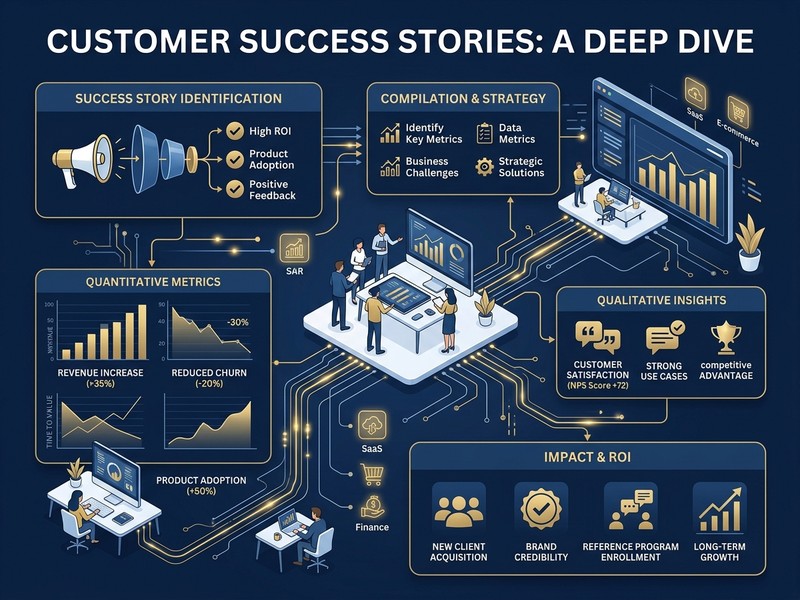
- The STAR Method (Situation, Task, Action, Result): This classic framework remains relevant, but it needs to be adapted for the modern context. Instead of simply documenting what happened, focus on highlighting the specific challenges the customer faced, the innovative solutions they implemented using your product, and the quantifiable results they achieved.
- The "Jobs to Be Done" Framework: Understand the underlying need or "job" that your product is fulfilling for the customer. Frame the success story around how your product helped the customer accomplish that job more effectively.
- The "Before and After" Transformation: Clearly articulate the "before" state (challenges, pain points, inefficiencies) and the "after" state (improvements, benefits, ROI). Use data to quantify the transformation.
- The "Hero's Journey" Narrative Arc: Structure the success story as a journey, with the customer as the hero, facing challenges, overcoming obstacles, and ultimately achieving success with the help of your product.
Analyzing the data from customer interactions is also key. What challenges are frequently mentioned? What features are most valued? What outcomes are most desired? Use this information to inform the focus and messaging of your success stories.
Comparison and Trade-offs - Tables with pros/cons
Here's a comparison of different approaches to creating customer success stories:
| Approach | Pros | Cons | Best For |
|---|---|---|---|
| Traditional Testimonial | Easy to collect, requires minimal effort. | Lacks depth, not data-driven, often generic and unconvincing. | Initial validation, quick wins, website social proof. |
| Case Study (PDF) | More in-depth than testimonials, allows for detailed explanation of challenges and solutions. | Static, not interactive, can be time-consuming to create, difficult to track performance. | Showcasing complex solutions, demonstrating in-depth understanding of customer needs, providing comprehensive documentation. |
| Video Case Study | Engaging, visually appealing, allows for direct customer testimonials. | More expensive to produce, requires careful planning and execution, can be difficult to update. | Building emotional connection, showcasing the personality of your brand, demonstrating the human impact of your product. |
| Interactive Story (Web) | Highly engaging, personalized, data-driven, allows for tracking and optimization. | More complex to create, requires technical expertise, may require ongoing maintenance. | Driving conversions, demonstrating ROI, providing a personalized experience, showcasing the value of your product in a compelling and interactive way. |
| AI-Generated Story | Fast, efficient, can analyze large amounts of data to identify compelling narratives. | Requires human validation and refinement, may lack authenticity, can be prone to bias. | Initial drafts, content creation assistance, identifying potential success story candidates. |
Here's a trade-off analysis between different content formats:
| Format | Speed of Creation | Cost | Engagement Level | Measurability | Personalization Potential |
|---|---|---|---|---|---|
| Text-Based | High | Low | Low | Medium | Low |
| Image-Based | Medium | Low-Medium | Medium | Medium | Medium |
| Video-Based | Low | High | High | High | Medium-High |
| Interactive | Low | Medium-High | High | High | High |
Implementation Framework - Step-by-step guide
Here's a step-by-step guide to implementing a modern customer success story strategy:
- Identify Ideal Candidates: Don't just focus on the "biggest" wins. Look for customers who represent your target audience, have faced relatable challenges, and have achieved measurable results. Use data to identify these candidates.
- Reach Out and Build Rapport: Start with a personalized email or phone call expressing your appreciation for their business and explaining the benefits of participating in a success story (e.g., increased visibility, thought leadership opportunities).
- Conduct a Structured Interview: Use the STAR method or the Jobs to Be Done framework as a guide. Ask open-ended questions and listen actively. Record the interview for transcription and analysis.
- Gather Data and Metrics: Request specific data points to quantify the results achieved. This could include metrics like increased revenue, reduced costs, improved efficiency, or enhanced customer satisfaction.
- Craft a Compelling Narrative: Weave together the interview insights and the data to create a compelling narrative that showcases the customer's journey and the impact of your product.
- Choose the Right Format: Select the format that best aligns with your target audience and your goals (e.g., interactive story, video case study, micro-story).
- Design an Engaging Experience: Pay attention to visual design, user experience, and interactivity. Make sure the story is easy to read, navigate, and share.
- Get Customer Approval: Share the draft with the customer and incorporate their feedback. Ensure they are comfortable with the final version.
- Promote and Distribute: Share the success story on your website, social media channels, and in your sales materials. Consider using paid advertising to reach a wider audience.
- Track and Measure Results: Monitor the performance of your success stories (e.g., page views, engagement, conversions). Use this data to optimize your strategy and improve future stories.

Decision Guide - How to choose
Choosing the right type of customer success story depends on several factors. Use this guide:
- Budget: Video case studies and interactive stories are more expensive to produce than traditional testimonials or PDF case studies.
- Target Audience: Consider your target audience's preferences and consumption habits. Are they more likely to watch a video or read a detailed case study?
- Complexity of Solution: If your product solves a complex problem, a more in-depth format like a PDF case study or an interactive story may be necessary.
- Desired Outcome: If your goal is to drive conversions, an interactive story with a clear call to action may be the most effective choice. If your goal is to build brand awareness, a video case study may be a better option.
- Data Availability: If you have access to detailed data and metrics, you can create a more data-driven and persuasive success story.
Here's a simple decision framework:
Question: What is your primary goal?
- Answer A: Drive Conversions: Interactive Story or Data-Rich Case Study.
- Answer B: Build Brand Awareness: Video Case Study or Engaging Micro-Story.
- Answer C: Showcase Complex Solutions: PDF Case Study or Detailed Interactive Story.
- Answer D: Quick Social Proof: Short Testimonial or Image-Based Quote.
Case Study or Real Example
Let's look at a hypothetical example. Imagine Versalence, an AI-powered customer success platform, wants to create a success story about how they helped a mid-sized e-commerce company, "ShopSpark," improve customer retention.
Instead of a generic testimonial, Versalence would create an interactive story. The story would begin by highlighting ShopSpark's challenges: high churn rate, low customer engagement, and difficulty personalizing customer interactions.
The interactive story would then showcase how ShopSpark used Versalence's AI-powered features to:
- Identify at-risk customers: Versalence's AI algorithms identified customers who were likely to churn based on their behavior and engagement patterns.
- Personalize outreach: Versalence helped ShopSpark create personalized email campaigns and in-app messages tailored to each customer's needs and preferences.
- Proactively address issues: Versalence alerted ShopSpark's customer success team to potential problems before they escalated, allowing them to proactively address customer concerns.
The story would conclude by showcasing the results: ShopSpark reduced its churn rate by 20%, increased customer engagement by 30%, and improved customer satisfaction scores by 15%. The interactive story would also include a personalized ROI calculator that allows prospects to estimate the potential benefits of using Versalence. This level of detail and interactivity makes the story compelling and convincing.
30-Day Action Checklist
Here's a 30-day checklist to kickstart your customer success story strategy:
Week 1: Planning and Research
- [ ] Define your goals and target audience.
- [ ] Identify potential success story candidates based on data and customer feedback.
- [ ] Research different success story formats and choose the right one for your needs.
- [ ] Create a list of questions to ask during customer interviews.
Week 2: Customer Outreach and Interviews
- [ ] Reach out to potential candidates and schedule interviews.
- [ ] Conduct structured interviews using the STAR method or the Jobs to Be Done framework.
- [ ] Gather data and metrics to quantify the results achieved.
Week 3: Content Creation and Design
- [ ] Craft a compelling narrative based on the interview insights and data.
- [ ] Design an engaging experience that is visually appealing and easy to navigate.
- [ ] Incorporate interactive elements to enhance engagement.
Week 4: Review, Promotion, and Tracking
- [ ] Share the draft with the customer and incorporate their feedback.
- [ ] Promote the success story on your website, social media channels, and in your sales materials.
- [ ] Track and measure the results to optimize your strategy.
Bottom Line - Key takeaways
In 2026, customer success stories need to be more than just feel-good anecdotes. They need to be data-driven, personalized, interactive, and authentic. By embracing these principles and following the implementation framework outlined above, you can create compelling stories that resonate with your target audience, drive conversions, and ultimately help you achieve your business goals. The key is to move beyond simple testimonials and embrace a more strategic, data-driven approach to storytelling.
Work With Versalence - CTA paragraph
Ready to revolutionize your customer success story creation? Versalence provides AI-powered tools to identify ideal candidates, analyze customer data, and generate compelling narratives. Stop relying on outdated methods and start crafting success stories that actually drive results. Contact us today to learn more about how Versalence can help you unlock the power of your customer success stories. 📧 versalence.ai/contact.html | sales@versalence.ai