Building for Compliance: How to Avoid a 3-Week Pre-Launch Crisis
The team was buzzing. Months of relentless coding, late-night strategy sessions, and countless cups of coffee had culminated in this moment. The product—an innovative, AI-powered customer support chatbot built on a powerful platform like Botpress—was feature-complete, stable, and performing brilliantly in the staging environment. The launch date was set. The marketing materials were ready. The champagne was literally on ice.
Then came the email from the legal department.
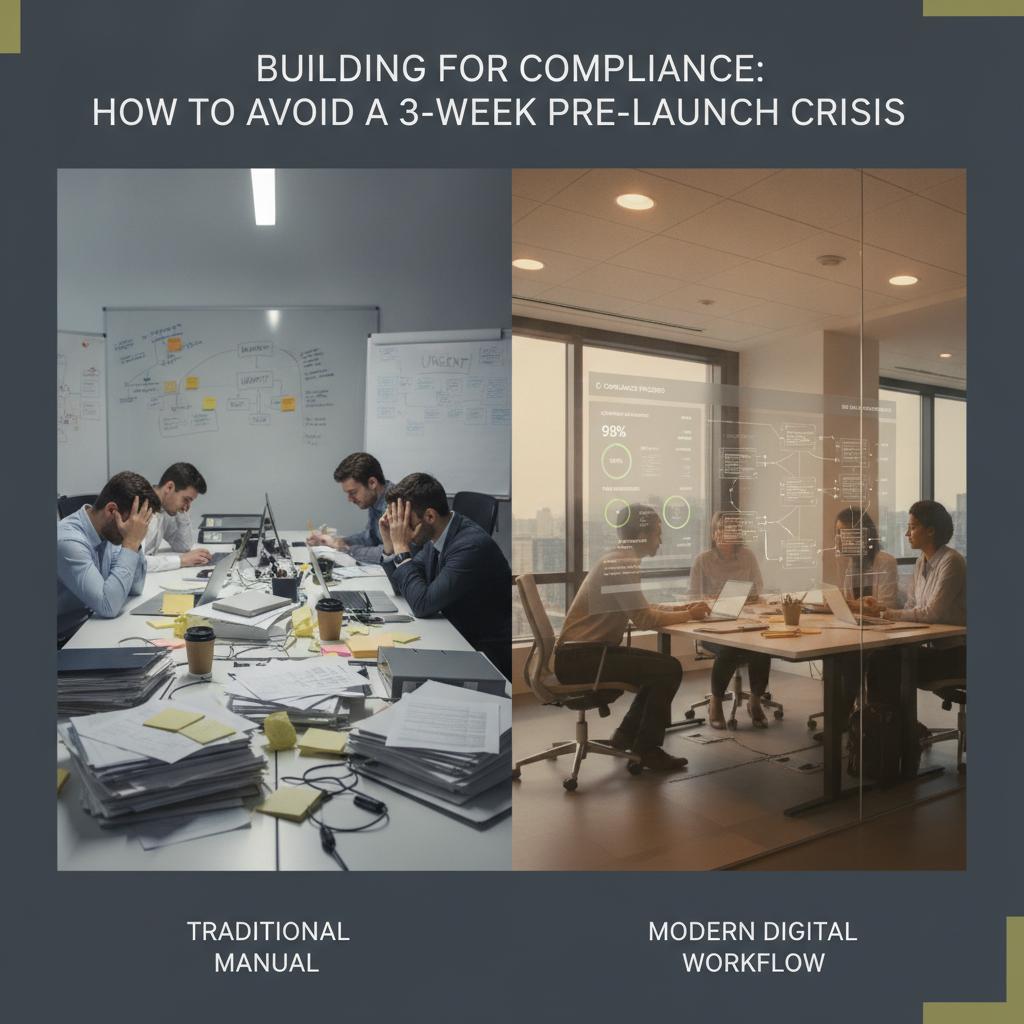
It started with "Following our initial compliance review..." and ended with the project being put on indefinite hold. A senior developer later described it as a "gut punch." The chatbot, designed to streamline user interactions, was handling Personally Identifiable Information (PII) in ways that hadn't been fully vetted against GDPR, CCPA, and half a dozen other regulations. The data logging was insufficient for audit trails, and the consent mechanisms were ambiguous.
What followed was a frantic, all-hands-on-deck, three-week scramble. The launch was scrapped. The marketing campaign was pulled. The engineering team, which should have been working on the next set of features, was now mired in refactoring core components, untangling data flows, and implementing a complex web of compliance controls. The "sprint" became a "marathon of remediation."
This story is fictional, but for countless companies, it's a painfully real scenario. According to a 2021 study by an IT consulting firm, nearly 75% of IT leaders have had a project delayed or completely derailed due to unforeseen compliance issues. That three-week surprise isn't an anomaly; it's a tragically common consequence of treating compliance as a final checkbox instead of a foundational principle.

At Versalence AI, we see this pattern constantly. Businesses invest heavily in innovation but neglect the guardrails that make that innovation viable and safe. The result is a high-stakes gamble where a single failed audit can cost millions in revenue, fines, and reputational damage. But it doesn't have to be this way. By embedding compliance into the development lifecycle from day one, you can turn a potential crisis into a competitive advantage.
The Business Impact: More Than Just a Delay
A last-minute compliance failure is not just an engineering problem; it’s a multi-faceted business catastrophe that ripples across the entire organization. Understanding the true cost is the first step toward preventing it.
1. Crippling Financial Costs
The most immediate impact is financial. The three weeks of developer time in our story weren’t free. Let’s break it down: a team of six senior engineers, a project manager, and a DevOps specialist working full-time on remediation easily costs a company tens of thousands of dollars in salaries alone, with zero forward progress on the product roadmap.
This is just the tip of the iceberg. The cost of non-compliance itself is staggering. A single GDPR violation can result in fines of up to €20 million or 4% of global annual turnover, whichever is higher. For a company handling sensitive health data, a HIPAA violation can lead to penalties of up to $1.5 million per year. These aren't abstract threats; they are real, balance-sheet-altering risks. The cost of building for compliance from the start is a tiny fraction of the cost of a single major fine.
2. Erosion of Market Trust and Reputation
A delayed launch sends a negative signal to the market, your investors, and your customers. It suggests a lack of foresight and execution. But a launch that proceeds with compliance flaws is far worse. A data breach or a finding of non-compliance can permanently damage your brand's reputation.
Trust is the currency of the digital age, especially in AI. When a customer interacts with your chatbot, they are trusting you with their data. If that trust is broken, it's incredibly difficult to win back. Competitors will seize on your missteps, and customers will flock to providers they perceive as more secure and reliable.
3. The Unseen Opportunity Cost
While your best engineers are rewriting logging mechanisms and implementing data masking, what are they not doing? They're not building the next feature that will delight your users. They're not optimizing the AI model to provide more accurate answers. They're not closing the gap with your biggest competitor.
This opportunity cost is the silent killer of innovation. Every hour spent on reactive fire-fighting is an hour stolen from proactive value creation. The three-week delay isn't just a three-week delay; it's a three-week head start you've just given to everyone else in your market.
4. The Morale Drain
Finally, consider the human cost. Nothing demoralizes a high-performing engineering team faster than being forced to halt exciting work to fix problems that could have been prevented. It creates a culture of frustration and blame. Developers want to build; they don't want to spend their time navigating bureaucratic legalese and refactoring already-completed work. This churn and burnout can have long-term consequences on your ability to attract and retain top talent.
How Versalence Delivers the Solution: Compliance as Code
The traditional approach to compliance is broken. It treats legal and engineering as separate silos that only interact at the end of the development process, a point where changes are most expensive and disruptive.
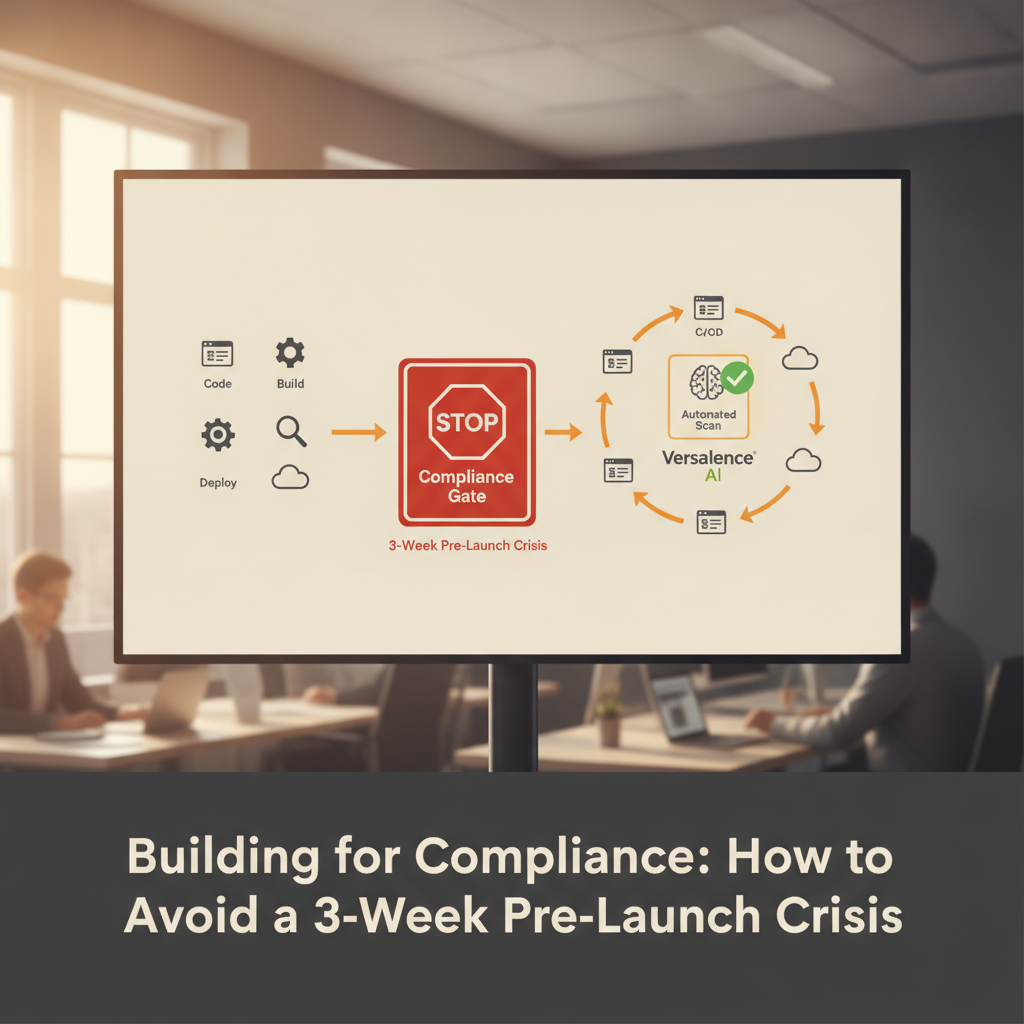
At Versalence AI, we flip this model on its head. We don’t treat compliance as a gate; we integrate it as a continuous, automated, and intelligent workflow directly into your development pipeline. This is the essence of "shifting left"—moving security and compliance from the end of the process to the very beginning.
Here’s how we architect this solution to prevent the "three-week surprise."
1. Intelligent Workflows: Your Automated Compliance Officer
Imagine a developer working on a new feature for your Botpress chatbot. They write a piece of code that logs user conversations to a new database. The moment they commit that code to the repository, an automated workflow triggers.

This isn’t just a simple syntax check. This is an intelligent, AI-powered analysis. Our system:
- Scans the code for patterns that suggest the handling of PII (e.g., email addresses, phone numbers, credit card numbers).
- Cross-references the destination database against a list of approved, compliant data stores (e.g., is it HIPAA-compliant? Is it located in an approved geographic region for GDPR?).
- Analyzes the chatbot's conversational flow to ensure that if sensitive data is being requested, the appropriate consent language and mechanisms are present.
If a potential violation is detected—for instance, logging an unencrypted email address to a non-compliant S3 bucket—the build is automatically paused. But it doesn't just fail. The developer instantly receives a notification in Slack or Microsoft Teams with a precise, actionable report:
Compliance Alert: Potential GDPR Violation Detected File:
user_logger.js, Line 42 Issue: PII (email address) is being written to a non-production, unencrypted log stream. Suggestion: Use theencryptAndStore()function from our approved data handling library and ensure the data is routed to thesecure-pii-logsdata store. Policy Link: [Link to internal GDPR data handling policy]
The three-week, panic-inducing meeting with legal is replaced by a three-minute, in-context fix by the developer. This is the power of intelligent, automated workflows. Compliance becomes a helpful co-pilot, not a punitive gatekeeper.
2. Policy as Code (PaC): Making Rules Machine-Readable
To power these automated workflows, we translate your complex, human-readable compliance policies (GDPR, HIPAA, SOC 2, etc.) into machine-readable code. Using powerful frameworks like Open Policy Agent (OPA), we define your organization's rules in a clear, version-controlled, and auditable format.
This means your compliance rules are no longer trapped in a PDF on a shared drive. They are living, breathing artifacts that are part of your codebase.
- Rule: "All user data originating from the EU must be stored in our Frankfurt data center."
- Policy as Code: An OPA policy that checks infrastructure-as-code templates (like Terraform or CloudFormation) to ensure any new database provisioned for EU users has the
regionparameter set toeu-central-1.
This approach ensures consistency, eliminates human error, and provides a perfect audit trail. When a regulator asks how you enforce a specific policy, you can show them the exact code that does it, along with a log of every time it has been checked and passed.
3. AI-Powered Anomaly Detection and Data Classification
Beyond static rules, we leverage AI to provide a deeper layer of compliance assurance. Our systems can be trained to automatically classify data flowing through your applications. By analyzing data schemas, API payloads, and even unstructured text within chatbot conversations, our AI models can identify and tag sensitive information in real-time.
This is critical for preventing "data leakage." For example, a customer might inadvertently type their social security number into your support chatbot. Even if your developers didn't plan for this, our AI can detect the pattern, automatically mask or redact the sensitive information before it's logged, and alert your security team to the incident. This proactive defense mechanism is something manual reviews could never achieve at scale.
By combining AI-powered automation, intelligent workflows, and Policy as Code, we transform compliance from a source of friction and fear into a strategic enabler of speed and safety.
Related Solutions We've Built
This "Compliance from Day One" methodology isn't limited to chatbot development. It is a core principle that Versalence AI applies across a wide range of custom software development projects. The tools and architecture may change, but the philosophy remains the same: automate, integrate, and shift left.
- Secure Infrastructure Provisioning: For clients in finance and healthcare, we build pipelines where every piece of cloud infrastructure—from virtual machines to network rules—is defined as code and automatically validated against security and compliance policies before it's ever deployed.
- Private LLM Deployments: When deploying Large Language Models (LLMs) on-premise or in a private cloud, data privacy is paramount. Our solutions ensure that no sensitive corporate or customer data is ever sent to third-party APIs by building automated data-masking and PII-redaction filters directly into the data ingress pipeline.
- Automated Data Governance: For companies dealing with vast amounts of data, we design and implement systems that automatically scan, classify, and tag data across the organization, enforcing retention policies and access controls without manual intervention.
The common thread is the elimination of manual, error-prone processes and their replacement with intelligent, automated guardrails that empower teams to innovate with confidence.
Results & ROI: The Tangible Business Outcomes
Adopting a "Compliance from Day One" strategy with Versalence AI isn't just about avoiding disaster; it's about generating a significant and measurable return on investment.
- Accelerated Time-to-Market: By catching and remediating compliance issues in real-time during the development cycle, we have seen clients eliminate the "final review" phase entirely, cutting their project timelines by 15-20%. The "three-week surprise" is completely removed from the equation.
- Reduced Development Costs: Studies show that fixing a bug or compliance issue in production is up to 100 times more expensive than fixing it during the design phase. Our automated workflows help clients catch over 85% of common compliance issues before the code is even merged, drastically reducing rework and wasted engineering hours.
- Dramatically Lowered Risk Profile: Continuous, automated compliance monitoring provides 24/7 assurance, not just a point-in-time snapshot from a manual audit. This leads to a quantifiable reduction in the risk of fines, breaches, and reputational damage, which can translate to lower cybersecurity insurance premiums and increased investor confidence.
- Increased Developer Velocity and Satisfaction: By providing instant, context-aware feedback, we empower developers to be self-sufficient. They no longer have to wait days or weeks for a manual review. This autonomy and efficiency lead to higher morale and faster innovation, allowing them to focus on what they do best: building great products.
Ultimately, building for compliance isn't a cost center; it's a value driver. It allows you to move faster, operate more efficiently, and build more resilient, trustworthy products that win in the market.
Don't Wait for the Surprise
That team with the champagne on ice learned a hard lesson: the most expensive time to think about compliance is right before you launch. The cheapest and most effective time is before you write the first line of code.
If you are planning a new software or AI project and want to build a foundation of security and compliance from day one, it's time to change the conversation. Let's move beyond reactive checklists and build proactive, automated systems that protect your business and accelerate your growth.
Don't let a preventable compliance issue kill your next launch.
Ready to build with confidence? Contact the experts at Versalence AI for a consultation on embedding automated compliance into your development lifecycle. Email us at sales@versalence.ai or visit us at versalence.ai.
Work With Versalence
Ready to remove the drag from your business operations? Our AI automation and system integration team delivers measurable results in 30-120 days.
📧 Contact us
✉️ sales@versalence.ai