AI in 2026: From Experimentation to Enterprise-Wide Intelligence
The year 2026 marks a fundamental shift in how businesses adopt, deploy, and benefit from artificial intelligence. After years of pilots, proofs of concept, and fragmented tools, organisations across industries are progressing toward AI as a core operating model, not a feature add-on. This transition reflects both the maturity of the technology and the urgency for strategic integration.
As we look ahead, two complementary perspectives help shape what’s next:
-
Operationalisation over experimentation, where AI systems become embedded in every layer of business.
-
Technological evolution, especially through purpose-built small language models and AI-fueled coding, that expands the practical reach of AI tools.
Below, we unpack the key trends that will define AI adoption and impact in 2026—and explore what they mean for companies preparing for the next wave of AI-driven transformation.

1. AI Becomes the Operating Layer of Business
For much of the past decade, AI adoption focused on individual tools—chatbots, analytics dashboards, or automation islands. In 2026, the emphasis shifts decisively toward AI operating models that run across functions, from sales and service to operations and support. The most successful companies embed AI into workflows, systems, and customer interfaces, enabling seamless, mission-critical outcomes that are measurable and scalable.
Instead of viewing AI as an isolated capability, leaders will treat it as the backbone of data-driven execution, enabling consistent enterprise-wide performance and competitive differentiation.
2. AI Agents as Digital Employees
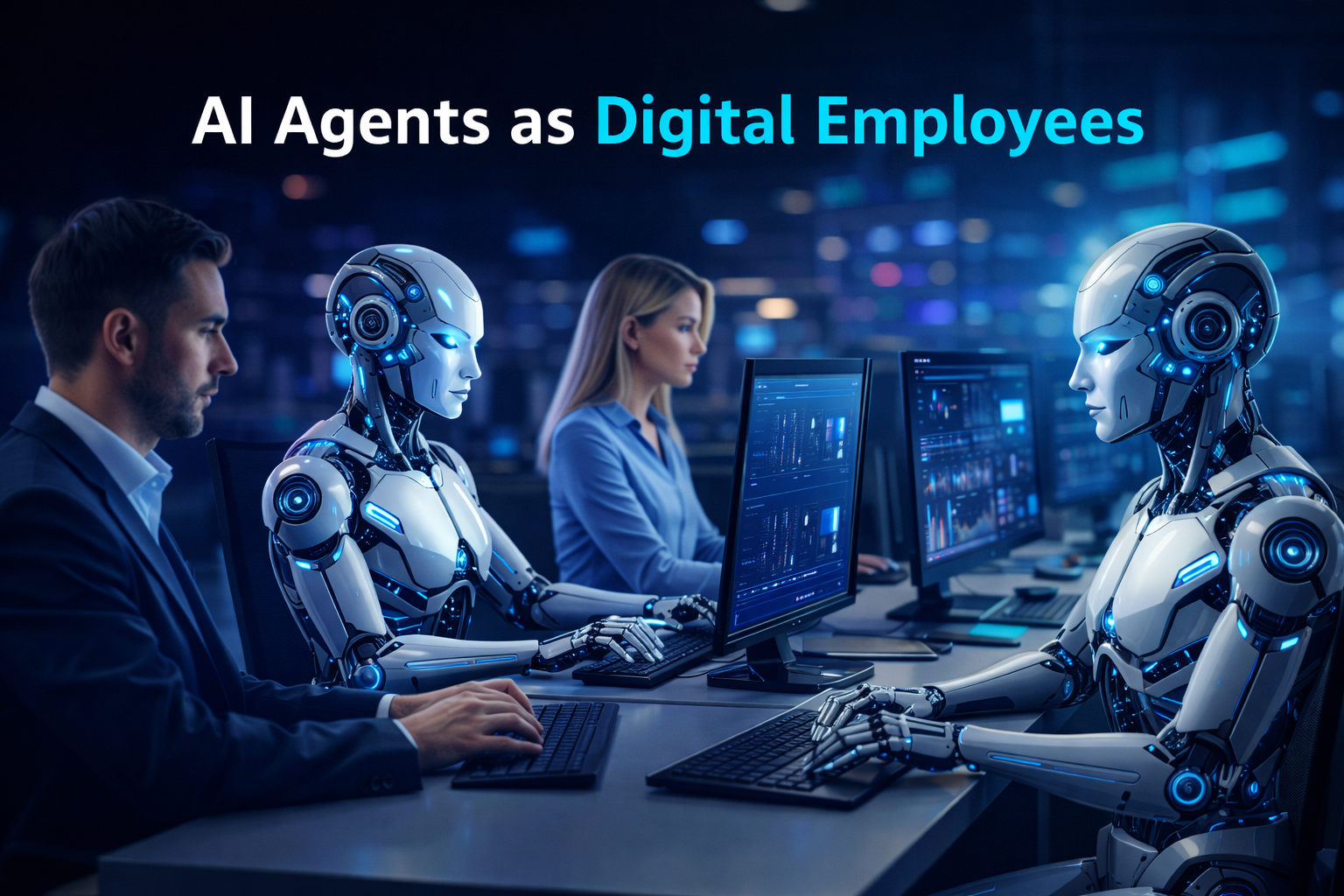
AI agents are no longer assistants that respond to tasks; they are stepping into digital workforce roles. Equipped with strategic coordination capabilities, these agents can monitor workflows, connect disparate systems, and execute goal-oriented actions across teams.
This trend converges with how enterprises increasingly pair agentic intelligence with human oversight—creating hybrid work models where AI handles repetitive execution and humans focus on judgement, creativity, and exceptions.
3. Small Language Models (SLMs) Become Central to Practical AI
According to forward-looking predictions from industry leaders, 2026 will be the year that fine-tuned small language models become the most-used models in enterprise environments. These purpose-built variants provide high accuracy for specific tasks—faster and more cost-efficient than generic large models—without sacrificing precision.
Across sectors, SLMs empower tailored automation, targeted decision support, and domain-specific intelligence. For businesses, this means AI solutions that deliver observable business outcomes rather than generic capabilities.
4. AI-Fueled Coding Accelerates Innovation Cycles
AI is reshaping software development itself.
AI-fueled coding will emerge as a major methodology, dramatically shortening development cycles and enabling teams—technical and non-technical—to build functioning, production-grade applications in hours instead of weeks.
This trend democratises innovation—unblocking internal ideas, speeding up go-to-market launches, and reducing dependency on traditional development bottlenecks.
5. Omnichannel AI and Invisible Automation
Customers no longer interact with isolated channels. They flow seamlessly across voice, messaging, web, email, and apps. In 2026, omnichannel AI isn’t a luxury—it’s the standard. Businesses will orchestrate AI across every customer touchpoint, ensuring consistent, personalised experiences.
Moreover, AI will become invisible—not because it’s hidden, but because it has become intrinsic to how processes work and outcomes are delivered. When AI no longer feels like a separate tool, it has succeeded: it becomes part of how work gets done.
6. Infrastructure and Connectivity Evolve Around AI Needs
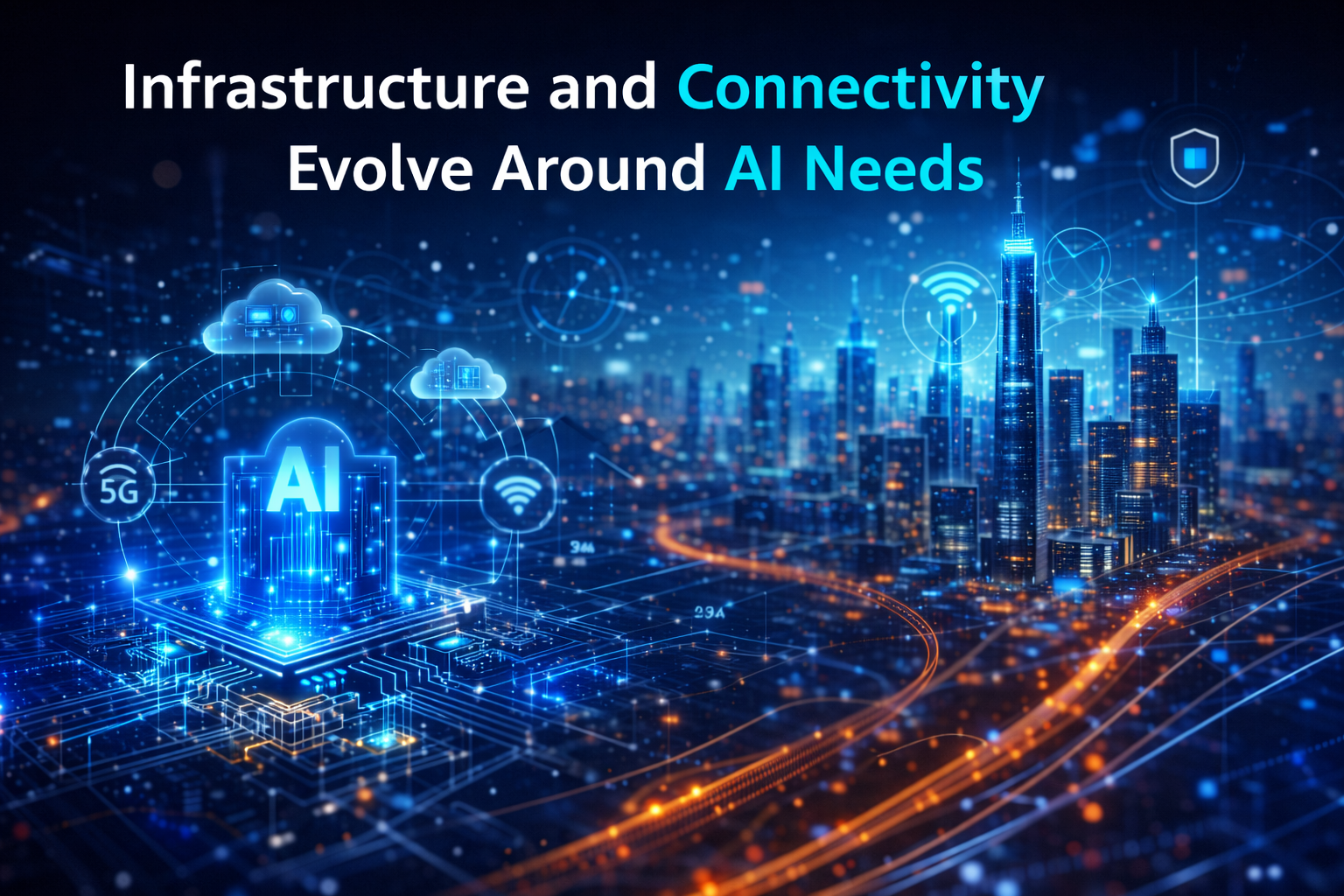
To enable high-speed, AI-driven transformation, enterprises will rethink connectivity and computing strategies. Predictions foresee a rise in private high capacity networks and hybrid cloud ecosystems that reduce latency, optimise data movement, and fortify performance for AI workloads.
This infrastructure evolution supports richer agentic systems, near real-time decision making, and robust integration between edge and enterprise data fabrics.
7. ROI-First AI Strategies Replace Experimental Pilots
As economic pressures intensify and competition grows, companies will no longer tolerate AI experiments that lack measurable ROI. In 2026, leading organisations will prioritise outcomes over novelty—tracking accuracy, cost efficiency, and business impact as critical performance metrics.
This shift aligns strategy with measurable business value—revealing which AI investments drive profitability, customer satisfaction, and operational excellence.
How Businesses Can Prepare Today
To lead rather than follow, companies must take proactive steps:
-
Build an AI Operating Framework: Adopt a governance-ready structure that balances scalability, accountability, and compliance.
-
Invest in Purpose-Built Models: Focus on SLMs and agentic frameworks tuned to your operations and data.
-
Measure Against Business Outcomes: Define KPIs that align AI performance with revenue, retention, or cost savings.
-
Enable Human-AI Collaboration: Equip teams to work with agents, not around them.
-
Rethink Connectivity and Data Strategy: Ensure architecture supports AI performance needs.
Conclusion: AI’s Next Chapter Is Operational Intelligence
AI in 2026 isn’t about what’s possible—it’s about what’s practical, scalable, and transformational. The future belongs to organisations that embed intelligent systems into the fabric of operations, harness agentic autonomy, and measure success by business outcomes, not experiments.
In this new era, AI stops being a novelty and becomes the engine that powers competitive advantage, resilient systems, and smarter organisations.