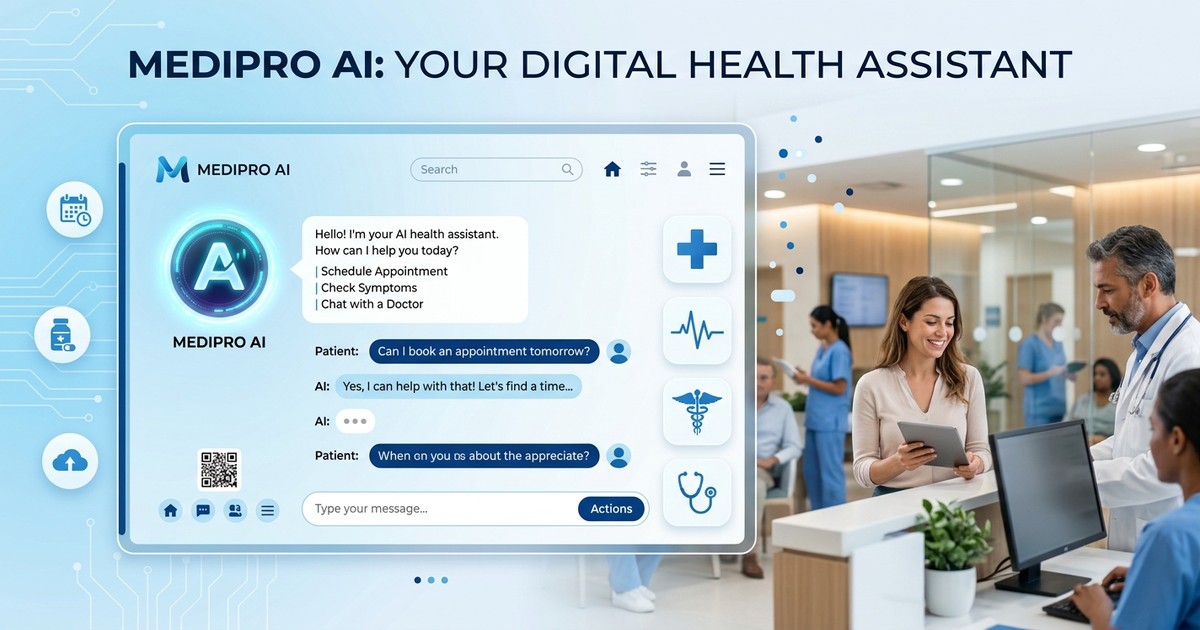
Agentic AI Is Reshaping Healthcare Customer Service — Here's How Clinics Can Lead the Charge
A recent deep dive into building agentic AI chatbots for clinics (featured on Towards AI) highlights something we've been shouting from the rooftops: the future of healthcare customer service isn't just automated — it's agentic.
The difference? Automation follows scripts. Agentic AI thinks, adapts, and executes multi-step workflows autonomously.
For clinics drowning in appointment chaos, patient follow-ups, and front-desk overload, this isn't a "nice-to-have." It's survival.
The Clinic Problem Is Bigger Than You Think
Every clinic faces the same operational nightmare:
- Phone tag — Patients call, lines are busy, they give up
- Scheduling Tetris — Matching patient needs with doctor availability across multiple locations
- No-shows — 30-40% of appointments in some markets go unattended
- Fragmented communication — WhatsApp, email, phone, walk-ins — nothing talks to each other
- Post-visit black hole — Follow-ups, prescription reminders, and rebooking happen manually (if at all)
Traditional chatbots? They handle FAQ. Maybe book one appointment if the stars align.
Agentic AI? It runs the entire front-office operation.
What Agentic AI Looks Like in a Clinic
Imagine a patient messages your clinic on WhatsApp:
"I need to see a cardiologist next week, preferably mornings."
An agentic system doesn't just reply with a link to a booking form. It:
- Understands intent — New patient vs. follow-up vs. emergency triage
- Checks availability — Queries real-time doctor schedules across all locations
- Matches requirements — Cardiologist + morning slots + insurance compatibility
- Books the slot — Creates appointment, sends confirmation with location/map
- Sets follow-up triggers — Pre-visit reminder at T-24h, post-visit feedback at T+2d, rebooking nudge at T+30d
- Handles changes — Patient reschedules? The agent cancels, finds alternative, updates all parties
This is the architecture described in the clinic chatbot project — built on LangGraph for state-driven orchestration, OpenAI for language understanding, SQLite for persistence, and Streamlit for the interface.
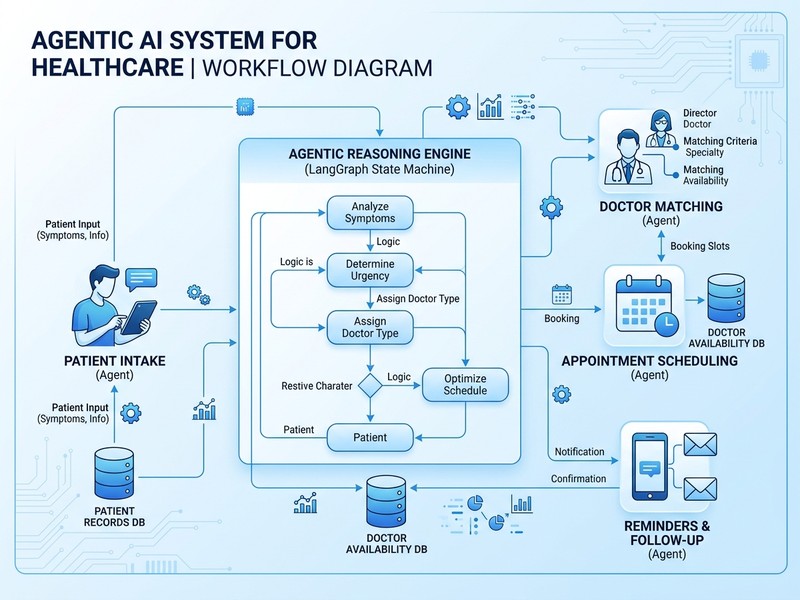
The workflow above shows a state-machine approach where each node represents a decision point or action. The agent doesn't just respond — it moves through states, gathering context, making decisions, and executing operations.
From Demo to Production: The vCX Advantage
Here's where Versalence comes in.
That clinic chatbot architecture? It's brilliant as a prototype. But clinics need:
- Multi-channel presence — WhatsApp, Instagram DMs, Facebook Messenger, email, and phone in ONE unified inbox
- CRM integration — Patient history, preferences, and communication logs in one place
- Team handoffs — When the AI hits a complex case, it seamlessly transfers to a human with full context
- Campaign capability — Broadcast vaccine reminders, seasonal health tips, or appointment slots to patient segments
- Voice capability — Because sometimes patients just want to talk
vCX — our Social CRM — was built for exactly this.
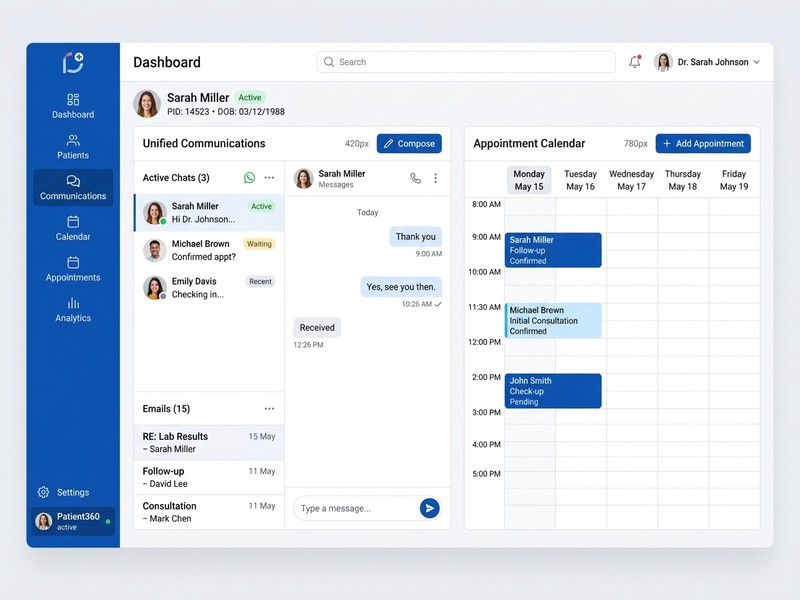
The dashboard above represents what vCX delivers out of the box: every patient conversation, across every channel, visible and actionable in one place. No more switching between WhatsApp Business, email clients, and phone logs.
When you combine vCX's omni-channel foundation with agentic AI workflows:
- The AI handles 80% of routine interactions autonomously
- Humans step in for complex cases with full conversation history
- Nothing falls through cracks — every message is tracked, every follow-up scheduled
- Patient satisfaction jumps — because responses are instant, accurate, and personalized
The Technical Stack That Makes It Work
For the builders reading this, here's how we architect clinic-grade agentic systems at Versalence:
| Layer | Tool | Purpose |
|---|---|---|
| Agent Orchestration | LangGraph / Custom state machines | Multi-step reasoning, tool calling, error recovery |
| LLM | GPT-4o / Claude / Gemini | Natural language understanding, summarization, sentiment |
| Workflow Engine | n8n | Integration glue — connecting EHRs, calendars, SMS gateways |
| Chat Interface | Botpress + vCX | Multi-channel deployment, human handoff, analytics |
| Data Layer | PostgreSQL / SQLite + Vector DB | Patient data, conversation memory, embedding search |
| Voice | Whisper + TTS + vCX voice module | Speech-to-text for calls, text-to-speech for responses |
This isn't theoretical. We've deployed variants of this stack for:
- A civil engineering firm automating project inquiry qualification
- A market research agency running automated survey follow-ups
- A customer service team handling 10,000+ WhatsApp inquiries monthly
The clinic use case is just the next logical evolution.
Why This Matters for Healthcare Now
Three forces are converging:
- Patient expectations — They already use ChatGPT. They expect clinics to be at least that smart.
- Staff shortages — Healthcare worker burnout is real. AI handles the repetitive load so humans do what humans do best — care.
- Regulatory push — Data privacy (HIPAA, GDPR) and audit trails are mandatory. Agentic systems with proper logging improve compliance, unlike informal WhatsApp chats.
Clinics that adopt agentic AI in 2026 will have lower no-show rates, higher patient retention, and staff that isn't drowning in admin work.
Clinics that don't? They'll be competing with ones that do.
The Bottom Line
The Towards AI clinic chatbot project proves what's possible with modern agentic frameworks. But possibility isn't enough — production-ready, multi-channel, integrated systems are what clinics actually need.
That's the gap vCX closes.
Whether you're running a single clinic or a chain of healthcare centers, the question isn't if you should adopt agentic AI. It's how fast you can deploy it without disrupting operations.
And that's exactly what we help you figure out.
Work With Versalence
At Versalence AI, we don't just talk about agentic AI — we ship it. From intelligent clinic booking systems to complete workflow automation, our team combines the best-of-breed tools (LangGraph, Botpress, n8n, Flowise, OpenClaw, and custom web applications) into solutions that actually work in production.
Whether you're looking to streamline patient intake, automate appointment scheduling, or build a unified communication hub across WhatsApp, email, and voice — we bring the expertise and the platform to make it happen. Let's build your clinic's AI front office.
📧 versalence.ai/contact.html | sales@versalence.ai