Social Search is Replacing Google: What the TikTok-ification of Search Means for Your Business
Users -- especially Gen Z -- are turning to TikTok, Instagram, and YouTube to search for answers, products, and recommendations instead of traditional search engines. "Social SEO" is now a real discipline.

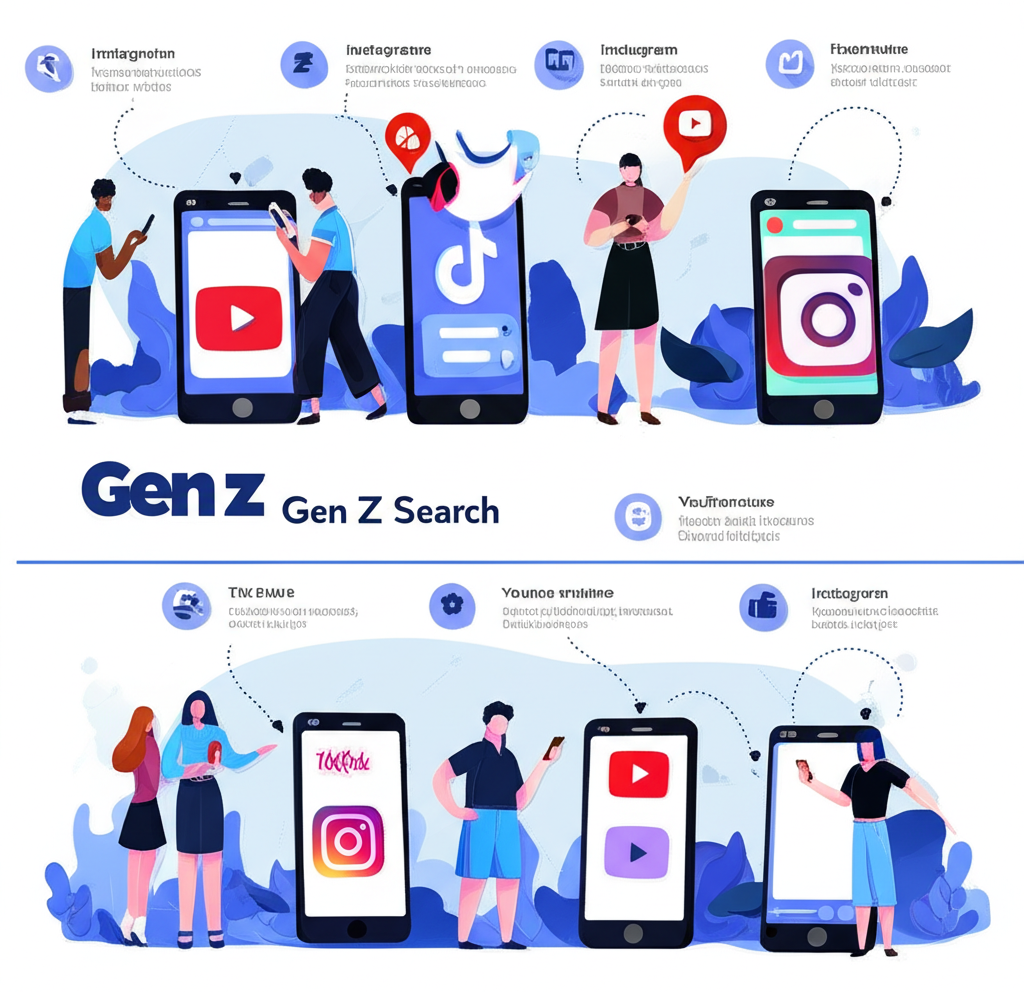
The data is undeniable. Nearly half of Gen Z prefers TikTok over Google for search. YouTube is the second-largest search engine in the world. Instagram has become the new storefront for product discovery. And yet, most businesses are still optimizing for Google while their customers are searching elsewhere.
This isn't a trend. It's a fundamental shift in how people find information, evaluate products, and make purchase decisions. The businesses that recognize this shift early are capturing attention at a fraction of the cost of traditional search advertising. The ones that don't are pouring money into SEO strategies that reach an increasingly smaller slice of their target audience.
Welcome to the era of social search -- where discovery happens in feeds, not on search engine results pages, and where the rules of visibility are being rewritten in real time.
The Data: Where Users Are Actually Searching Now
Google still dominates overall search volume, but the picture changes dramatically when you look at specific demographics and use cases:
Gen Z Search Behavior:
- 46% of Gen Z users start product searches on TikTok rather than Google
- YouTube is the preferred search platform for 35% of users under 30 for "how-to" content
- Instagram is the #1 platform for discovering new brands among 18-24 year olds
What's Driving the Shift:
- Visual learning preference: Video demonstrations beat text descriptions for complex topics
- Authenticity signals: User-generated content feels more trustworthy than polished marketing
- Immediate gratification: Social feeds deliver answers without the click-through-to-website friction
- Community validation: Comments and reactions provide instant social proof
The implications are stark. If your SEO strategy is focused entirely on ranking in Google, you're invisible to nearly half of your next generation of customers during their most formative discovery moments.
How Social SEO Works
Traditional SEO optimizes for keywords, backlinks, and page authority. Social SEO operates on an entirely different set of signals:
Caption Optimization:
Social platforms index the text in captions, not just hashtags. The first 125 characters of a TikTok caption are crucial for discovery. YouTube descriptions need keyword-rich first sentences. Instagram captions should front-load relevant terms before the "more" cutoff.
Hashtag Strategy:
Hashtags function as category tags, not just engagement boosters. The sweet spot is 3-5 highly relevant hashtags rather than 30 generic ones. Niche hashtags with 10K-500K posts often deliver better reach than mega-tags with millions of posts where content gets buried instantly.
Spoken Keywords:
This is the most underutilized social SEO tactic. TikTok and YouTube transcribe audio and index it for search. Saying your target keywords out loud in videos -- naturally, not awkwardly -- significantly boosts discoverability. Most creators write scripts optimized for ears, not search algorithms, leaving massive visibility on the table.
Engagement Velocity:
Social algorithms prioritize content that generates immediate engagement. The first 30 minutes after posting determine whether content gets pushed to broader audiences. This means timing, audience priming, and initial engagement strategy are as important as the content itself.
Why Traditional SEO Strategies Are Becoming Less Effective
The classic SEO playbook -- keyword research, long-form content, backlink building -- isn't dead, but its effectiveness is declining for several reasons:
Zero-Click Searches:
Google increasingly answers queries directly in search results, eliminating the need to visit websites. Featured snippets, knowledge panels, and AI overviews mean users get information without leaving Google. Your carefully optimized content drives zero traffic.
SERP Saturation:
The first page of Google is increasingly dominated by ads, featured snippets, video carousels, and "People also ask" sections. Organic results are pushed below the fold, especially on mobile where they require significant scrolling to reach.
Generative AI Disruption:
AI search summaries aggregate information from multiple sources, often without clear attribution. Users get answers without visiting any of the source websites. The traffic model that sustained content marketing for a decade is breaking down.
Changing Query Types:
Users still Google for specific, transactional queries ("best running shoes 2026"). But exploratory, research-heavy queries increasingly happen on social platforms where users can see products in action, compare real user experiences, and get unfiltered opinions.
Actionable Tactics for Businesses to Optimize for Social Search

Audit Your Current Visibility:
Search for your brand, products, and key terms on TikTok, Instagram, and YouTube. What comes up? If it's not your content, it's your competitors or -- worse -- irrelevant content that distracts potential customers.
Create Platform-Native Content:
Don't repurpose blog posts into video scripts. Social search rewards content designed for the platform. TikTok needs hook-driven, fast-paced videos. YouTube rewards comprehensive, chaptered content. Instagram prioritizes visual storytelling and carousel depth.
Optimize for Audio Search:
Script videos with spoken keywords in mind. Say your target terms naturally within the first 30 seconds. Include keyword variations throughout. Remember: platforms transcribe and index everything you say.
Build Content Series:
Social algorithms favor creators who post consistently on specific topics. A series of 10 videos on "Social SEO tactics" signals expertise to algorithms better than 10 unrelated videos. Series also train audiences to return, boosting engagement velocity.
Leverage User-Generated Content:
Encourage customers to create content featuring your products. Repost, stitch, and duet this content. UGC often outperforms branded content in social search because it carries authenticity signals that algorithms and users both reward.
Monitor Social Search Trends:
Use platform-native analytics to understand what search terms drive discovery. TikTok's Creator Portal shows search terms that led to your content. YouTube Studio reveals search queries that surface your videos. Instagram Insights tracks discovery sources.
Cross-Platform Consistency:
Maintain consistent branding and messaging across platforms while adapting format to each platform's strengths. Users who discover you on TikTok should be able to find you on YouTube for deeper content, creating a discovery ecosystem.
The Bottom Line
Social search isn't replacing Google entirely -- it's complementing it for specific use cases and demographics. The businesses that win will be those that optimize for both traditional and social search, recognizing that different audiences prefer different discovery channels.
The window for early advantage is closing. As more businesses recognize the shift, competition for social search visibility will intensify. The cost of attention will rise. The algorithms will evolve.
The question isn't whether social search matters for your business. It's whether you'll adapt before your competitors do.
About Versalence: We help businesses navigate the shifting landscape of digital discovery -- from traditional SEO to social search optimization. If you're rethinking your search strategy for the TikTok era, let's talk.