
Feature Deep-Dives: A Deep Dive for Tuesday
Introduction - Hook with real problem
Imagine it’s Tuesday morning, January 6th, 2026. Your customer support queues are flooded. Not just with routine inquiries, but with complex issues stemming from the latest product release – the one everyone said would be a game-changer. The problem? The promised "seamless integration" between your CRM and the new AI-powered knowledge base is anything but. Agents are spending more time wrestling with the system than actually helping customers. Sales cycles are lengthening because the promised personalized demos are riddled with glitches. Operations is scrambling to find workarounds, manually syncing data that should be flowing automatically.
This isn't a hypothetical scenario. It’s the reality many organizations face when they chase the latest "shiny object" feature without a clear understanding of its underlying mechanics, integration challenges, and long-term impact. In 2026, the pressure to adopt cutting-edge technology is immense. But the difference between a competitive advantage and a costly failure lies in understanding what actually works and how to implement it effectively. This deep dive will equip you with the frameworks, analyses, and practical advice you need to navigate the feature landscape and make informed decisions.
The Current Landscape - What's happening in 2026
By 2026, several key trends are shaping the feature landscape across customer support, sales, and operations:
* Hyper-Personalization is Expected: Customers demand highly personalized experiences, driven by advanced AI and data analytics. Generic interactions are no longer acceptable.
* AI Integration is Pervasive (But Uneven): AI is embedded in almost every software solution, but the quality and effectiveness vary significantly. "AI washing" is rampant, making it crucial to scrutinize actual capabilities.
* Composable Architecture is King: Businesses are moving away from monolithic software suites towards composable architectures, allowing them to select and integrate best-of-breed solutions. This requires robust APIs and seamless data flow.
* Data Privacy and Security are Paramount: Increased regulations and customer awareness make data privacy and security non-negotiable. Features must be designed with privacy-by-design principles.
* Automation is Table Stakes: Basic automation is no longer a differentiator. The focus is on intelligent automation that handles complex tasks and frees up human agents for higher-value activities.
The challenge is not just adopting these trends, but doing so in a way that delivers tangible business value without creating new problems.
Deep Dive: Core Concepts - Frameworks and analysis
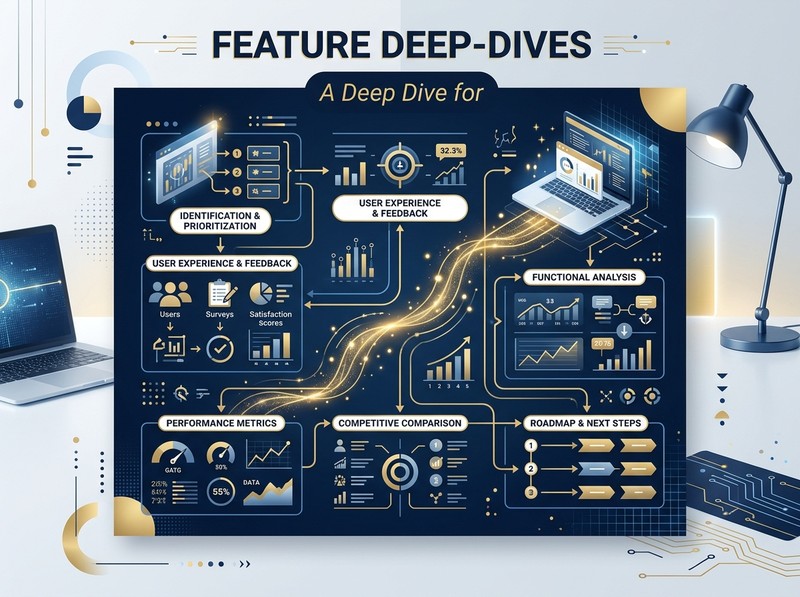
To understand what truly works, we need to move beyond surface-level descriptions and delve into the core concepts driving successful feature implementations.
* The "Jobs to Be Done" Framework: Instead of focusing on features themselves, understand the "jobs" your customers are hiring your product to do. This helps prioritize features that directly address customer needs and avoid unnecessary complexity.
* The "Impact vs. Effort" Matrix: Prioritize features based on their potential impact on key metrics (e.g., customer satisfaction, sales conversion rate, operational efficiency) and the effort required to implement them. Focus on high-impact, low-effort wins.
* The "Integration Tax": Every new feature has an "integration tax" – the cost of integrating it with existing systems, training employees, and managing data flow. Accurately estimate this tax before making any decisions.
The "AI Explainability" Principle: In 2026, it’s no longer enough for AI to provide answers; it must explain why* it arrived at those answers. This builds trust and allows humans to validate and refine AI decisions.
These frameworks provide a structured approach to evaluating and implementing features, ensuring they align with business goals and customer needs.
Comparison and Trade-offs - Tables with pros/cons
Here are a couple of comparison tables outlining the pros and cons of common feature implementations in 2026:
Table 1: AI-Powered Chatbots vs. Human-Assisted Chat
| Feature | Pros | Cons |
|-------------------|----------------------------------------------------------------------------------------------------------------------------------------------------------------------------------------------------------------------------------------------------------------------------------------------------------------------------------------------------------|--------------------------------------------------------------------------------------------------------------------------------------------------------------------------------------------------------------------------------------------------------------------------------------------------------------------------------------------------------------------|
| AI-Powered Chatbots | 24/7 availability, Scalability, Reduced agent workload, Faster response times for simple queries, Cost-effective for high-volume, low-complexity interactions, Can handle initial triage and routing. | Can struggle with complex or nuanced inquiries, May provide inaccurate or irrelevant information, Requires ongoing training and maintenance, Can feel impersonal and frustrating for customers, "AI hallucination" can be detrimental to brand trust, Requires significant investment in training data. |
| Human-Assisted Chat | Ability to handle complex and nuanced inquiries, Provides personalized support, Builds stronger customer relationships, Can empathize and resolve emotional issues, Higher customer satisfaction for complex issues, Adaptable to changing customer needs. | Limited availability, Scalability challenges, Higher labor costs, Slower response times during peak periods, Requires extensive agent training, Subject to human error and bias. |
Table 2: Predictive Analytics for Sales vs. Reactive Reporting
| Feature | Pros | Cons |
|-----------------------|-----------------------------------------------------------------------------------------------------------------------------------------------------------------------------------------------------------------------------------------------------------------------------------------------------------------------------------------------------------------|--------------------------------------------------------------------------------------------------------------------------------------------------------------------------------------------------------------------------------------------------------------------------------------------------------------------------------------------------------------------|
| Predictive Analytics | Proactive identification of sales opportunities, Improved lead scoring and prioritization, Increased sales conversion rates, Reduced sales cycle times, Better forecasting and resource allocation, Enables personalized sales strategies, Can identify at-risk accounts before churn. | Requires high-quality data and sophisticated algorithms, Can be difficult to interpret and act upon, May generate false positives or negatives, Requires ongoing monitoring and refinement, Can be expensive to implement and maintain, Relies on historical data which may not always be indicative of future performance. |
| Reactive Reporting | Provides insights into past performance, Identifies trends and patterns, Helps track key metrics, Enables data-driven decision-making, Relatively easy to implement and understand, Cost-effective for basic reporting needs. | Lacks predictive capabilities, Limited ability to influence future outcomes, Can be slow to identify emerging problems, Provides a rearview mirror view of the business, May not provide actionable insights, Can be overwhelming with large amounts of data without clear analysis. |
Implementation Framework - Step-by-step guide
Implementing new features effectively requires a structured approach. Here’s a step-by-step guide:
1. Define the Problem: Clearly articulate the problem you're trying to solve with the new feature. Use the "Jobs to Be Done" framework to understand the customer's perspective.
2. Evaluate Solutions: Research and compare different solutions, considering their pros and cons, integration challenges, and "integration tax."
3. Pilot Project: Implement the feature in a pilot project with a small group of users. This allows you to test its effectiveness and identify potential problems before a full rollout.
4. Data Collection and Analysis: Collect data on the feature's performance, including key metrics like customer satisfaction, sales conversion rate, and operational efficiency. Analyze the data to identify areas for improvement.
5. Iterate and Refine: Based on the data analysis, iterate on the feature and refine its implementation. This is an ongoing process.
6. Full Rollout: Once you're confident in the feature's performance, roll it out to all users.
7. Training and Support: Provide comprehensive training and support to users to ensure they can effectively use the new feature.
8. Monitor and Maintain: Continuously monitor the feature's performance and provide ongoing maintenance to ensure it remains effective.
Decision Guide - How to choose
Choosing the right features requires a careful evaluation of your specific needs and priorities. Here's a decision framework:
1. Identify Your Key Objectives: What are your top priorities for customer support, sales, and operations? (e.g., improving customer satisfaction, increasing sales conversion rate, reducing operational costs).
2. Assess Your Current Capabilities: What are your existing systems and processes? What are their strengths and weaknesses?
3. Evaluate Potential Solutions: Consider the pros and cons of different features, using the comparison tables and frameworks outlined above.
4. Consider Integration Challenges: How easily will the new feature integrate with your existing systems? What is the "integration tax"?
5. Estimate the ROI: What is the expected return on investment for the new feature? Consider both tangible and intangible benefits.
6. Prioritize Based on Impact and Effort: Use the "Impact vs. Effort" matrix to prioritize features that offer the highest impact with the least amount of effort.
7. Pilot Test and Iterate: Before committing to a full rollout, pilot test the feature with a small group of users and iterate based on their feedback.
Case Study or Real Example
Let's consider the example of a financial services company implementing AI-powered fraud detection.
The Problem: Rising fraud rates were impacting profitability and customer trust. Existing rule-based systems were slow to adapt to new fraud patterns.
The Solution: The company implemented an AI-powered fraud detection system that analyzed transaction data in real-time to identify suspicious activity.
The Implementation: The company started with a pilot project, focusing on a specific type of transaction. They collected data on the system's performance, including the number of fraudulent transactions detected, the number of false positives, and the time it took to investigate suspicious activity.
The Results: The AI-powered system significantly reduced fraud rates and improved the efficiency of fraud investigations. However, the system also generated a high number of false positives, which required manual review.
The Iteration: The company refined the system's algorithms to reduce the number of false positives. They also implemented a feedback loop that allowed fraud investigators to provide input on the system's performance.
The Outcome: The AI-powered fraud detection system became a critical tool for protecting the company's assets and customers. By carefully implementing and iterating on the system, the company was able to achieve significant business benefits.
30-Day Action Checklist
Here’s a practical 30-day checklist to get started:
Week 1: Assessment and Planning
* [ ] Day 1-2: Identify 1-2 key pain points in customer support, sales, or operations.
* [ ] Day 3-4: Define the "Jobs to Be Done" for each pain point.
* [ ] Day 5-7: Research 3-4 potential feature solutions for each pain point.
Week 2: Evaluation and Prioritization
* [ ] Day 8-10: Evaluate the pros and cons of each solution using comparison tables.
* [ ] Day 11-12: Estimate the "integration tax" for each solution.
* [ ] Day 13-14: Prioritize solutions based on the "Impact vs. Effort" matrix.
Week 3: Pilot Project Setup
* [ ] Day 15-17: Select the top-priority solution and define the scope of a pilot project.
* [ ] Day 18-20: Set up the pilot environment and train pilot users.
* [ ] Day 21: Launch the pilot project.
Week 4: Monitoring and Iteration
* [ ] Day 22-24: Collect data on the pilot project's performance.
* [ ] Day 25-27: Analyze the data and identify areas for improvement.
* [ ] Day 28-30: Iterate on the solution based on the data analysis.
Bottom Line - Key takeaways
In 2026, the key to successful feature implementation is not just adopting the latest technology, but understanding its underlying mechanics, integration challenges, and long-term impact. By focusing on the "Jobs to Be Done," accurately estimating the "integration tax," and continuously iterating based on data, you can ensure that your feature investments deliver tangible business value. Remember: thoughtful planning, rigorous testing, and continuous improvement are essential for success. Don't get distracted by the hype. Focus on solutions that genuinely solve customer problems and improve business outcomes.
Work With Versalence - CTA paragraph
Navigating the complex landscape of AI-powered solutions requires expertise and a deep understanding of your specific business needs. Versalence provides AI-driven solutions tailored to optimize your customer support, sales, and operations. We offer comprehensive consulting services, implementation support, and ongoing maintenance to ensure your technology investments deliver maximum ROI. Let us help you transform your business with intelligent automation and personalized experiences.
📧 versalence.ai/contact.html | sales@versalence.ai