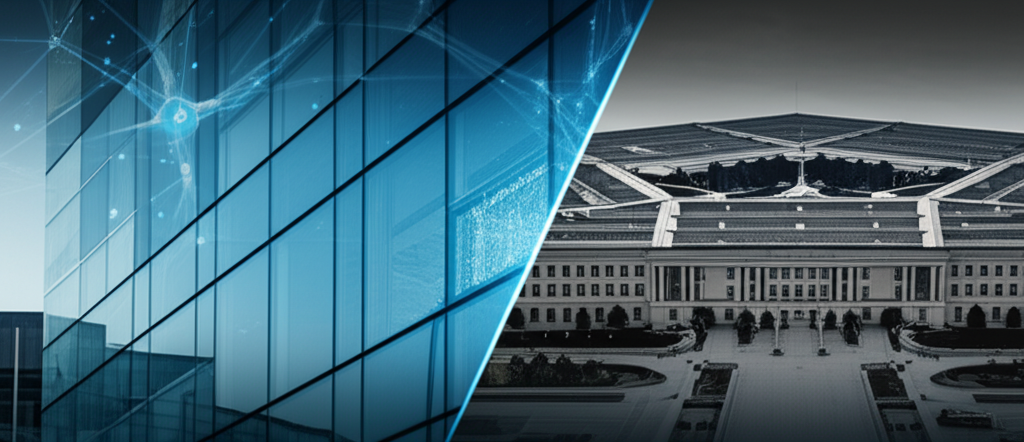
Anthropic vs. The Pentagon: The AI Safety War Nobody's Talking About
Anthropic just released its most autonomous AI agents yet. Simultaneously, the company is navigating an increasingly fraught relationship with the U.S. military. The contradiction is stark: a company built on "safety first" principles is being pulled into defense applications it once swore to avoid. This isn't hypocrisy -- it's the fundamental tension shaping the entire AI industry.

Every AI company faces the same impossible choice. On one side: the massive capital requirements of training frontier models, the need for cloud infrastructure at scale, and the pressure to generate returns. On the other: the ethical commitments made to employees, users, and the public about responsible AI development.
For Anthropic, this tension has crystallized around its relationship with the U.S. military. The company's stated mission is to ensure transformative AI benefits humanity. Its safety research is industry-leading. Its corporate structure -- a public benefit corporation with unusual governance provisions -- was designed to resist the profit-maximizing pressures that might compromise safety.
Yet the Pentagon has needs, budgets, and strategic imperatives that no major AI company can ignore indefinitely. The question isn't whether Anthropic will work with defense agencies -- it's already happening. The question is what constraints remain, what boundaries get redrawn, and what this means for the broader AI safety movement.
What Anthropic's New Autonomous Agents Actually Do
Anthropic's latest release represents a significant leap in AI autonomy. These aren't chatbots that respond to prompts. They're agents that can plan, execute multi-step tasks, and operate with minimal human supervision across extended time horizons.
The technical capabilities are impressive. The agents can navigate complex software environments, manipulate data across multiple systems, write and debug code, conduct research, and synthesize information from diverse sources. They can work for hours on tasks, checking their own progress, adapting to obstacles, and reporting outcomes.
What makes these agents different from previous generations is their ability to handle uncertainty. They don't just follow scripts -- they make judgment calls about priorities, resource allocation, and when to escalate to human oversight. This is the kind of autonomous capability that has obvious military applications.
Intelligence analysis. Logistics coordination. Communications monitoring. Cyber operations. The same capabilities that make these agents valuable for commercial applications make them attractive to defense agencies. Anthropic knows this. The Pentagon knows this. The tension is inevitable.
The Safety-Defense Paradox

Anthropic's safety research is genuine and significant. The company has published groundbreaking work on AI alignment, interpretability, and the technical challenges of controlling powerful AI systems. Its safety team includes respected researchers who have built careers on the premise that AI development must be constrained by ethical considerations.
This work creates a reputational and cultural foundation that distinguishes Anthropic from competitors. The "safety first" positioning attracts talent concerned about AI risk, builds trust with users wary of unchecked AI development, and creates narrative distance from the "move fast and break things" ethos of other AI labs.
But safety research is expensive. Frontier models require billions in compute. Maintaining a competitive position requires ongoing investment at scale. The funding for this research comes from somewhere -- and increasingly, that somewhere includes defense-adjacent sources.
The paradox is this: the very safety research that makes Anthropic attractive to ethically-minded researchers and users requires funding that pulls the company toward defense applications. You cannot separate the technical capabilities from their potential uses. Autonomous agents useful for commercial logistics are useful for military logistics. Research that makes AI more controllable also makes it more deployable in sensitive contexts.
Why "Safety First" Companies End Up in Defense
The trajectory from safety-focused startup to defense contractor isn't unique to Anthropic. It's a pattern repeated across the AI industry. Understanding why requires looking at the structural pressures facing frontier AI companies.
Capital Requirements: Training frontier models costs hundreds of millions to billions of dollars. Only a handful of funding sources can provide capital at this scale: venture capital, big tech, and government. Defense agencies have budgets. They need AI capabilities. The economic logic is inexorable.
Infrastructure Access: Running AI at scale requires specialized infrastructure -- chips, data centers, network architecture. Defense-adjacent contracts often come with infrastructure benefits: access to secure facilities, priority for compute resources, relationships with hardware suppliers. For companies struggling with compute constraints, these benefits are hard to refuse.
Talent Retention: Top AI researchers want to work on hard problems with real-world impact. Defense applications offer challenging technical problems, substantial resources, and the satisfaction of working on issues of national importance. Companies that refuse defense work entirely risk losing talent to competitors who don't.
Market Positioning: In a competitive landscape, defense contracts provide stable revenue, validation of technical capabilities, and relationships with influential customers. The commercial AI market is uncertain and crowded. Defense contracts offer predictability that venture-backed companies desperately need.
These pressures don't make defense work inevitable, but they make it the path of least resistance. Companies that genuinely want to avoid military applications must actively swim against a strong current. Most eventually tire.
What This Means for AI Governance
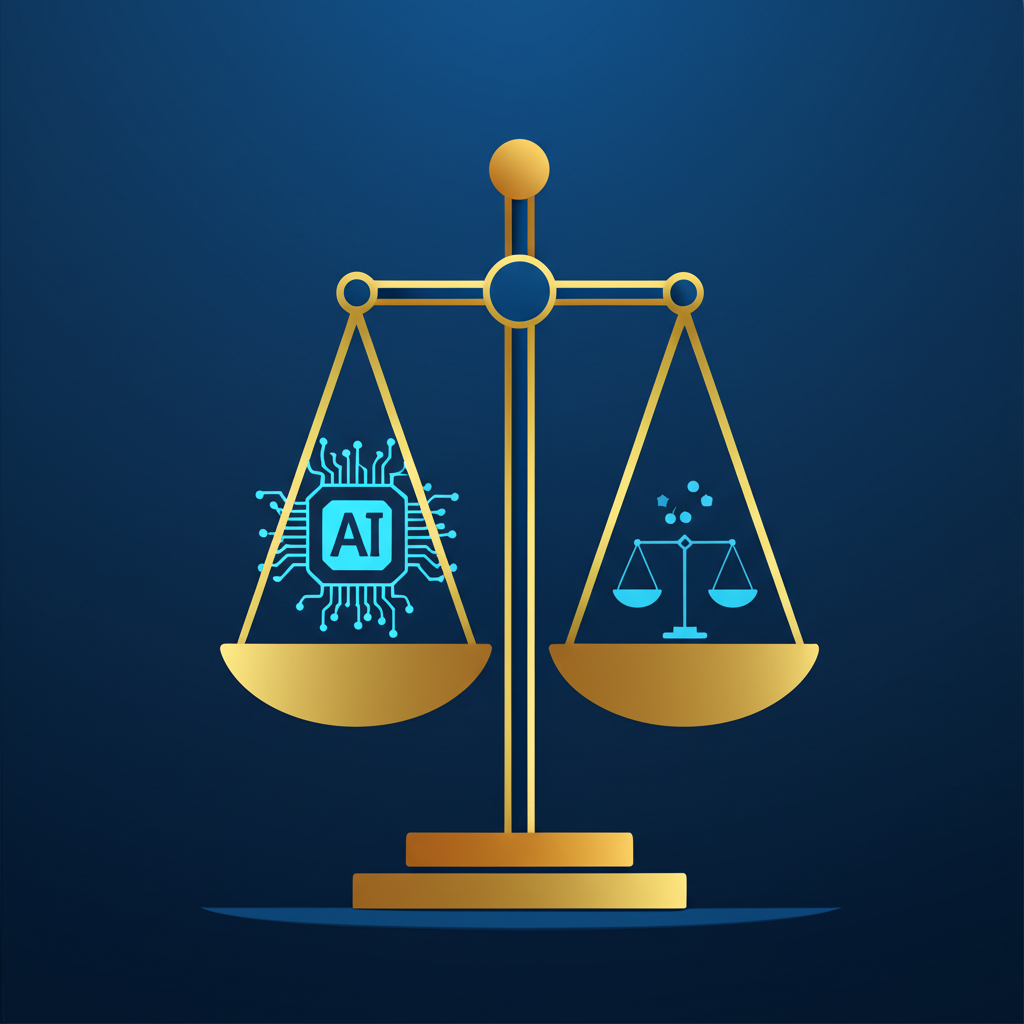
The Anthropic-Pentagon tension exposes a fundamental weakness in current AI governance frameworks. We've built systems that assume a meaningful distinction between commercial and military AI applications. That distinction is increasingly illusory.
Technical capabilities are dual-use by nature. An AI system that optimizes supply chains for a retailer can optimize supply chains for an army. An AI that analyzes financial data can analyze intelligence. An AI that writes marketing copy can write propaganda. The underlying technology is the same; only the application differs.
This means governance cannot rely on company-level commitments to avoid defense work. If the technology is dual-use, and the economic pressures favor defense contracts, then companies will eventually work with defense agencies. The question is not whether but how -- what constraints, what oversight, what accountability.
Several governance models are emerging:
Export Control: Treat frontier AI like advanced weapons technology, with strict controls on who can access what. This is the current default, but it's ill-suited to software that can be transmitted instantly and trained by anyone with sufficient resources.
Use Case Restrictions: Attempt to draw lines between acceptable and unacceptable applications. The challenge is that these lines blur quickly. Is logistics coordination acceptable while targeting assistance is not? The distinction depends on context that changes rapidly.
Transparency Requirements: Require disclosure of defense relationships and intended applications. This doesn't prevent problematic uses but creates accountability through public scrutiny. It's a weaker constraint but more enforceable than outright bans.
None of these models fully addresses the dual-use problem. Anthropic's situation shows that even companies with strong safety commitments and unusual governance structures struggle to maintain boundaries when structural pressures push toward defense applications.
The Illusion of Ethical Boundaries
Perhaps the most important lesson from Anthropic's defense entanglements is that ethical boundaries in AI are less robust than they appear. Corporate commitments, safety research, and public benefit structures all create the impression of guardrails. But when tested by economic and competitive pressure, these guardrails bend.
This isn't a criticism of Anthropic specifically. The company has done more than most to build safety into its structure and culture. If even Anthropic struggles to maintain distance from defense applications, what chance do less principled companies have?
The implications are sobering. We cannot rely on corporate self-regulation to prevent AI capabilities from flowing to military applications. The incentives are too strong, the boundaries too porous, the technology too dual-use. Effective governance requires external constraints -- regulation, international agreements, technical standards -- that operate independently of corporate goodwill.
This doesn't mean corporate ethics are irrelevant. Anthropic's safety research genuinely advances the field. Its transparency about challenges is more than competitors offer. But ethics without enforcement is aspiration, not constraint.
What Businesses Should Watch
For businesses using AI -- which is now virtually every business -- the Anthropic-Pentagon dynamic has practical implications:
Supply Chain Risk: If your AI capabilities depend on providers who might be restricted from defense-related activities, or conversely who might be pulled into defense work, your supply chain has geopolitical risk. Diversify providers and understand their defense relationships.
Compliance Complexity: As AI governance tightens, particularly around defense applications, compliance requirements will multiply. Companies using AI for sensitive applications need robust legal frameworks and active monitoring of regulatory developments.
Reputational Considerations: Your AI providers' defense relationships can become your reputation problem. Customers increasingly ask about AI supply chains. Be prepared to explain where your capabilities come from and what constraints govern their use.
Technical Redundancy: Don't build critical capabilities on single providers who might be disrupted by defense-related restrictions or controversies. Maintain technical optionality across multiple AI platforms.
The Bottom Line
Anthropic vs. the Pentagon isn't a story about one company's moral failings. It's a story about structural forces that affect every frontier AI company. The safety-defense tension isn't resolvable through better intentions or stronger corporate governance. It's baked into the technology, the economics, and the geopolitics of AI development.
The question for the AI industry is whether we can build governance frameworks that acknowledge these structural pressures and channel them productively. The question for businesses using AI is whether they understand the supply chain risks these dynamics create.
Anthropic's autonomous agents are impressive technical achievements. They also represent capabilities that will inevitably flow to military applications, regardless of corporate intentions. The safety war isn't between Anthropic and the Pentagon -- it's between our aspirations for responsible AI development and the structural realities that make those aspirations hard to achieve.
So far, structure is winning.
About Versalence: We help businesses navigate the complex landscape of AI governance, safety, and strategic implementation. If you're wrestling with the implications of frontier AI for your organization, let's talk.