Build Production-Ready Graph RAG: From Vector Search to Knowledge Graphs
Introduction: Why Graph RAG Changes Everything
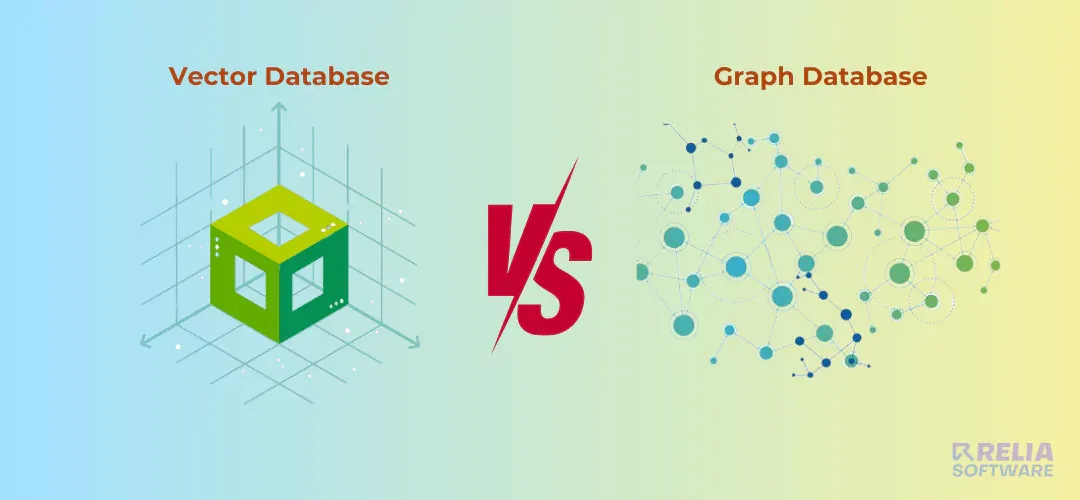
Retrieval-Augmented Generation (RAG) has become the standard architecture for grounding large language models in external data. But traditional vector RAG has a critical limitation: it treats knowledge as isolated chunks of text, losing the relationships between entities that give information its meaning. When you ask a complex question like What projects does A manager lead?, vector search alone fails because it cannot traverse relationships through multiple hops.
Graph RAG solves this by combining vector similarity search with graph database traversal. Instead of retrieving flat text chunks, Graph RAG navigates relationships between entities, enabling multi-hop reasoning that mirrors how humans understand complex domains. This article provides a complete implementation guide using Neo4j and LangChain, with production-ready code patterns you can deploy today.
Understanding the Graph RAG Architecture
The Limitations of Vector-Only RAG
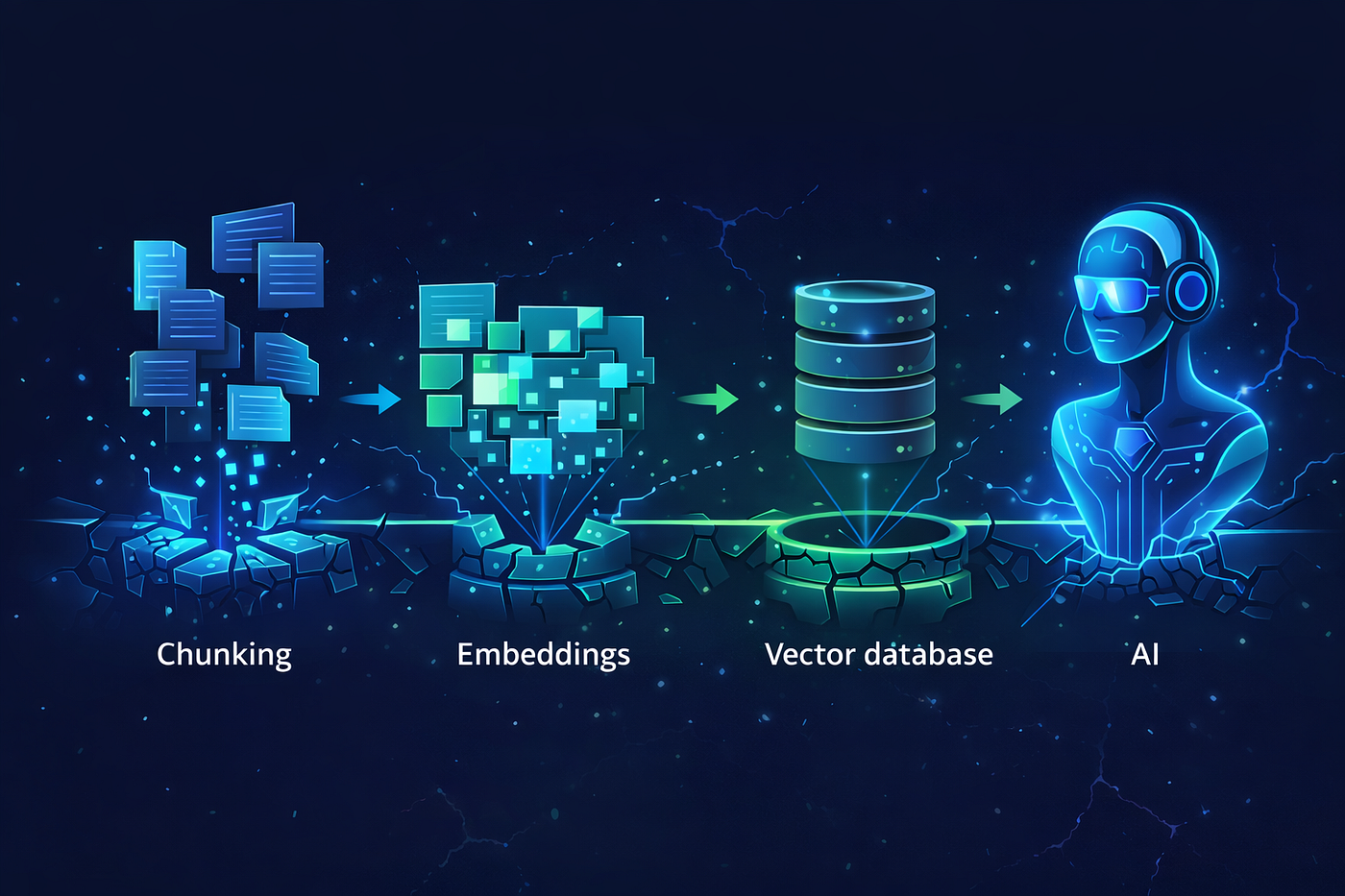
Traditional RAG systems work by splitting documents into chunks, embedding them into vectors, and retrieving the most similar chunks to a query. This approach works well for factual questions that can be answered from a single passage. But it fails when questions require connecting information across multiple documents or understanding relationships between entities.
Consider a scenario with three documents: one mentions that Alice is a project manager, another states that Alice manages the Alpha project, and a third describes the Alpha project budget. A vector search for Who manages the Alpha project? might retrieve all three documents, but the LLM must infer the connection. For What is the budget of the project managed by Alice?, the system needs to connect Alice to Alpha project to Budget through explicit relationships.
Vector RAG also suffers from context fragmentation. When documents are chunked for embedding, entity relationships that span chunks are broken. The model loses the graph structure of knowledge, replacing it with isolated points in vector space.
How Graph RAG Preserves Relationships
Graph RAG addresses these limitations by explicitly modeling entities and their relationships. The architecture has three core components: entity extraction transforms text into structured nodes and edges, graph storage persists these structures in a graph database, and hybrid retrieval combines vector similarity with graph traversal to find relevant context.
The knowledge graph stores entities as nodes (people, projects, organizations) and relationships as edges (manages, belongs_to, funded_by). This structure enables the system to traverse connections explicitly. When asked about Alices project budget, the system can navigate: Alice manages Alpha project has_budget $500K.
Neo4j provides the graph database layer with native support for both property graphs and vector indexes. LangChains GraphCypherQAChain handles the natural language to Cypher query translation, allowing the LLM to interact with the graph without requiring users to learn graph query languages.
Building the Knowledge Graph Pipeline
Setting Up Neo4j and Dependencies
To get started, you need a Neo4j instance running locally or in the cloud. For local development, Docker provides the fastest setup path. The following command launches Neo4j with the necessary ports exposed and authentication configured.
The Python dependencies include LangChain for orchestration, the Neo4j driver for database connectivity, and OpenAI for embeddings and language models. Install these with pip.
Establish a connection to Neo4j using the GraphDatabase driver. Create a wrapper class that handles queries and sets up constraints for performance. Uniqueness constraints on entity names prevent duplicate nodes and speed up merge operations.
Entity and Relationship Extraction
The extraction layer uses structured output models to identify entities and relationships from text. Pydantic models define the schema for entities (with name, type, description) and relationships (with source, target, type). This structure ensures the LLM outputs conform to the graph schema.
The extraction prompt instructs the LLM to identify concrete entities and their connections from the input text. Using the PydanticOutputParser ensures the response matches the expected structure, making it easy to validate and insert into Neo4j.
Hybrid Vector and Graph Retrieval

Creating Vector Indexes in Neo4j
Neo4j supports vector indexes that store embeddings alongside the graph structure. This enables a hybrid approach: use vector similarity to find entry points in the graph, then traverse relationships to gather multi-hop context. Create a vector index on the embedding property of nodes.
The hybrid retrieval method combines vector similarity with graph traversal. First, perform a vector search to find semantically similar chunks. Then traverse the graph from those chunks to find related entities, expanding the context through relationships. This captures information that vector similarity alone would miss.
Production Implementation with GraphCypherQAChain
Natural Language to Cypher Translation
LangChains GraphCypherQAChain automates the translation from natural language questions to Cypher queries. The chain uses the graph schema to generate appropriate queries, then executes them against Neo4j and synthesizes answers from the results.
The validate_cypher parameter ensures generated queries are syntactically correct before execution. Using separate LLMs for Cypher generation and answer synthesis provides cost optimization: GPT-4o for the complex task of query generation, GPT-3.5 for the simpler task of answer formatting.
Handling Multi-Hop Queries
The real power of Graph RAG emerges with multi-hop questions. A query like What is the budget of the project managed by Alice? requires traversing: Alice MANAGES Project HAS_BUDGET Budget. GraphCypherQAChain generates the appropriate multi-hop Cypher query automatically.
Performance Optimization and Best Practices
Indexing and Query Optimization
Production Graph RAG systems require careful optimization. Create indexes on frequently queried properties like entity names and relationship types. Use parameterized queries to enable query plan caching. Monitor query execution times and optimize traversals that exceed latency thresholds.
For large knowledge graphs, consider partitioning strategies. Community detection algorithms can identify clusters of related entities, allowing you to route queries to relevant subgraphs rather than traversing the entire graph.
Balancing Vector and Graph Retrieval
The hybrid approach requires tuning the balance between vector similarity and graph traversal. Too much vector weighting misses relationship context; too much graph traversal introduces irrelevant entities. Experiment with retrieval depth (number of hops) and vector similarity thresholds to find the optimal configuration for your domain.
Implement feedback loops to improve retrieval quality. Track which retrieved contexts lead to correct answers and which introduce hallucinations. Use this data to fine-tune embedding models or adjust graph traversal strategies.
Conclusion
Graph RAG represents a fundamental evolution in retrieval-augmented generation. By preserving entity relationships in a knowledge graph, systems can answer complex multi-hop questions that vector-only approaches cannot handle. The combination of Neo4j for graph storage and LangChain for orchestration provides a production-ready platform for building these systems.
The implementation patterns in this article provide a foundation for domain-specific applications. Whether analyzing research papers, legal documents, or enterprise knowledge bases, Graph RAG enables AI systems to understand not just individual facts, but the connections that give them meaning.
As knowledge graphs grow and models improve, the gap between surface-level retrieval and deep understanding will continue to close. Organizations that invest in Graph RAG today are building the infrastructure for AI systems that truly comprehend their domains.